Career & Online Earning
How to Make Money Online in Nepal: A Beginner’s Guide to Selling Digital Services to Tourism Businesses
EverestBlog AI · Oct 31, 2026 · 11 min read
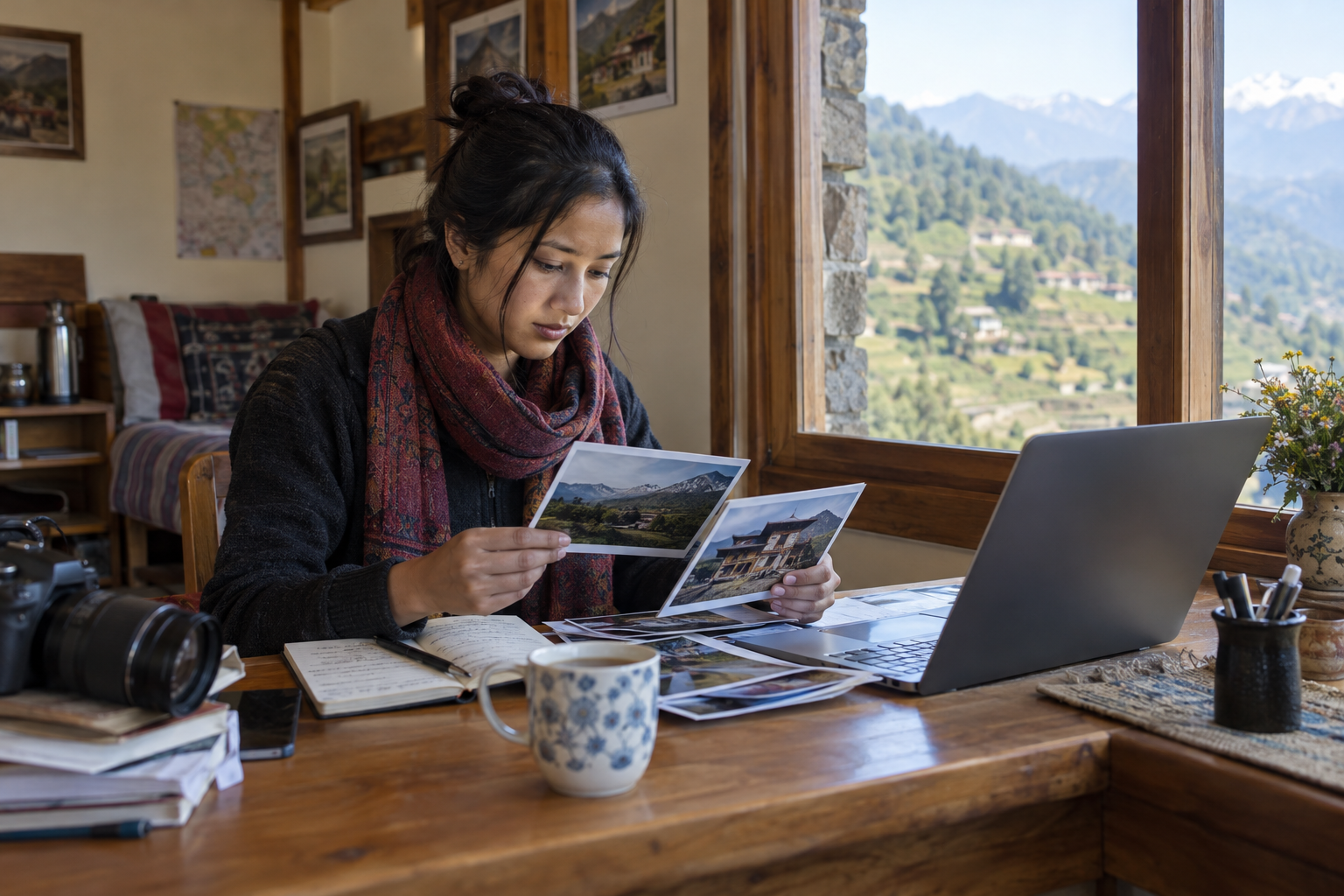
A small lodge website-copy project offers a practical starting point for selling digital services to tourism businesses. · AI-generated illustration
If you are searching for ways to earn money online Nepal, one practical starting point is a small writing service for a tourism business. Instead of offering to manage an entire website, offer to rewrite one lodge homepage and prepare a visitor FAQ. The lodge receives two editable documents that its owner or website manager can review and use. You do not need to build a website, handle reservations or publish any changes yourself.
Imagine a lodge whose homepage says “comfortable rooms in a beautiful location” but leaves visitors with basic questions. Where is it in relation to the nearest road? Are bathrooms private or shared? Can guests order meals? Does reaching the property involve steps or an uphill walk? Your job is to replace vague descriptions with clear, verified information that helps someone understand what staying there would involve.
The homepage and FAQ serve different purposes. The homepage gives readers a quick picture of the property: its setting, accommodation, main facilities and how to enquire. The FAQ answers practical questions that might otherwise require several messages. Together, they can make information easier to find and help guests judge whether the lodge suits their plans. Clearer writing cannot guarantee bookings, and offering this service cannot guarantee income.
Your work is useful because tourism information often needs more precision than promotional language provides. “Easy access,” for example, may mean different things to a driver, a trekker and a guest with limited mobility. “Hot showers available” may need an explanation about timing or supply limitations. You should not fill these gaps with attractive guesses. Ask the owner for details and describe the actual situation in straightforward language.
You need only a few basic tools and abilities to begin:
- Reliable internet access: You need to exchange questions, review existing information and send documents. Plan around interruptions rather than promising constant availability.
- Clear writing: Short sentences, descriptive labels and familiar words matter more than elaborate vocabulary. Write in a language you can use accurately.
- Careful fact-checking: Confirm property details with the owner. Treat old website text, reviews and social posts as clues, not automatic proof of current conditions.
- A way to create editable files: A shared document or word-processing file lets the owner correct details without needing website access.
Be particularly cautious with changing information. Room rates, transport arrangements, meal availability and seasonal services can vary; check locally before treating them as current facts. Accessibility and safety claims also deserve specific confirmation. A photograph of an entrance, for instance, cannot establish that every room is accessible. When something remains uncertain, flag it for the owner rather than presenting it as settled.
This is a remote writing service, not tourist guiding. You are organising a business’s information, not accompanying visitors, leading treks or taking responsibility for their journeys. You can work away from the lodge, provided you have enough verified material. Understanding that boundary keeps the offer manageable for a beginner: a defined piece of writing, supplied for review, with no implied promise to operate the business’s website or advise guests personally. It is a modest, concrete service whose value rests on accuracy and usefulness rather than big claims.
Create a Small Sample and Pitch a Lodge Owner
A small writing sample gives a lodge owner something concrete to judge. If you want to earn money online Nepal tourism businesses can become potential clients, but show how your work could help their guests first. Prepare a short document that demonstrates clearer website writing without pretending you have already worked for a real lodge.
Build a Clearly Labelled Fictional Sample
At the top of your document, write “Fictional lodge sample—not a real business or client project.” Use a name such as “[Lodge Name]” and keep unverified details in square brackets. Do not invent mountain views, walking times, room facilities, transport services or environmental credentials. Your sample should demonstrate structure and tone, not believable-looking claims.
Include a short homepage excerpt and three FAQ answers. For example:
Homepage excerpt: “Planning a stay in [Location]? [Lodge Name] offers [confirmed accommodation type] for travellers visiting [area or destination]. Find information about rooms, meals and arrival arrangements below. To ask about availability for your travel dates, contact us through [confirmed booking channel].”
- How do I reach the lodge? “Our location is [confirmed address or landmark]. From [arrival point], follow [owner-approved directions]. Transport options and route conditions can change; check locally before travelling.”
- Are meals available? “We offer [confirmed meal arrangements]. If you have dietary requirements, contact us through [business contact channel] before booking so we can confirm whether we can accommodate them.”
- How can I check room availability? “Send your arrival date, departure date and number of guests to [confirmed booking channel]. We will confirm availability, current rates and booking terms before you decide.”
Add a note explaining that every bracketed detail needs owner confirmation before publication. Share the document through a view-only link, and test that it opens without requesting permission. Keep the presentation simple and readable on a phone.
Find One Business With a Clear Information Gap
Look at public lodge websites in a destination you understand. Choose a business whose information is genuinely unclear: perhaps its homepage never explains how to enquire, or its arrival details are scattered across several pages. Check the relevant pages before suggesting that something is missing.
Contact the owner through a published business email, website enquiry form or messaging number listed for business use. If staff manage that channel, politely ask whether they can forward your note to the person responsible for the website. Avoid private personal accounts and bulk messages.
Send a Short, Specific Paid Offer
Your pitch should identify one useful improvement, link the fictional sample and offer a bounded service. You could write:
“Hello [owner/team], I noticed that [specific page] does not clearly explain [verified information gap]. A short [FAQ or homepage addition] could help guests find that answer before enquiring. Here is a fictional writing sample: [sample link]. I offer a paid package covering one short homepage introduction and three FAQ answers, based on details you confirm, with one revision round. Would you like me to send a quote?”
Personalise the observation rather than merely changing the lodge name. Do not promise more bookings or write its entire website for free. The sample shows your approach; the paid offer covers work tailored to that business.
Agree on Scope, Produce the Copy and Hand It Over
Before writing the lodge’s website copy, turn the owner’s interest into a clear written agreement. A short document or email exchange can record what you will deliver and what the owner will pay. Ask for written confirmation before starting. For beginners looking to earn money online Nepal, this makes the project easier to manage and helps prevent unpaid extra work.
Put the boundaries in writing
Use this checklist, filling in each item with the owner:
- Pages and FAQs: Name the pages included and set a maximum number of FAQ answers. State whether headings and calls to action are included.
- Word-count range: Agree on a range for each page or the whole package, rather than promising unlimited copy.
- Owner-supplied facts: List the information and existing materials the owner must provide, and confirm their responsibility for checking business details.
- Deadline: Set delivery and feedback dates. Explain how late information or approval will affect the schedule.
- One revision round: Include one consolidated set of changes within the original brief. Agree separately on the cost of additional rounds or new pages.
- Exclusions: Specify that translation, photography, website design, uploading and ongoing updates are not included unless agreed.
- Fee and payment milestones: Record the total fee, currency, any applicable taxes, payment stages and due dates.
- Usage rights: Explain what rights the owner receives, when those rights take effect and whether you need separate permission to show the work in your portfolio.
Quote for the work involved
Estimate the time needed to review materials, ask questions, draft, revise and prepare the handover. Multiply that effort by a working rate you can sustain, then explain the package price. Do not present your personal quote as a standard Nepal market rate. If the budget is too small, reduce the deliverables rather than leave the scope vague.
Confirm a payment method both parties can actually use, including currency, transfer charges and how payment will be confirmed. Before invoicing or accepting money, verify applicable Nepal tax, registration, invoicing, withholding and payment requirements for your circumstances—check locally with a qualified adviser and the relevant payment provider or authority.
Write from verified information
Request confirmed room types, bed arrangements, amenities, meal options, access directions, transport arrangements and booking or cancellation policies. Ask which facilities are shared, seasonal or available only on request. Never infer safety, accessibility or environmental claims from photographs or general descriptions. Claims such as “wheelchair accessible” or “eco-friendly” need specific, verified support.
Draft in simple language and mark unanswered questions clearly. Flag changing details, including room rates, transport schedules, road conditions and seasonal services, for owner confirmation. Send the draft for factual review and collect the agreed revision round in one message or document. Obtain written approval of the final version.
Hand over a usable package
Deliver clearly named editable files, such as LodgeName_Rooms_Approved, with placement notes identifying each page, heading, FAQ block and booking button text. Remove unresolved placeholders before delivery. Include an invoice matching the agreement and retain the owner’s acceptance message alongside the approved files and payment records.
This is a copywriting package, so website login access is unnecessary. The owner or their website manager can publish the approved text using your placement notes.
Conclusion: Turn One Completed Project into Evidence
Your first completed assignment for a lodge or another tourism business gives you something more useful than a promise: evidence that you can finish a job. It shows that you can understand a brief, write clear copy, respond to corrections and deliver usable work. That matters when you approach another owner. Still, one successful assignment does not guarantee regular clients or steady income. Tourism demand, business budgets and payment habits can change. Treat the project as a starting point, not proof that you can immediately depend on online earnings.
Before adding the work to a portfolio, ask the client for permission. Be specific about what you want to show and where you plan to show it. A lodge owner may approve a short website excerpt but prefer to keep draft documents, business discussions or contact details private. Do not assume that receiving payment gives you permission to publish everything involved in the assignment.
A small before-and-after example can make your contribution easy to understand. Choose an approved excerpt that shows a useful improvement, such as clearer room descriptions, simpler arrival instructions or a more direct booking enquiry message. Include only enough text to demonstrate the change. Explain the task and your contribution in plain language, without making the original writer look careless. If the client does not want their business identified, ask whether an anonymous example is acceptable. If permission is refused, respect that decision.
Describe results carefully. You can say that you reorganised information or clarified wording if that is what you did. Do not claim that your copy increased bookings unless the business has reliable evidence and permits you to share it. A finished piece can demonstrate writing ability without a dramatic sales claim. Keep a private record of the approved version, agreed scope and delivery confirmation so you can explain your work accurately later.
Once the owner has had time to review the deliverable, ask for honest feedback. Keep the request brief and make it easy to answer:
- Was the final copy useful for the purpose we agreed on?
- Was anything unclear during our communication or handover?
- What could I improve on a future assignment?
If they are pleased, you can also ask whether they know another tourism business that might need similar help. Make clear that there is no obligation. If you request a testimonial, use their actual words and obtain approval before publishing it. Feedback is valuable even when it identifies a weakness rather than providing praise.
Record the real time the assignment required. Count research, messages, drafting, revisions, formatting and handover, not just writing. Compare that total with your original estimate. Note what caused extra work: missing information, unclear expectations or a task you had not allowed for. Use those observations to make the next estimate more realistic.
If your goal is to earn money online Nepal tourism businesses can become clients, but trust takes time to build. Judge this first step by something you can verify, rather than hoped-for monthly earnings: a completed, paid deliverable and one documented lesson for the next project. That is practical progress you can build on.
Up next

Career & Online Earning
Freelancing vs. Online Business in 2026: Which Leaves You More Profit in Nepal?

Career & Online Earning
10 Real Ways to Earn Money Online Without Investment in Nepal: The First-Payment Test

Career & Online Earning