
Travel & Destinations
20 Most Beautiful Countries to Visit in 2027: Mountains, Wildlife and Living Culture
EverestBlog AI · Oct 31, 2026 · 11 min read
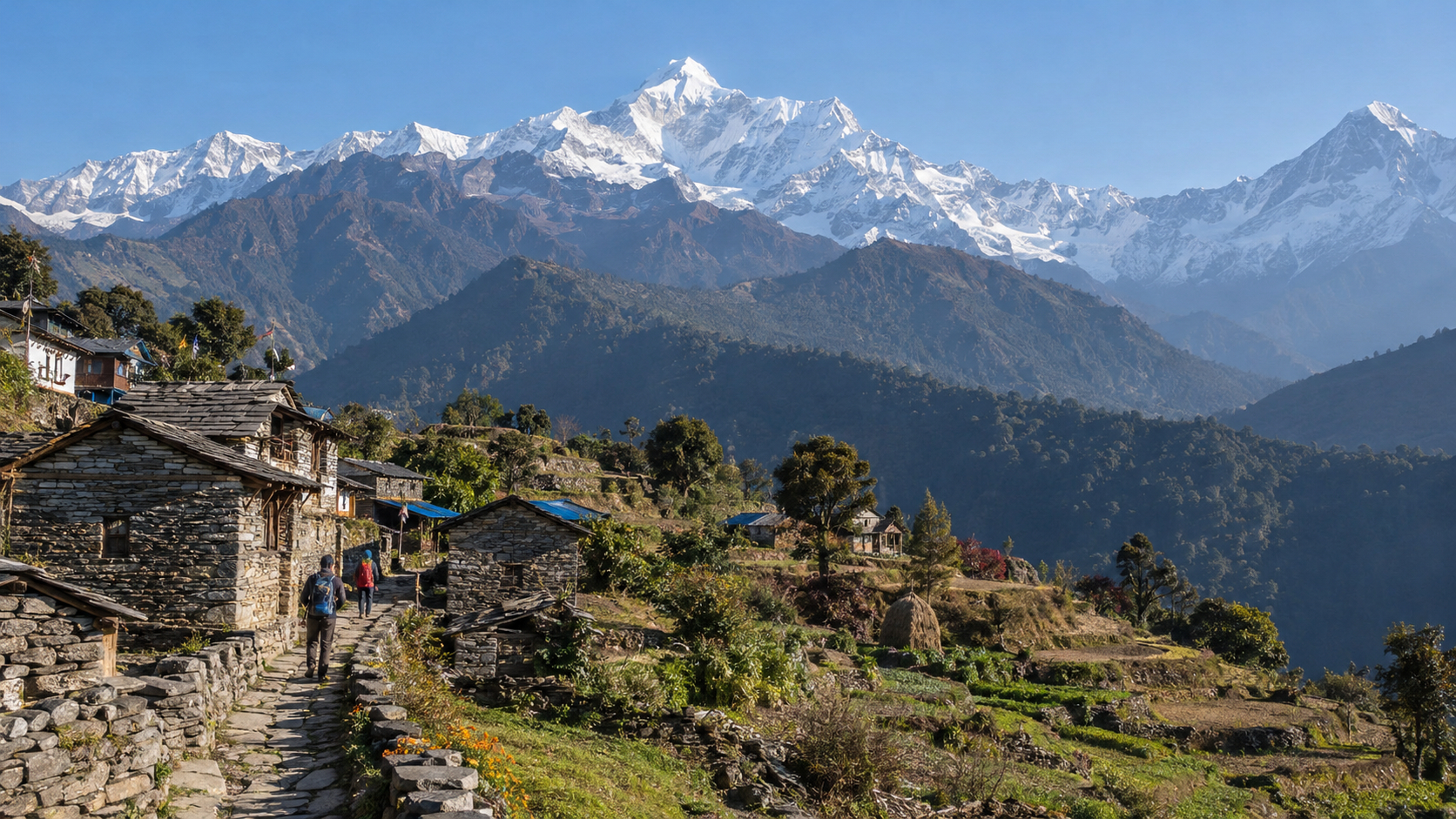
Nepal’s Annapurna region brings mountain landscapes and everyday village life into the same view. · AI-generated illustration
What makes a country beautiful enough to shape a whole journey around it? A mountain skyline may catch your attention first, but beauty becomes richer when you notice the forest below it, the animals moving through that forest, and the people whose lives are tied to the land. This selection of the most beautiful countries in the world looks beyond postcard views. It brings together landscape variety, wildlife and living heritage: places where nature and culture offer different reasons to slow down, look closely and stay curious.
For EverestBlog, that means giving a quiet wetland or a working village as much consideration as a famous summit. Beauty might lie in the transition from tropical coast to high plateau, in a healthy ecosystem, or in a local craft still practised and passed between generations. It is not limited to wilderness. Terraced fields, historic neighbourhoods and everyday food traditions can reveal how people have shaped—and continue to care for—the places travellers admire.
The 20 countries featured here are an editorial selection, not an objective ranking. They appear without numbered positions, and their order does not suggest that one is more beautiful than another. No list can fairly measure every coastline, language, habitat or cultural tradition against a single standard. Instead, this one offers a varied starting point for readers drawn to mountains, wildlife and living culture, with room for different travel styles and interests.
Each country receives an equal assessment of 80–100 words, using the same four labels. This shared format keeps the coverage balanced and makes comparisons easier without turning distinct places into scores. The short entries highlight possibilities rather than attempt to describe an entire country.
- Landscapes: The landforms, habitats and contrasts that give a destination its character, rather than only its best-known viewpoint.
- Wildlife: Notable animals or ecosystems, with the understanding that wild encounters depend on season, habitat, conditions and chance.
- Living culture: Traditions, skills, food and community life that remain part of the present, not simply attractions preserved for visitors.
- Planning note: A practical consideration, such as seasonal access, altitude, permits or the need to check locally before committing to a route.
The year 2027 is a planning horizon, not a promise of ideal conditions. Weather patterns vary, trails and parks may close, and entry requirements or transport services can change. A generally favourable season does not guarantee clear mountain views, safe road access or wildlife sightings. Before booking, consult official entry guidance and current travel advice; for permits, local access and seasonal services, check locally.
Think about the experience behind the photograph, too. Mountain journeys may require gradual acclimatisation and spare days. Wildlife trips reward patience and operators who keep a respectful distance from animals. Cultural visits work best when photography is welcomed, sacred spaces are treated with care and local guides or businesses benefit from your spending.
Use the countries ahead as invitations to investigate further. Choose fewer stops if that gives you time to understand a place beyond its headline attraction. The most rewarding journey need not deliver every celebrated view; it can leave you with a clearer sense of how landscapes, wildlife and communities belong together.
Asia, Europe and Oceania, Plus Canada: The First 10 Countries
These ten destinations belong among the most beautiful countries in the world for their landscape contrasts, thoughtful wildlife experiences and cultures shaped by people living there today.
1. Nepal
Landscapes: Himalayan peaks rise above terraced hills, while the Terai holds forests and grasslands. Wildlife: Explore Chitwan with a licensed guide, without expecting rhino sightings. Living culture: Choose community-led Tharu stays or Newar food walks that support local hosts. Planning: Build acclimatisation days into high-altitude treks; check permits and trail conditions locally.
2. Bhutan
Landscapes: Forested valleys give way to high Himalayan passes. Wildlife: Watch wintering black-necked cranes in Phobjikha from designated viewing areas. Living culture: Meet contemporary textile makers and explore Thimphu’s cafés alongside its religious spaces. Planning: Check current visa rules, tourism fees and guide requirements before committing to a route.
3. Japan
Landscapes: Snowy mountains contrast with subtropical islands and volcanic terrain. Wildlife: Join a responsible birdwatching guide in Hokkaido, keeping clear of nesting areas. Living culture: Explore neighbourhood food markets, contemporary design and Ainu-led interpretation where available. Planning: Book popular seasonal routes early; blossom and autumn-colour timing varies with weather.
4. Indonesia
Landscapes: Volcanoes, rainforest and coral-fringed islands create striking contrasts. Wildlife: Visit orangutan habitat with authorised guides who prohibit feeding and close approaches. Living culture: Learn from working batik makers in Java, recognising regional differences rather than treating Indonesia as one culture. Planning: Island transfers take time; check ferry conditions and volcanic advisories locally.
5. New Zealand
Landscapes: Fiords and glaciers contrast with geothermal plateaus and beaches. Wildlife: Visit managed seabird viewing sites without approaching nests. Living culture: Book Māori-led experiences that explain local histories, language and present-day aspirations. Planning: Alpine weather changes quickly; check track alerts and clean footwear to help prevent the spread of plant diseases.
6. Norway
Landscapes: Steep fjords meet Arctic tundra and island coastlines. Wildlife: Choose whale-watching operators that keep respectful distances and avoid pursuing animals. Living culture: Seek Sámi-owned experiences presenting contemporary livelihoods alongside traditions. Planning: Winter daylight is limited in the north, while weather can disrupt ferries and mountain-road access.
7. Italy
Landscapes: Dolomite peaks contrast with volcanic islands and Mediterranean wetlands. Wildlife: Watch birds from designated hides in the Po Delta. Living culture: Explore neighbourhood markets and workshops where artisans adapt inherited skills. Planning: Check reservation requirements for popular attractions and local access rules before visiting heavily pressured coastal towns.
8. Slovenia
Landscapes: Julian Alps, limestone caves and a short Adriatic coastline reward varied itineraries. Wildlife: Join guided birdwatching at protected wetlands, staying on marked routes. Living culture: Meet beekeepers and browse Ljubljana’s markets. Planning: Mountain trails can remain snowy beyond winter; check conditions rather than judging accessibility from valley temperatures.
9. Georgia
Landscapes: Caucasus mountains contrast with eastern semi-desert and Black Sea shores. Wildlife: Watch migrating raptors around Batumi with knowledgeable local guides. Living culture: Visit working wineries and Tbilisi’s contemporary arts spaces. Planning: Check travel advisories and mountain-road conditions; remote journeys may require flexibility and locally arranged transport.
10. Canada
Landscapes: Rocky Mountain lakes contrast with temperate rainforest and Atlantic shores. Wildlife: Choose Indigenous-owned bear-viewing trips where available, following guides’ distance rules. Living culture: Visit Indigenous-led cultural centres presenting distinct nations and contemporary voices. Planning: Distances are enormous; focus on one region and check wildfire-related closures before travelling.
Africa and Latin America: 10 More Countries to Explore
Costa Rica
- Landscapes: Cloud forests around Monteverde contrast with Tortuguero’s waterways and seasonally dry Guanacaste.
- Wildlife: Seek scarlet macaws around Carara with guides; avoid feeding or approaching birds.
- Culture: Arrange Bribri community visits through local hosts, respecting permissions around cacao traditions.
- Planning: Choose fewer regions; mountain roads make short distances slow. Check locally beforehand.
Brazil
- Landscapes: The Pantanal’s seasonal wetlands differ sharply from Amazonian forests and Cerrado savannas.
- Wildlife: Near Porto Jofre, choose jaguar operators maintaining distance and avoiding crowded sightings.
- Culture: Explore Salvador’s Afro-Brazilian history with local guides; treat religious ceremonies as sacred.
- Planning: Distances demand careful choices; seasonal flooding shapes access. Check locally before booking.
Chile
- Landscapes: Atacama salt flats, central Mediterranean woodlands and Patagonian temperate rainforests reward comparison.
- Wildlife: Watch guanacos in Torres del Paine; never encourage predators closer for photographs.
- Culture: Book Mapuche-led experiences around Araucanía, letting hosts explain contemporary life alongside traditions.
- Planning: Northern altitude and southern wind require different preparation; avoid rushing between ecosystems.
Peru
- Landscapes: Andean valleys descend towards cloud forests, while Pacific deserts support coastal wetlands.
- Wildlife: Visit the Ballestas Islands with responsible boats keeping clear of resting seabirds.
- Culture: Choose community-run weaving encounters in the Sacred Valley, paying fairly for demonstrations.
- Planning: Acclimatise before strenuous Andean walks; check locally for trail permits and disruptions.
South Africa
- Landscapes: Cape fynbos, Drakensberg grasslands and the arid Karoo reveal remarkably different habitats.
- Wildlife: At Boulders, observe African penguins from designated routes without blocking their movement.
- Culture: Explore Johannesburg’s neighbourhood histories with resident guides, including perspectives beyond apartheid landmarks.
- Planning: Combine protected areas with locally owned accommodation; check locally for driving advice.
Namibia
- Landscapes: Namib dunes meet Atlantic fog, while rugged inland escarpments frame sparse grasslands.
- Wildlife: Track desert-adapted elephants in Damaraland with guides who protect feeding and movement.
- Culture: Visit community conservancies through resident-led programmes; request consent before portraits or homestead visits.
- Planning: Allow generous driving time, carry water and check locally for road conditions.
Tanzania
- Landscapes: Serengeti plains contrast with Udzungwa forests and Lake Tanganyika’s steep, wooded shores.
- Wildlife: In Mahale, follow chimpanzee health rules and maintain the required viewing distance.
- Culture: Explore Zanzibar’s Swahili maritime connections with local guides, respecting neighbourhoods beyond landmarks.
- Planning: Remote parks require substantial logistics; check locally for access, permits and guides.
Kenya
- Landscapes: Laikipia’s highland mosaics, northern drylands and coastal forests offer distinct ecological settings.
- Wildlife: Seek Grevy’s zebras around Samburu with guides, allowing animals unobstructed access to water.
- Culture: Choose community-led encounters in northern conservancies; explore Lamu’s Swahili architecture with residents.
- Planning: Ask how conservancy fees support residents; check locally for security and access.
Madagascar
- Landscapes: Eastern rainforests contrast with western dry forests and the south’s extraordinary spiny vegetation.
- Wildlife: Listen for indri around Andasibe with guides; avoid feeding lemurs or playback.
- Culture: Highland, Sakalava and Vezo communities have distinct histories; ask hosts about fady.
- Planning: Slow roads favour regional itineraries; use local guides and allow weather buffers.
Morocco
- Landscapes: Atlas elevations support juniper woodlands and alpine plants, contrasting with Saharan margins.
- Wildlife: Watch Barbary macaques near Ifrane without feeding them; avoid roadside photo handlers.
- Culture: Walk Amazigh mountain villages with resident guides, arranging meals through willing hosts.
- Planning: Mountain weather differs from desert conditions; check locally for trails and access.
Conclusion: Choose the Journey That Fits Your Interests
The most beautiful countries in the world offer different kinds of journeys, and the right choice depends on how you want to spend your days. A mountain landscape may draw you outdoors, but steep trails, long transfers or limited access can shape the experience. Wildlife encounters require patience rather than a packed schedule. Living culture is best understood through time, conversation and respectful participation, not a quick stop for photographs.
Before booking, decide which of three interests matters most: walking, wildlife observation or cultural immersion. Then choose a destination and route that support that priority while leaving room for the others. You do not need every day to deliver all three.
- If walking comes first: Consider daily distance, elevation gain, altitude and trail conditions, not just famous viewpoints. Choose routes that match your fitness and confidence. Build in rest days, allow appropriate acclimatization where needed, and keep an alternative for poor weather or a closed trail.
- If wildlife comes first: Give yourself several outings rather than relying on one excursion. Ask whether observation involves quiet waiting, boat travel, guided walks or vehicle drives. Choose operators that maintain appropriate distances, avoid feeding or baiting wild animals, and never promise a sighting.
- If culture comes first: Allow time for neighborhood walks, markets, museums and locally guided visits. Seek experiences shaped by the people whose traditions you are learning about. Ask before photographing anyone, respect restrictions at sacred places, and accept that some ceremonies are not open to visitors.
Fewer stops usually create more opportunities to notice a place. Instead of crossing several borders, consider one region with a comfortable base and a few manageable excursions. Longer stays reduce the share of your trip spent packing and transferring. They also leave space for a second trail attempt, another wildlife outing or an unexpected invitation without forcing you to abandon the whole plan.
Choose locally owned accommodation, restaurants, guiding services and craft businesses where practical. Ask who operates the service, who leads the activity and how local people benefit. Local ownership alone does not guarantee responsible practice, so look for clear answers about working conditions, conservation rules and community consent. Book activities that welcome visitors rather than treating everyday life as a performance.
For a 2027 journey, use this checklist before paying deposits and again close to departure. Save official guidance and booking terms, and leave enough flexibility to respond to changes.
- Entry rules: Confirm passport validity requirements, visas, transit permissions and any health documentation through official immigration or embassy sources; check locally for changing procedures.
- Travel advisories: Review your government’s current advice and insurance conditions, including exclusions for particular regions or activities.
- Permits: Verify protected-area entry, trekking permissions, guide requirements and photography restrictions with the relevant authority; check locally for availability and application arrangements.
- Seasonal access: Check locally for trail, road, ferry and park access. Typical seasonal patterns are not guarantees of safe conditions on your travel dates.
- Operator practices: Check locally that the operator’s current arrangements include suitable safety equipment, emergency plans, required qualifications and responsible wildlife conduct. Ask about cancellation terms and whether advertised community partnerships remain active.
Up next
Travel & Destinations
Are You Planning to Visit Pokhara in 2027? The Complete Guide to Nepal’s Lake City

Career & Online Earning
Freelancing vs. Online Business in 2026: Which Leaves You More Profit in Nepal?

Career & Online Earning