Travel & Accessibility
Can You Visit Chitwan with Limited Mobility? An Accessibility Audit of Sauraha
EverestBlog AI · Oct 30, 2026 · 10 min read
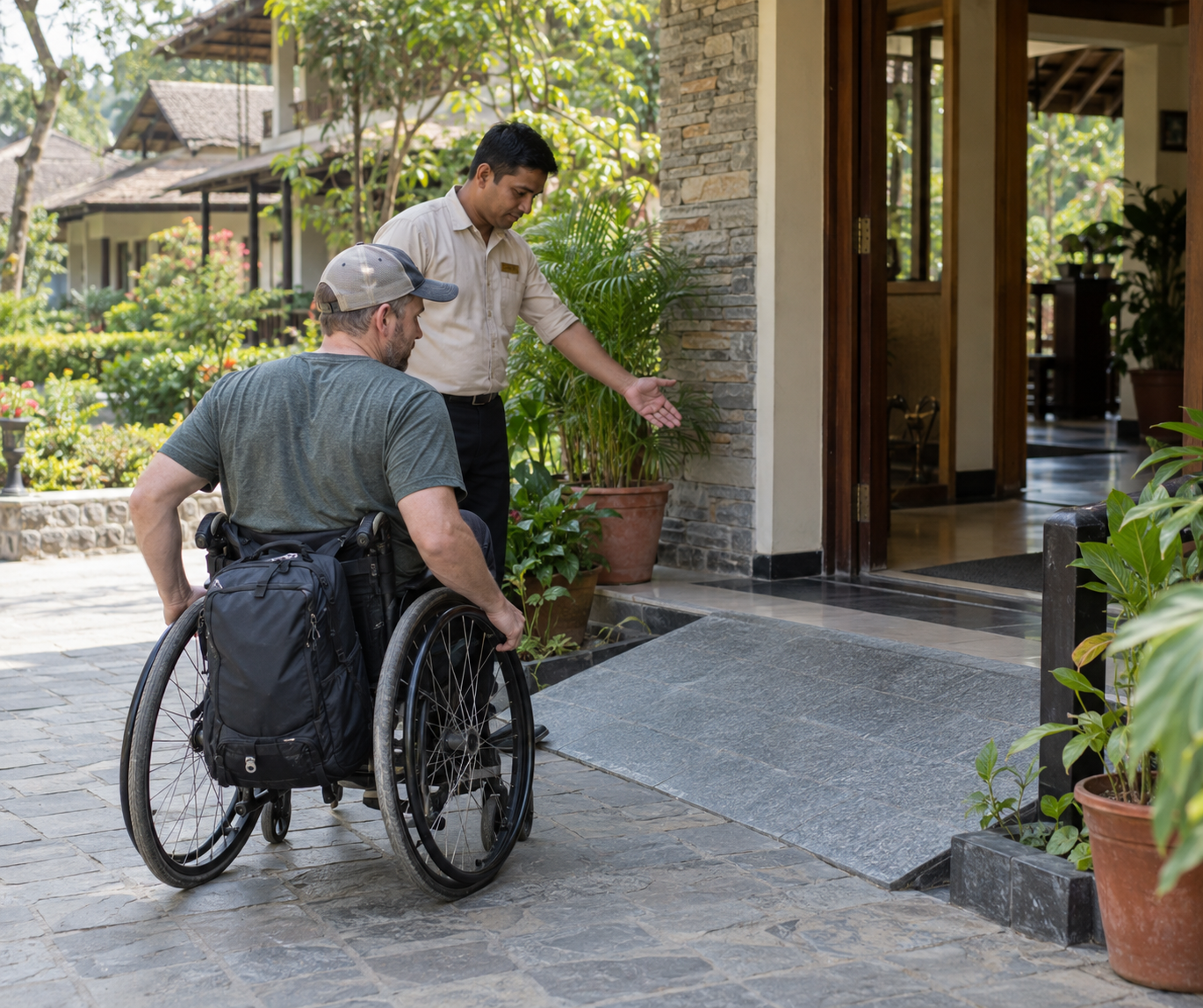
Access starts at the entrance, but a workable stay also depends on bathrooms, transfers and routes to activities. Illustrative image. · AI-generated illustration
Can you visit Chitwan with limited mobility? Potentially, yes, but the answer depends on your particular needs and the arrangements a provider can demonstrate. A hotel described as accessible may still have a bathroom threshold, a loose gravel approach or a vehicle you cannot board. One workable feature does not make the whole journey workable.
Sauraha, a tourism base beside Chitwan National Park, is a useful place to begin these conversations. Accommodation, guides and transport operators can help arrange a visit, but their understanding of accessibility may differ from yours. For accessible Chitwan travel, the most valuable question is not “Is it accessible?” It is “Can you show me the entire route I will use?”
What this audit can honestly establish
This is a booking and verification audit, not a report of completed site inspections. No firsthand measurements or traveler interviews were available for this article. It therefore does not certify individual hotels, toilets, vehicles or activities. Treat unverified features as unknown, not as promises or proof that a visit is impossible.
A credible on-site audit should combine measurements, continuous video and accounts from travelers with comparable mobility needs. Until that evidence is available, the checks below help you request it. Current road conditions, operating arrangements and available equipment can change; check locally before paying and again shortly before arrival.
Start with your access requirements
“Limited mobility” covers very different experiences. Someone who can manage a few steps with a handrail may need different arrangements from a wheelchair user who cannot transfer. Walking distance, standing tolerance, balance, pain and fatigue all matter. Describe the tasks you need to do rather than relying on a diagnosis.
Send providers a short access brief. Include your mobility aid’s dimensions, whether it folds, whether you can transfer, and whether you need someone to assist. State which conditions are essential and which are preferences. You do not need to disclose your medical history to explain that you require a step-free bathroom.
- Can you manage any steps, and under what conditions?
- Do you need level access throughout, including dining areas?
- Which side do you transfer from, if applicable?
- How far can you comfortably walk or propel?
- Do you need assistance overnight or during activities?
Audit the entrance, not just the bedroom
Ask for a continuous video from the vehicle stopping point to the room. It should show gates, parking surfaces, reception, ramps, corners and every threshold. A photograph of a flat bedroom says nothing about the steps outside it. Request the exact room number or room type shown, with written confirmation that it will be reserved.
Look closely at surfaces. Gravel, sand, broken paving and soft ground can stop small front wheels or make walking aids unstable. A path that looks smooth in a distant photograph may slope sideways. Ask whether the same route remains usable after rain and whether there is a firm alternative.
For any ramp, request its rise and horizontal length, clear width, edge protection and handrail details. These measurements help you judge the gradient; a provider’s description of “gentle” does not. Check for a level landing where doors open. If a portable ramp is proposed, confirm its load rating and who positions it.
Check whether the room actually works
Inside the room, ask for clear doorway widths with doors fully open, rather than the width of the door panel. Request measurements beside the bed and along the route to the toilet. Furniture can reduce usable space, and a large room may still have a narrow bathroom entrance.
Bed height matters for transfers. Ask for the height from the floor to the top of the mattress and whether the bed moves when pushed. If you need a hoist, do not assume one is available or that its legs will fit underneath. Any specialist equipment needs separate confirmation.
Check access to sockets, switches, curtains and drinking water. Ask whether you can reach reception from the bed and what happens during a power interruption. For powered mobility aids, confirm a suitable charging location and electrical compatibility. A ground-floor room also needs a usable route to meals, not simply an accessible sleeping area.
Give the toilet its own inspection
The toilet is often the decisive booking issue. “Western toilet” describes the fixture, not its accessibility. Ask for photographs from the doorway and from inside, followed by measurements of the entrance, internal space and toilet height. Specify which side needs clear transfer space so staff do not measure the wrong gap.
Check whether support rails are securely fixed, where they sit, and whether they suit your transfer method. A towel rail is not a grab rail. Ask whether the door opens inward and could obstruct assistance after a fall. A raised threshold can be a barrier even when the bathroom itself is spacious.
For showering, verify the floor level, drainage, stable seating and access to controls. A plastic chair is not automatically a safe shower chair. Confirm any seat’s intended use and load capacity. Wet floors may affect people using crutches or walkers as much as wheelchair users, so ask about slip resistance and housekeeping.
Trace the journey into Sauraha
Your arrival plan needs the same scrutiny as the hotel. Whether approaching by road or through Bharatpur airport, establish every transfer: terminal or bus stop, vehicle, roadside stop and accommodation entrance. Ask who meets you, where the vehicle can stop, and whether you must walk across an uneven parking area.
Do not assume an ordinary car, bus or tourist vehicle can carry someone seated in a wheelchair. Ask for the actual vehicle’s photographs and entry measurements. If you will transfer into a seat, check seat height, door opening, legroom and the space available for a helper. Confirm secure storage for your mobility aid.
If remaining in your wheelchair is necessary, verify a purpose-built arrangement with suitable boarding equipment, wheelchair securement and occupant restraint. A chair placed loose inside a vehicle is not an accessible transfer solution. Also identify a usable toilet stop along the route; a driver’s usual stop may not meet your needs.
Assess movement around Sauraha
A central location can reduce travel, but proximity alone does not guarantee access. Ask the hotel to film the route to the places you actually want to use: a restaurant, riverside seating or a meeting point. Look for drains, broken edges, traffic pinch points and places where you would have to leave the path.
Road and path conditions vary, particularly after rain or maintenance work. Request recent images rather than relying on older promotional photographs. If you use a manual wheelchair, consider whether soft surfaces or cross slopes would require assistance beyond what your companion can safely provide.
Check daytime and evening arrangements separately. Poor lighting can make a manageable threshold harder to see, while a return journey after fatigue may need transport. Agree on a pickup point that the vehicle can reach. “We will help you back” needs a named person and a practical plan.
Inspect wildlife-viewing access from start to finish
Wildlife access is a chain of physical tasks, not simply a choice of activity. Ask where you meet the guide, how you reach the vehicle or viewing place, where you sit, and how you return. Park entry rules, permitted routes and activity availability require current confirmation; check locally.
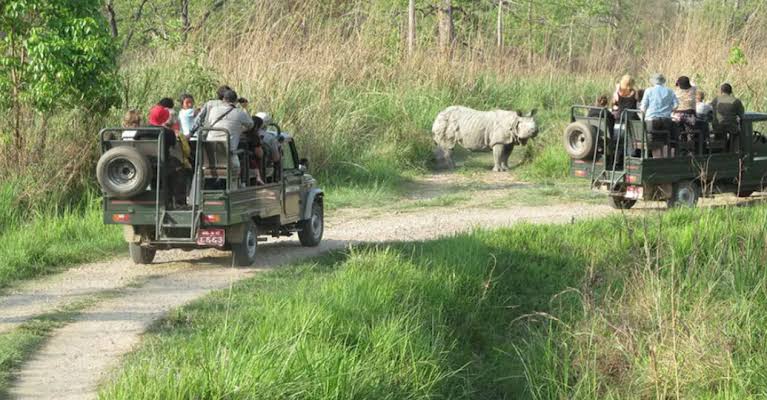
For a jeep outing, inspect the specific vehicle rather than a sample picture. Entry height, steps, handholds and seating layout matter. Some setups may require climbing or stepping between seats. Ask whether you can use a seat with an appropriate restraint and whether there is space to keep necessary mobility equipment with you.
Explain your tolerance for jolting and unsupported sitting. Ask the guide what the proposed route surface is like, whether breaks are possible and how an early return would work. Do not accept promises of a completely smooth wildlife drive. Conditions can change, and wildlife sightings are never guaranteed.
Question boats, towers and fixed viewpoints
A boat excursion needs a separate transfer assessment. Ask about the landing surface, height difference, boat stability and seating support. Photographs should show the boarding point as well as the boat. If boarding depends on someone carrying you over an unstable edge, declining that activity may be the safer choice.
Raised viewing structures may involve stairs, while ground-level viewpoints may still be reached by rough paths. Request the complete approach route and details of seating, shade and nearby toilets. A description such as “easy birdwatching” refers to the activity, not necessarily the journey to the observation point.
Ask a guide about quieter, reachable places outside demanding routes, without assuming that any riverside area is safe or step-free. Wildlife can approach settlement edges. Follow local guidance, keep a safe distance from animals and avoid isolated banks. An alternative should offer a worthwhile experience, not merely somewhere to wait.
Plan assistance without relying on lifting
Friendly staff are valuable, but goodwill cannot replace suitable infrastructure or trained assistance. “Our team can carry you” leaves major questions unanswered: who, using what method, with whose consent, and with what risk? Manual lifting can injure both the traveler and the people helping. It should not be the default access plan.
Agree on exactly which assistance is available, when it is available and whether it costs extra; check locally. A guide may help navigate a route but not provide personal care. A companion should not discover on arrival that they are expected to perform difficult transfers or push through deep gravel.
Ask about emergency exits from the room, bathroom assistance and evacuation from an outing. Identify the nearest appropriate medical support with your provider and insurer. Carrying a phone is useful, but it does not replace a clear response plan where communication or vehicle access may be limited.
Use traveler interviews as evidence, not endorsements
When seeking firsthand accounts, prioritize people whose access needs resemble yours. A traveler who walked a few steps may reasonably call a hotel manageable, while someone who cannot stand may find it unusable. Ask when they visited, which room they used and whether the property knew their requirements beforehand.
Useful interview questions focus on tasks: Could you reach the toilet independently? Did anyone lift you? Was the promised vehicle the one supplied? What became difficult when you were tired? Ask about unexpected barriers as well as successful arrangements. A cheerful review can omit the help that made the stay possible.
With permission, compare those accounts with current photographs and measurements. Distinguish independent access from access achieved through assistance. Neither experience should be dismissed, but they are not interchangeable. Treat an older review as a lead to investigate, not confirmation that today’s room or transfer arrangement is identical.
Get the final agreement in writing
Before booking, assemble a simple access record covering the room, bathroom, arrival vehicle and planned outings. Mark each requirement as confirmed, unresolved or unsuitable. Keep the supporting photographs and measurements alongside the provider’s replies. Any essential feature still unresolved deserves another question before payment.
- Confirm the exact room and vehicle, including substitutions.
- Record promised equipment and who supplies it.
- Agree on assistance, additional charges and cancellation terms.
- Ask what happens if access differs from the evidence supplied.
Sauraha may support a rewarding Chitwan visit when the whole access chain matches your needs. The strongest booking is not the one with the warmest reassurance. It is the one backed by clear evidence, realistic assistance and an enjoyable alternative whenever a particular activity does not work.