
Travel & Budget Planning
15 Cheapest Countries to Visit in Europe in 2027: What a Seven-Day Trip Really Costs
EverestBlog AI · Oct 31, 2026 · 17 min read
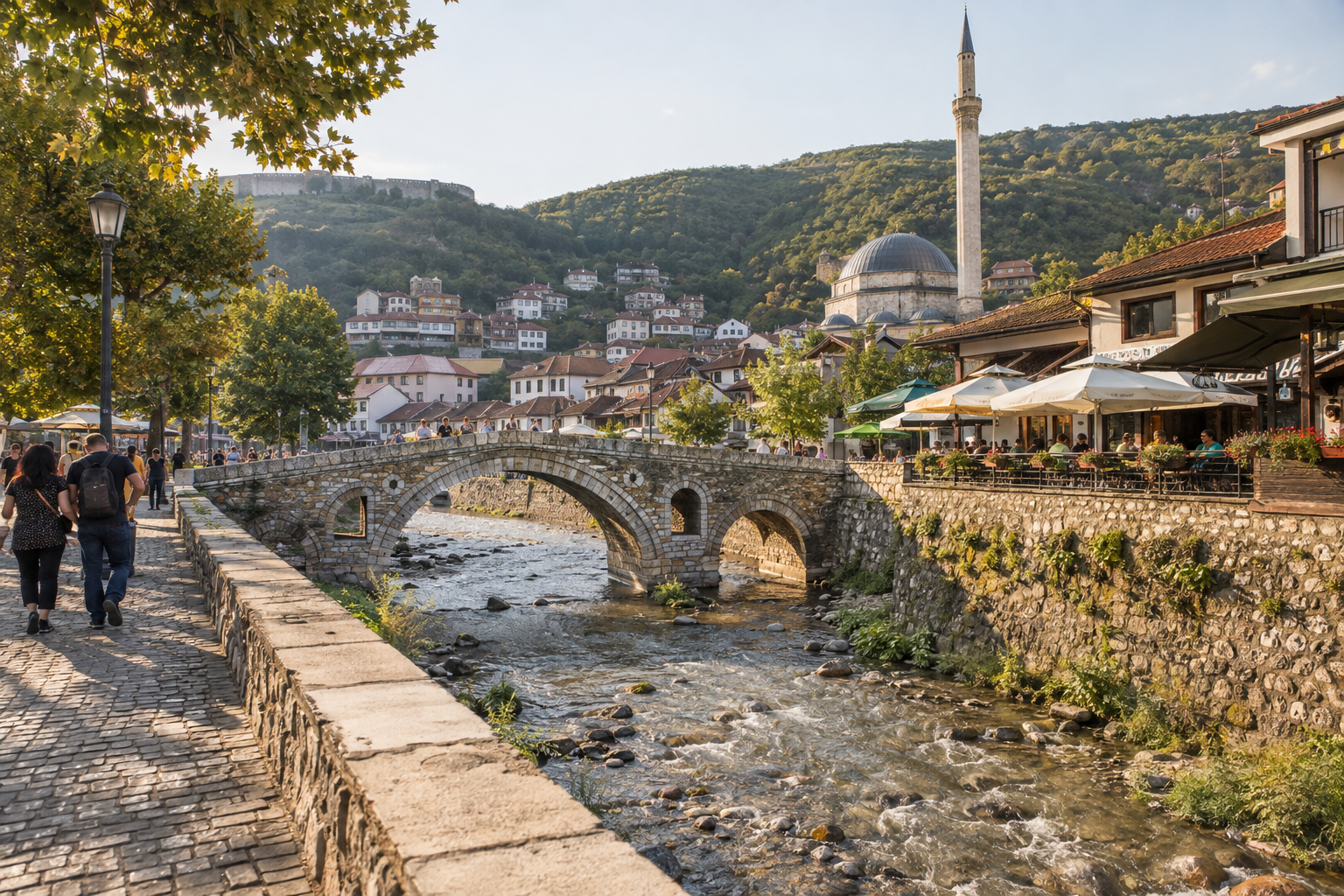
Prizren, Kosovo: one destination to investigate for an affordable European trip. Actual costs depend on dates and travel style. · AI-generated illustration
What does one week in Europe actually cost? That is a more useful starting point than asking which country has the cheapest coffee or the lowest hostel rate. A destination can look inexpensive until you add meals, local transport and the places you travelled to see. Another may have slightly higher room prices but offer walkable streets, affordable public transport and plenty to enjoy without buying a ticket. Finding the cheapest countries to visit in Europe means looking at the whole week, not one attractive price.
This article compares 15 countries through that practical lens: what might a budget-conscious traveller spend during a comparable seven-day visit? The aim is to help you build a realistic shortlist, rather than promise that a particular country will always be your cheapest option. Think of it as a planning tool for choosing between trips you would genuinely enjoy. A low weekly total is useful only if the travel style behind it suits you. Sharing a dormitory, cooking some meals or staying outside the centre can make a difference, but those choices are not equally appealing or practical for everyone.
This is a researched shortlist, not proof of the world’s lowest prices. No comparison can capture every guesthouse, bus route, neighbourhood or seasonal deal across Europe. Nor does a list of affordable countries establish that they are cheaper than destinations elsewhere in the world. What it can do is place selected destinations beside one another using a consistent approach, making the trade-offs easier to understand. The strongest comparison is not “Where did someone once find an exceptionally cheap bed?” but “Where could another traveller reasonably plan a similar week without depending on luck?”
Country names also need careful handling. Travellers pay for specific places, not national averages. A capital city, a coastal resort and a small inland town can have very different accommodation markets and daily expenses. Even within one city, staying near a major landmark may cost more than sleeping a short public-transport ride away. City-level examples are reference points, not prices for an entire country. If an example looks right for your budget, use it to investigate that destination first; do not assume the same amount will cover a famous island, a mountain resort or a busy festival weekend elsewhere.
The year matters just as much as the location. All 2027 budget figures in this article should be treated as projections, not confirmed rates. Accommodation availability, transport fares, entrance charges, taxes and exchange rates may change before you travel. A projected weekly total is therefore a working estimate, not a quote or a guarantee. Before booking, check locally and confirm current rates directly with accommodation providers, transport operators and official attraction websites. Leave room in your budget for changes rather than treating the lowest estimate as a hard spending limit.
Your travel dates and pace will also shape what “cheap” means. A week based in one city usually involves different expenses from a week moving between several destinations. Changing bases can add transfer costs and reduce the time available for low-cost exploring. Likewise, travelling outside a destination’s busiest period may improve value, but it can bring shorter opening hours, reduced transport services or less suitable weather. The useful question is not simply whether a place is affordable, but whether it is affordable when you want to go and for the experience you want.
Read the comparison with two decisions in mind: which destination offers an appealing everyday budget, and which offers the best overall value from your starting point? Those answers may differ. For travellers leaving Nepal, as for anyone crossing continents, reaching Europe can change the calculation substantially. The goal is a week you can afford comfortably, with enough flexibility to enjoy being there—not merely the smallest number on a list.
How the Seven-Day Budgets Are Calculated
Comparing the cheapest countries to visit in Europe only works when every budget buys roughly the same trip. Our benchmark is one solo adult travelling for seven days and six nights, sleeping in a hostel dorm, eating three modest meals daily and exploring one base city. It is a simple independent holiday, not a survival budget or a countrywide tour.
One Traveller, One Consistent Basket
Each country’s weekly estimate follows the same calculation. Travellers sharing a private room may get different results, while anyone needing a private bathroom should price that upgrade separately.
- Accommodation: Six nights in an adult hostel dorm bed. Use a regular, well-reviewed hostel with practical access to the centre, rather than a remote bargain. Include compulsory booking charges, linen fees and tourist taxes where applicable.
- Food: Seven breakfasts, seven lunches and seven dinners. Price a basic breakfast, a bakery or takeaway lunch, and a simple main meal at an inexpensive restaurant. Include drinking water where needed, but exclude alcohol and optional snacks. If breakfast is included in the hostel rate, do not charge for it twice.
- Local transport: Allow two ordinary urban journeys per day: 14 journeys altogether. Use the cheapest valid combination of standard tickets or passes covering those journeys, without assuming student discounts. Airport transfers sit outside this allowance.
- Sightseeing: Include two standard adult admissions: one museum and one historic building or comparable cultural landmark. The remaining sightseeing is free. Exclude guided tours, special exhibitions and premium experiences, and name both paid attractions.
Match the Place and Travel Window
Choose one base city per country and identify it clearly. A city budget is an example of what a week can cost there, not proof that every destination in that country costs the same. Keep accommodation location and attraction quality reasonably comparable; do not pit a central capital-city stay against an isolated beach hostel.
Use the same seven-day, six-night shoulder-season window wherever practical, with the same weekday pattern. Check school holidays, festivals and major events before accepting a comparison. Shoulder season varies across Europe, so disclose any country where the shared window is unusually busy or quiet. If different dates are necessary, explain the exception rather than hiding it.
Make Every Price Traceable
Every accommodation quote, menu price, transport fare and attraction ticket needs a source, an observation date and intended travel dates. Link to the hostel or booking listing, restaurant menu, transport operator and attraction’s official ticket page wherever possible. Record the room type, meal items, ticket conditions and whether taxes are included.
A current menu or fare is not automatically a confirmed 2027 price. Mark it as observed on the collection date, then state whether its validity covers the planned trip. For unpublished schedules, unavailable hostel inventory or unclear charges, write check locally. Do not replace missing evidence with an apparently precise estimate.
Separate Today’s Evidence from 2027 Projections
Report totals in euros. For non-euro prices, retain the original currency in the working notes and name the exchange-rate source and rate date. Apply one dated conversion consistently across the comparison; card fees and future currency movements are not part of that reference rate.
Show an observed-price subtotal for each of the four categories, followed by their combined total. Alongside it, show a separate 2027 projected range, explicitly labelled as an estimate. Explain its basis: available 2027 quotes, comparable hostel alternatives or published price changes. Never invent an inflation percentage. Where evidence cannot support a defensible range, say so.
Explain what could shift each range, especially dorm availability, booking conditions and exchange rates. If the sightseeing basket cannot be matched, disclose the substitution. Round projections sensibly rather than implying cent-level accuracy. Keep flights, visas, insurance, airport transfers, luggage charges, shopping and intercity touring outside the weekly total; these belong in the separate extras calculation.
15 Countries Compared: Itemised Weekly Costs
These 15 destinations deserve consideration among the cheapest countries to visit in Europe, but they are a shortlist—not a verified cheapest-to-most-expensive ranking. Comparable 2027 accommodation quotes, meal prices, transport fares and attraction fees have not been verified here. Publishing numerical totals or claiming a price order without that evidence would be misleading.
The comparison below therefore identifies practical base cities, what a modest budget could buy and the main costs to investigate. Every monetary field remains “check locally” pending dated source checks. The alphabetical order does not imply that Albania is cheaper than Bosnia and Herzegovina, or that Slovakia is the most expensive.
Seven-day comparison: costs awaiting verification
Apply the same method throughout: one traveller, seven days and six nights, the same travel dates and comparable accommodation. Price accommodation per person; include three simple meals daily, a consistent allowance for local journeys and a small selection of paid sights. Exclude international travel. Below, A means accommodation, M meals, T local transport, S basic sightseeing and Total their combined seven-day cost.
- Albania — Tirana. A: check locally; M: check locally; T: check locally; S: check locally; Total: check locally. Bakeries, casual restaurants and walkable central sights suit a modest week. Coastal summer prices should not be inferred from Tirana.
- Bosnia and Herzegovina — Sarajevo. A: check locally; M: check locally; T: check locally; S: check locally; Total: check locally. Small guesthouses and traditional eateries support economical stays. Mountain excursions and guided history tours need separate allowances.
- Bulgaria — Sofia. A: check locally; M: check locally; T: check locally; S: check locally; Total: check locally. Public transport and accessible central landmarks make a city-based week practical. Trips to mountain or monastery attractions increase transport spending.
- Estonia — Tallinn. A: check locally; M: check locally; T: check locally; S: check locally; Total: check locally. Walking and supermarket meals can contain spending. Old Town restaurants and accommodation during popular periods are important pressures to test.
- Hungary — Budapest. A: check locally; M: check locally; T: check locally; S: check locally; Total: check locally. Markets, neighbourhood eateries and public transport offer flexibility. Thermal baths, nightlife and central lodging can substantially change the total.
- Kosovo — Pristina. A: check locally; M: check locally; T: check locally; S: check locally; Total: check locally. Cafés and a compact central itinerary suit an uncomplicated stay. Excursions beyond the capital require careful bus or taxi costing.
- Latvia — Riga. A: check locally; M: check locally; T: check locally; S: check locally; Total: check locally. Market food and self-guided architecture walks provide inexpensive options. Old Town dining and event-period rooms deserve close comparison.
- Lithuania — Vilnius. A: check locally; M: check locally; T: check locally; S: check locally; Total: check locally. Walking between neighbourhoods limits transport needs. Central hotels, paid museums and excursions to Trakai can stretch a basic allowance.
- Moldova — Chișinău. A: check locally; M: check locally; T: check locally; S: check locally; Total: check locally. Parks and everyday eateries support a restrained city budget. Winery visits, transfers and organised excursions require separate scrutiny.
- Montenegro — Podgorica. A: check locally; M: check locally; T: check locally; S: check locally; Total: check locally. This tests an inland city stay, not a beach holiday. Coastal accommodation and intercity travel can produce very different costs.
- North Macedonia — Skopje. A: check locally; M: check locally; T: check locally; S: check locally; Total: check locally. Bazaar meals and central walks suit simple spending. Matka Canyon excursions add transport and potentially activity charges.
- Poland — Kraków. A: check locally; M: check locally; T: check locally; S: check locally; Total: check locally. Milk bars and walking routes offer budget choices. Major excursions and accommodation near the historic centre need attention.
- Romania — Bucharest. A: check locally; M: check locally; T: check locally; S: check locally; Total: check locally. Public transport supports stays outside the tourist core. Paid tours and trips into Transylvania change the budget significantly.
- Serbia — Belgrade. A: check locally; M: check locally; T: check locally; S: check locally; Total: check locally. Bakeries and fortress walks suit economical sightseeing. Nightlife, waterfront dining and event-driven room demand are key variables.
- Slovakia — Bratislava. A: check locally; M: check locally; T: check locally; S: check locally; Total: check locally. A compact centre helps reduce travel spending. Old Town accommodation and restaurant meals warrant comparison with outer neighbourhoods.
Source and date requirement: before publication, record accommodation quotes, dated restaurant menus, official transport tariffs and attraction admission pages for every city, including access dates and intended travel dates. Tourism-board information alone cannot substantiate weekly totals. Rank only after applying the shared method; where verified ranges overlap, describe destinations as similarly priced rather than implying a decisive winner.
Beyond the Weekly Total: Flights, Visas and Other Expenses
A low weekly budget does not always mean a low total trip cost. When comparing the cheapest countries to visit in Europe, keep international flights and visa expenses outside the country rankings. These costs depend on the traveller, not simply the destination. Add them afterwards to see which seven-day trip offers the best value from your home airport, with your passport and planned travel dates.
Compare Flights You Would Actually Book
Airfare varies with departure airport, season, weekday, connections and booking conditions. A cheap fare from a nearby European city says little about the cost of travelling from Kathmandu or another long-haul starting point. Compare return journeys for the same dates, and check whether the itinerary requires separate tickets, an overnight stop or a change of airport.
Use the final checkout total, not the headline fare. Cabin-bag limits, checked luggage, seat selection and airport check-in charges can change the calculation; check locally with the airline before paying. For separate-ticket connections, allow enough time to collect luggage and check in again. A missed connection can erase any saving, particularly when the next airline has no obligation to rebook you.
Check Entry Rules for Your Own Situation
Visa requirements depend on your passport, residence status and itinerary. Do not assume that everyone needs a visa, or that a residence permit automatically removes that requirement. Transit countries can introduce additional paperwork, even when you do not intend to leave the airport. Check every border crossing before buying tickets that cannot be refunded.
Schengen and non-Schengen destinations need different checks. For many short-stay visitors, time spent across the Schengen Area counts towards a shared allowance, commonly 90 days in any 180-day period; your nationality, permission and circumstances still matter. Non-Schengen countries apply their own entry rules. Some may recognise certain valid visas or residence permits, but this is not a universal exemption. European Union membership and Schengen membership are not interchangeable.
Start with the European Commission’s official visa guidance: https://home-affairs.ec.europa.eu/policies/schengen/visa-policy_en. Then confirm requirements through the destination’s foreign ministry, immigration authority or embassy serving your place of residence. For 2027 travel, check official updates rather than relying on older blogs. Budget separately for application fees, service-centre charges, photographs, document preparation and any appointment travel; check locally for current charges. Allow for processing time without assuming approval.
Add the Practical Extras Separately
- Travel insurance: Choose cover for your medical needs and activities, including hiking if relevant. Check exclusions, excess payments, cancellation protection and medical evacuation. Insurance required for a visa is not necessarily sufficient for everything you plan to do.
- Airport transfers: Price the journey between each arrival or departure airport and your accommodation. A distant airport or late landing may leave you needing a taxi rather than a bus. Confirm operating hours and fares; check locally.
- Connectivity: Compare your provider’s roaming terms with a local SIM or travel eSIM. Check device compatibility, coverage and identification requirements. Do not assume that one roaming arrangement covers every European destination; check locally for packages and charges.
- Contingency money: Keep a separate reserve for disrupted transport, an extra night or urgent purchases. Set it according to your route and access to backup funds, rather than treating it as ordinary spending money.
Check Advice Before Committing
For destinations near conflict-affected areas, assess the actual route, border crossings and regions you intend to visit. Proximity alone does not establish the risk, but restrictions, transport disruptions and insurance exclusions deserve attention. Read your own government’s travel advice and destination authorities’ notices before booking and again before departure.
Official reference sources include the UK’s destination-by-destination advice at https://www.gov.uk/foreign-travel-advice and Australia’s advice at https://www.smartraveller.gov.au/destinations. These offer useful context, but passport-specific entry confirmation should come from the relevant authorities. Finally, add these separate expenses to your weekly estimate: the result is your personal trip budget, not a revised country ranking.
Conclusion: Choose the Best-Value Week for Your Trip
The best-value European week is the one that stays affordable from your front door to your return home—not simply the one with the lowest daily spending. A comparison of the cheapest countries to visit in Europe is a useful starting point, but its winner must fit your departure airport, passport, travel dates and preferred way of travelling. Treat the weekly figures as a shortlist, not a promise of what your own holiday will cost.
A reliable recommendation needs a verified comparison. Before treating any option as the strongest value, make sure its accommodation, meals, local transport and sightseeing allowances have been checked on the same basis. Without those checks, naming an overall winner would create false confidence. Among the options already compared, give priority to those whose affordable totals do not depend on an unusually cheap room, an inconvenient arrival or spending assumptions you would struggle to follow.
There is also a difference between the lowest possible budget and the lowest comfortable budget. A shared room can be excellent value for someone happy with hostel life, but it is not a useful benchmark for a couple seeking privacy. Likewise, a food allowance built around self-catering only works if your accommodation has usable cooking facilities and you want to cook. Choose the comparison that resembles your actual habits rather than trying to reshape your holiday around its smallest number.
The cheapest on-the-ground option can lose its lead once flights and visas enter the calculation. A destination with lower room and meal costs may require a more expensive flight from your home airport. An awkward connection could also add an overnight stay or another transfer. Meanwhile, a slightly higher weekly budget elsewhere may work out cheaper overall if you can reach your chosen base directly and arrive at a practical time.
Visa costs make this calculation personal, especially for travellers using a Nepali passport. Check the entry rules that apply to your nationality, residence status and itinerary, including any transit requirements. Where applicable, add application charges, service fees and the cost of reaching an appointment. Do not assume that one traveller’s visa-free access applies to you. For current procedures and charges, check official sources; for changing appointment and service arrangements, check locally.
For a seven-day trip, convenience deserves particular attention. Every change of base uses part of a short holiday and may bring another transport bill. A well-connected base with enough nearby activities can therefore offer better value than a cheaper room that leaves you travelling long distances each day. Look at the location of the actual property you might book, not just its nightly rate. Your budget should support the trip you want to take, including time to enjoy it.
Keep the final decision focused on the expenses that could change your ranking. If two options remain close, compare the booking conditions, arrival times and what is genuinely included. Check whether baggage, airport transfers or accommodation extras sit outside the displayed quotes. Leave a manageable buffer rather than committing every available amount before departure. A modest saving is rarely worthwhile if it relies on a connection or cancellation policy you cannot comfortably accept.
For 2027, use this article as a planning framework, then refresh the evidence before paying. Finish with this short checklist:
- Select a base city: Choose one from your shortlist that suits your interests, accommodation needs and local transport plans.
- Confirm your dates: Check that flight times, nights booked and entry permissions cover the same complete itinerary.
- Refresh your quotes: Recheck accommodation, transport and planned activities for your dates; where details change often, check locally.
- Compare your full personal total: Add flights, visa-related expenses, insurance, transfers and a buffer to each weekly budget. Book the option that delivers the best complete week for your money, not merely the lowest headline total.
Up next

Travel & Destinations
20 Most Beautiful Places in the World You Must Visit: When the Famous View Is Actually Visible

Wildlife & Travel
The World’s Most Beautiful Butterflies and Where to Find Them: A Wild-Sighting Guide

Career & Online Earning