
Travel & Destinations
20 Most Beautiful Places in the World You Must Visit: When the Famous View Is Actually Visible
EverestBlog AI · Oct 31, 2026 · 22 min read
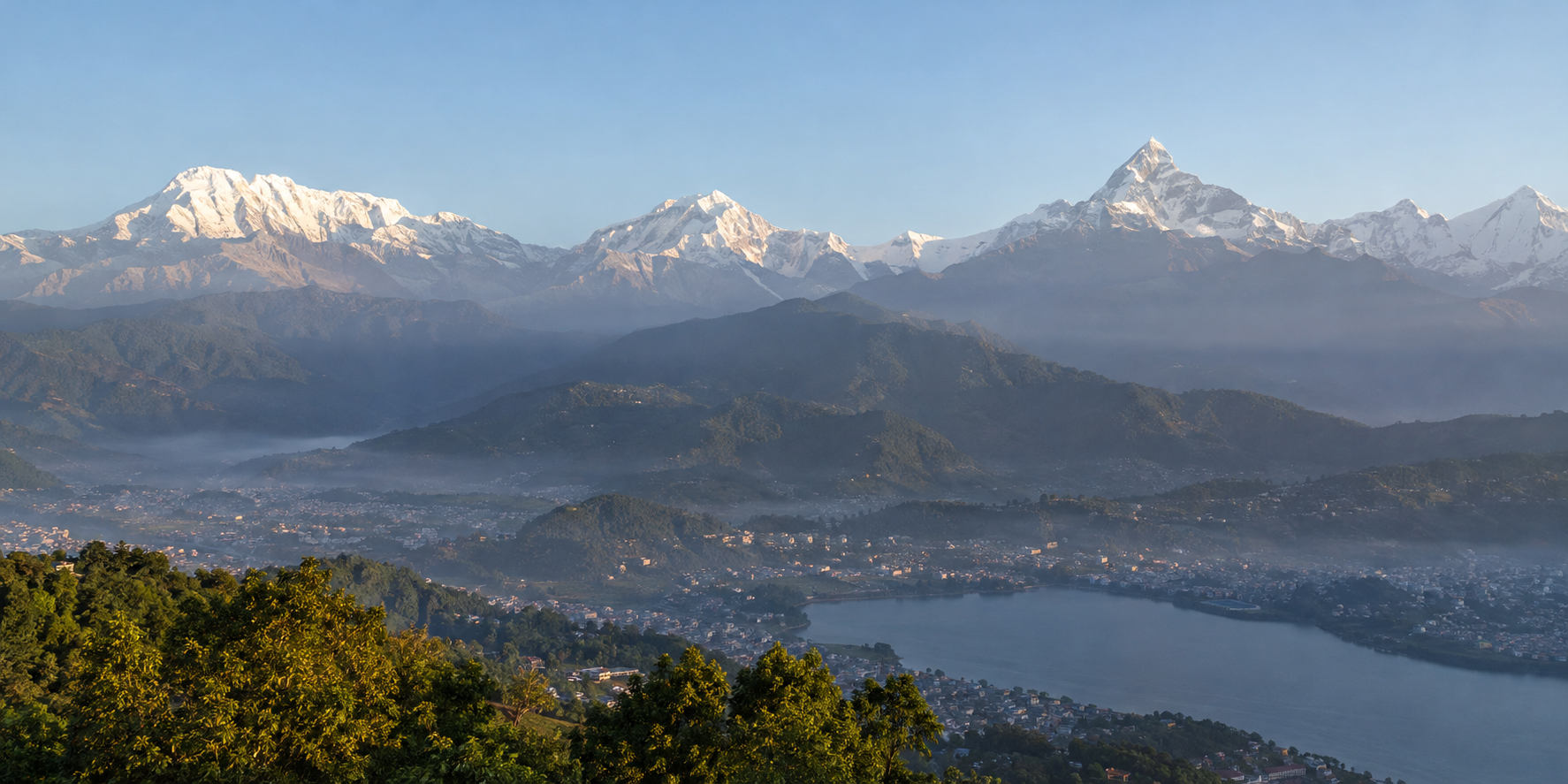
The Himalayan skyline from Sarangkot, Nepal: clear mornings can reveal the peaks, but cloud and valley haze often change the view. · AI-generated illustration
A mountain can be right in front of you and still disappear into cloud. A turquoise bay may look silver under an overcast sky, while a lake known for its perfect reflection can turn choppy before you reach the shore. Many of the most beautiful places in the world deserve their reputation, but their famous views depend on more than arriving at the right location. Season, visibility, water conditions and the direction of light can all shape what you actually see.
This list is not a ranking of countries, and beauty is not a competition with a single winner. Some travelers love sharp mountain skylines; others prefer quiet wetlands, dramatic coastlines or a desert beneath a dark sky. Instead, we look at 20 specific places through one practical question: when is their signature view most likely to be visible? The aim is to help you plan with realistic expectations, not promise that every visit will resemble a magazine cover.
That distinction matters because a clear view and a beautiful experience are not always the same thing. Mist can give a forest depth while hiding the peaks behind it. Rain can strengthen a waterfall but make a distant viewpoint difficult to enjoy. A calm lake may offer reflections without the golden light you hoped for. Understanding these differences helps you decide which conditions matter most to your trip, and which disappointments you can happily accept.
Each place follows the same format so you can compare it with the others without treating very different landscapes as interchangeable:
- Famous view: The particular scene people travel to see, whether that is an exposed summit, a mirror-like lake, a colorful landscape or a natural light display. This identifies what needs to be visible, rather than simply calling the whole destination beautiful.
- Promising seasonal window: The part of the year that generally offers a useful combination of visibility, light and landscape conditions. A promising window is a planning guide, not a guarantee of clear skies or a fixed date for a natural event.
- Weather trade-off: What you might gain and lose by choosing that window. Drier conditions can improve access but reduce waterfall flow; clearer skies may come with cold temperatures; warmer weather can bring haze or cloud.
- Typical visit versus ideal photograph: What a visitor can reasonably expect, compared with a photograph made during a brief break in the weather, an unusually still morning or a carefully timed return visit.
- One practical viewing tip: A useful action, such as leaving room for a second attempt, choosing a safe viewpoint with a different angle or checking wind conditions before planning around a reflection.
Seasonal patterns improve the odds; they never guarantee the conditions. A generally dry month can still have wet days, and a rainy season can produce striking clear intervals. Elevation and local terrain also matter: sunshine in a nearby town does not mean a mountain lookout is clear. Before setting out, verify local forecasts for the actual viewing area, including cloud, wind and visibility where available. Recent reports and webcams can add context, but neither tells you exactly what will happen after you arrive.
Access deserves a separate check. Trails, boat services, park entry arrangements and viewing areas may change because of weather, maintenance or conservation needs. For changing access rules, closures and schedules, check locally. Keep some flexibility where possible, and do not cross barriers or enter unsafe terrain to recreate an image. The best plan gives you a reasonable chance of seeing the famous view while leaving room to enjoy the place as it appears that day.
1–4: Mountain Skylines That Clouds Can Hide
Mountain skylines earn their place among the most beautiful places in the world, but their famous outlines are not always on display. A clear sky overhead can still leave a summit wrapped in cloud, while a distant range may disappear behind haze. For these four viewpoints, choosing a promising season helps—but leaving room for another look often matters just as much.
1. Sarangkot, Nepal
Above Pokhara, Sarangkot offers a Himalayan panorama dominated by the Annapurna range and the distinctive profile of Machhapuchhre. On a crisp morning, snowy ridges stand sharply against the sky, with foothills layered below. On a less cooperative day, you may see only fragments of the range through cloud, or a pale outline that is difficult to separate from the horizon.
Post-monsoon mornings are generally a good bet for clearer air, after seasonal rain has reduced some of the dust and haze. Some winter mornings also bring excellent visibility, although valley fog or low cloud can complicate the view. Spring may offer pleasant conditions around Pokhara while haze softens or hides the mountains. During the monsoon, persistent cloud often obscures the skyline, though brief openings are possible.
Arrive before sunrise if you want to watch the first light reach the peaks, but do not assume sunrise guarantees visibility. Check the local mountain forecast and ask about recent mornings. If your stay allows it, keep a second morning available rather than making one cloudy visit your only chance.
2. Matterhorn from Zermatt, Switzerland
The Matterhorn’s steep, recognisable profile is striking from Zermatt, but the summit can carry its own cap of cloud even when much of the valley is sunny. Summer generally provides broader access to mountain paths and viewpoints, subject to local conditions. It also brings days when cloud builds as the air warms, making an earlier outing worth considering.
Winter can deliver exceptionally crisp views, with snow giving the surrounding landscape a cleaner, more dramatic appearance. The trade-offs are cold, shorter daylight hours and more limited walking access. Mountain transport operations and trail conditions vary; check locally before planning around a particular viewpoint.
A visible summit and a perfect lake reflection are separate rewards. Reflection photographs also need an unfrozen lake, little wind and a suitable viewing angle. You could enjoy a completely clear Matterhorn while ripples break up its reflection—or find a still lake beneath a cloud-hidden peak.
3. Torres del Paine, Chile
The granite towers of Torres del Paine rise above a landscape where weather can change faster than your plans. Austral summer brings longer daylight hours and generally more options for exploring, but it is also associated with strong winds. Cloud may sweep across the mountains, briefly reveal their faces, then close in again.
Longer days mean more viewing opportunities, not guaranteed clear towers. Even a promising forecast cannot tell you exactly when each summit will emerge. Allow flexibility across your stay where possible, and judge outings by wind, precipitation and safety as well as photographic potential. Ask park staff about current conditions and any restrictions.
4. Mount Fuji from Lake Kawaguchi, Japan
From Lake Kawaguchi, Mount Fuji can look wonderfully close and distinct—or disappear almost entirely into humid air. Colder months often offer better visibility than summer, when moisture and cloud commonly soften the view. Early morning is usually worth prioritising, though neither the season nor the hour guarantees a clear mountain.
Cherry blossoms add another moving part. Their timing depends on the weather, while Fuji’s visibility depends on conditions that may change within hours. Peak blossoms and a cloud-free summit do not reliably coincide. Check current flowering reports locally, but decide which matters more: seasonal colour or the best chance of seeing the mountain.
5–8: Coastal Views Shaped by Sea Conditions and Haze
5. Nā Pali Coast, Hawaii
Kauaʻi’s Nā Pali Coast earns its place among the most beautiful places in the world through steep green ridges, narrow valleys and cliffs that fall straight into the Pacific. But the view depends on where you stand—or float. Many photographs showing the coastline’s full sweep are taken offshore. Land viewpoints, including those around Kalalau Valley, offer a different perspective: deep folds of mountain and a glimpse of ocean, sometimes hidden by cloud.
Summer generally brings calmer seas along this exposed coast, making it a more promising period for boat trips. It is not a guarantee. Swell, wind and local conditions can change a route or cancel a departure, while showers occur throughout the year. Winter’s larger surf can make access much more difficult.
Leave room in your itinerary to reschedule, and check locally before travelling to a departure point. If choosing a land viewpoint instead, remember that a clear coast does not guarantee a clear valley lookout. Never leave marked routes or approach exposed edges to recreate an offshore photograph.
6. Twelve Apostles, Australia
The Twelve Apostles rise from the Southern Ocean beside Victoria’s Great Ocean Road. Their appeal is not tied to blue skies: rough water and dark clouds can make the limestone stacks look especially powerful. Warm-season visits usually offer more comfortable conditions for walking between lookouts, but popular viewing areas can be crowded, particularly during holidays and around sunset.
Cooler months tend to be wetter and windier. That can produce dramatic scenery, but also uncomfortable waits and fewer opportunities to keep a camera dry. Flat, overcast light can reduce contrast between the cliffs, stacks and sea. Breaking sunshine may briefly reveal their colour and texture, while airborne spray can soften the view and coat your lens.
Bring a windproof layer and a lens cloth, and allow time for changing light rather than treating the stop as a quick photograph. Stay behind barriers and follow closures: cliff edges are unstable, and a dramatic sea is a reason to keep your distance, not move closer.
7. Amalfi Coast from Positano, Italy
Positano’s famous view gathers pastel buildings, a curved beach and steep coastal slopes into one frame. From an elevated terrace or path, the town can appear almost still. Those photographs hide the busy streets below, along with stairways, traffic and the effort of moving between the waterfront and higher neighbourhoods.
Spring and autumn often offer more comfortable walking temperatures than midsummer. They can also bring unsettled weather, with rain or cloud obscuring the coastal outline. Summer gives you a stronger chance of sunshine, but heat, crowds and haze can make both sightseeing and photography harder. Distant headlands may fade into a pale background rather than appear sharply defined.
Plan your viewpoint around the light, not just the season. Earlier outings can avoid the strongest heat and some foot traffic, though clear air is never assured. Check locally for ferry conditions if arriving by sea, and choose an accessible public viewpoint rather than assuming every terrace seen online is open to visitors.
8. Ha Long Bay, Vietnam
Ha Long Bay’s limestone towers often appear as overlapping silhouettes rather than crisp islands in bright turquoise water. Cooler-season mist and low cloud can reduce visibility, yet give the landscape its quiet, layered character. A grey day is not necessarily a failed visit; it simply reveals a different bay from the saturated postcard version.
Warmer months bring heat and a greater likelihood of heavy rain and storms. Conditions vary, but severe weather can disrupt or suspend cruises. Check locally for forecasts and official sailing decisions, and keep onward travel flexible where possible.
Choose a trip for time among the limestone scenery, not a promised water colour. Cloud cover, light and suspended sediment all affect its appearance. Allow yourself to enjoy mist, shifting shadows and emerging rock formations rather than waiting only for sunshine.
9–12: Lakes, Waterfalls and Fiords Beyond the Perfect Reflection
9. Lake Bled, Slovenia
Lake Bled’s island church and mountain backdrop earn it a place among the most beautiful places in the world, but the complete scene is not always visible. In autumn and winter, fog can settle over the water, hiding the island or separating it from the surrounding hills. Sometimes it thins into beautiful layers; sometimes it stays stubbornly grey. Allow time for a second look rather than assuming an early start guarantees clarity.
Reflections need still water, not simply sunshine. Summer brings swimming, rowing and sightseeing boats, while afternoon breezes can break up the surface. Early morning often offers a quieter opportunity, although wind and fog remain possible.
Choose your perspective deliberately. Shoreline paths put you close to the water, where reflections and changing light become the main attraction. Elevated viewpoints such as Ojstrica reveal the island’s position within the lake, but their trails can be slippery after rain or icy in winter. A higher viewpoint may rise above shallow fog—or disappear inside it.
10. Plitvice Lakes, Croatia
Plitvice is a connected landscape of lakes, cascades and forest, not one turquoise pool. Spring often brings strong waterfall flow as rain and snowmelt feed the system. Summer offers leafy surroundings but also busy boardwalks, making an uninterrupted view harder to find. Autumn adds woodland color, though the timing and intensity vary with weather.
The familiar turquoise appearance depends partly on light, viewing angle and water clarity. Sunshine can make the colors more vivid, while cloud softens them. Heavy rain may introduce sediment and cloud some water, so a wet spell can strengthen the cascades without delivering the transparent pools seen in promotional photographs.
Build your route around conditions rather than a single saved image. High water, snow or ice can restrict access, and some routes and transport services operate seasonally. Check locally for current openings before setting out. Boardwalks keep visitors close to the water, but they also limit where you can stop safely; leave room for others instead of blocking a narrow crossing for a photograph.
11. Iguazú Falls, Argentina and Brazil
At Iguazú, rainfall across the wider river basin matters more than the weather above your hotel. Flow can change substantially, and upstream rain may influence the falls even when local skies are clear. A fixed “best month” cannot reliably promise both maximum power and unobstructed views. Check locally for recent flow conditions and walkway access.
High water creates a thunderous spectacle, but more water can mean less visibility. Spray may swallow sections of the falls, soak visitors and cover camera lenses. Exceptionally high flows can also lead to access restrictions. Lower flows often reveal more individual cascades, rock faces and depth, although very low water can reduce the scale of the display.
The Argentine side generally offers closer encounters along walkways, while the Brazilian side provides broader panoramas. Neither escapes spray or changing conditions. Carry waterproof protection, keep lenses covered between photographs and treat rainbows as a bonus requiring sunlight and a suitable angle—not a guaranteed feature.
12. Milford Sound/Piopiotahi, New Zealand
Rain is part of Milford Sound/Piopiotahi’s character throughout the year. Low cloud can conceal the summits, including the upper outline of Mitre Peak, even while the lower cliffs remain striking. A clear forecast improves your chances of seeing the skyline, but mountain weather can change quickly.
A wet visit has its own rewards. Rain feeds temporary waterfalls that thread down the steep walls, adding movement and scale to the fiord. After drier weather, many of these disappear, leaving the permanent falls more prominent.
A reflective photograph requires calm as well as clear skies. Wind, rain and boat wakes disturb the surface, so blue sky alone is not enough. From a cruise, expect changing angles rather than a fixed mirror view. Wear waterproof layers and enjoy what conditions reveal: sharp peaks in clear weather, or waterfalls and cloud-wrapped cliffs in rain.
13–16: Open Landscapes Where Water, Dust and Light Decide the View
Across these four contenders for the most beautiful places in the world, an open horizon does not guarantee a clear view. Water changes the foreground, dust blurs rock formations, and the sun’s angle determines whether a landscape looks flat or richly textured. Plan for the conditions behind the photograph, not just the location.
13. Salar de Uyuni, Bolivia
Bolivia’s vast salt flat offers two very different scenes. During the wetter part of the year, generally the austral summer, shallow water can turn the surface into a mirror. In dry conditions, the attraction is the white expanse itself, often marked by polygon-shaped salt crusts stretching toward distant mountains.
The mirror needs more than rain. A suitable shallow layer of water must cover a reasonably smooth area, and calm conditions help preserve the reflection. Wind can ripple the surface, while uneven coverage can leave a patchwork of reflective pools and exposed salt. Clouds are not necessarily a problem: scattered clouds can make the reflected sky especially striking.
More water does not automatically mean a better trip. Flooding can restrict routes and access to islands within the salt flat. Ask an experienced local operator which areas are accessible and whether your priority is reflections or dry salt patterns. Conditions can vary across the salar, so check locally rather than treating a wet-season booking as a mirror guarantee.
14. Sossusvlei and Deadvlei, Namibia
The dunes around Sossusvlei and the dark, dead trees of Deadvlei reward an early start. Cooler dry-season mornings usually make walking more comfortable, although dawn can feel cold. Hotter periods demand greater caution: exposed sand, limited shade and the walk to Deadvlei can turn a manageable outing into a tiring one.
Occasional rain can change the wider desert landscape, sometimes bringing vegetation or, less commonly, water into the vleis. It can also affect access conditions. Do not expect Deadvlei to become a lake simply because rain has fallen somewhere nearby; ask about current road and walking conditions before setting out.
Low-angle light creates the celebrated dune contrast. Near sunrise or sunset, one dune face catches warm light while another falls into deep shadow, revealing sharp ridges and curves. Around midday, stronger overhead light reduces that contrast. Check gate hours and access arrangements locally: reaching a viewpoint at first light depends on where you stay and when entry is permitted.
15. Wadi Rum, Jordan
Spring and autumn often offer a more comfortable balance between daytime warmth and cool evenings than summer. However, pleasant temperatures do not guarantee crisp views. Wind can lift dust, soften distant cliffs and make exposed viewpoints uncomfortable. Cloud cover also varies, changing both the landscape’s color and the chances of a clear night sky.
The glowing orange and red rock in sunset photographs is real, but it is not an all-day appearance. Under high midday sun, formations can look paler and more muted, particularly when airborne dust reduces contrast. Warm, low sunlight brings out richer tones and longer shadows.
Arrange a route with time to pause before sunset rather than arriving at a viewpoint as the light disappears. Ask your guide about wind and visibility, and allow flexibility if dust obscures the horizon. A sheltered canyon may offer more rewarding detail than a sweeping panorama on a hazy afternoon.
16. Grand Canyon South Rim, USA
Summer brings heat, especially below the rim, along with thunderstorms that can interrupt sightseeing. Winter snow can beautifully outline the canyon’s ledges, but ice and temporary closures may complicate access. Spring and autumn can offer milder conditions, though temperatures and visibility remain variable.
A blue sky overhead does not ensure sharp canyon layers. Smoke from wildfires or prescribed burns, along with other haze, can soften distant formations. Check current park alerts, air-quality information and webcams before committing to a long drive for a particular view.
Allow more than one viewing window if possible. Morning and late-afternoon light reveal relief differently, while passing weather can transform the scene. During thunderstorms, leave exposed viewpoints and seek proper shelter; a dramatic sky is not worth lightning exposure.
17–20: Fleeting Color and Night Skies That Resist Fixed Dates
Some of the most beautiful places in the world offer their signature view only briefly—or reveal it differently from the photographs. Blossoms, lavender, autumn leaves and northern lights respond to conditions that no fixed travel date can guarantee. Plan around a likely season, then leave room to adjust.
17. Mount Yoshino, Japan
Mount Yoshino’s cherry trees spread across slopes at different elevations. Spring flowering generally moves uphill, with lower areas opening before the higher groves. This progression can extend your chances of finding blossoms, but it also means the whole mountain rarely looks identical at once. A viewpoint showing abundant flowers below may overlook trees still in bud farther uphill.
Temperature influences how quickly flowering advances. Warm weather can speed it up, while cooler spells can slow it down. Rain and wind may shorten the display once flowers are open. Use current blossom reports rather than treating last year’s peak dates as a promise. Check locally before deciding which elevation to explore.
Full-bloom photographs often capture a carefully chosen slope during a short favorable window. Your visit may include bare branches, fresh flowers and falling petals together. Expect crowds around popular paths and viewpoints during blossom season; arriving early may ease congestion, but it cannot guarantee solitude. Allow time to walk beyond your first crowded stop without entering private land.
18. Valensole Plateau, France
The lavender fields around Valensole are a summer attraction, but their appearance varies between farms and growing seasons. Flowering depends on weather, elevation and the plants being cultivated, including lavandin, a lavender hybrid common in the region. One field may be richly colored while another is less advanced—or already harvested.
Harvest schedules follow crop readiness, weather and farm operations, not visitors’ photography plans. Broad seasonal advice helps with initial planning, but check locally for current flowering and harvest conditions shortly before your trip. Avoid building the entire visit around one field pictured online.
These are working agricultural landscapes, not unrestricted photo locations. Stay on permitted paths, respect signs and ask before entering fields; an unfenced row is not an invitation. Never damage plants or block machinery to get a photograph. Midday can be hot, with little shade beside the fields, and strong light may flatten their color. Carry water and sun protection. Early or late outings can offer softer light and cooler walking, provided access is allowed.
19. Jiuzhaigou, China
Jiuzhaigou’s autumn appeal comes from the combination of wooded slopes, clear lakes and changing leaves. Yet foliage does not turn everywhere together. Elevation, tree species and local exposure create a shifting pattern across the valleys: green woodland may sit beside yellow trees, with stronger reds confined to particular slopes.
Rain can make leaves look richer while reducing distant visibility. Low cloud may hide mountain backdrops, although softer light can suit closer woodland views. Frost can influence the pace of seasonal change, while harsher cold and storms may shorten the display or strip leaves. A widely shared photograph may show one exceptional lakeside corner rather than conditions throughout the scenic area.
Check locally for foliage reports, weather and current route access. Give yourself time for several permitted viewpoints instead of chasing a single image. If cloud obscures the peaks, focus on nearby trees and water rather than assuming the whole visit has failed.
20. Tromsø’s Surrounding Landscapes, Norway
Aurora viewing around Tromsø needs darkness, sufficiently clear skies and suitable solar activity. Darkness alone is not enough: thick cloud can conceal a strong display, while a clear night may bring little visible activity. Summer’s bright nights are unsuitable for conventional aurora watching.
Cameras also change expectations. Long exposures can record color that looks faint or grayish to the naked eye, although strong displays can be vividly visible. Allow several nights if possible, check forecasts locally and choose safe viewing spots away from bright lights. Even with careful planning, unsuccessful nights are part of the experience.
Conclusion
The most beautiful places in the world are not always at their best in the same conditions. Clear air may reveal a distant mountain, while cloud softens a forest and rain gives a waterfall more force. Before choosing your travel dates, make one simple decision: which visual feature matters most to you? Name it clearly—a sharp skyline, a calm reflection, a landscape full of water, or a dark sky. That answer is more useful than a general search for the “best time to visit.”
Then accept the trade-off that comes with your choice. A season with better chances of clear mountain views may bring cold mornings or busier trails. Wetter months can create lush scenery but hide distant peaks. Long daylight hours allow more exploring, yet leave less darkness for watching the sky. You are not looking for a season without drawbacks. You are choosing the drawbacks you can comfortably live with in return for a better chance of seeing what brought you there.
Build a Plan That Can Bend
Give your main view more than one opportunity to appear. Where your budget allows, stay nearby rather than making a single rushed stop between long transfers. A spare morning or an uncommitted afternoon can let you respond to changing weather. Buffer time does not guarantee visibility, but it reduces the pressure to make one particular hour deliver everything. It also makes it easier to wait safely instead of pushing ahead in poor conditions.
Keep the viewing plan flexible too. Pick a preferred viewpoint, then identify an accessible alternative at a different height or facing another direction. Low cloud might hide a summit while leaving the valley open. Wind may spoil a lake reflection but make a sheltered shoreline pleasant to explore. Check forecasts, access notices and local advice close to your visit; seasonal opening arrangements and transport schedules can change, so check locally. Never treat a brief clearing as a reason to ignore closures, rough seas or storm warnings.
A useful final check before booking is to ask yourself:
- What am I hoping to see? Separate the essential feature from details that would simply be a bonus.
- What can I move? Keep a viewing window free of fixed commitments where practical, and read cancellation terms before paying.
- What would make the day worthwhile without it? Choose an alternative you genuinely want to experience, not something that only fills time.
Make the Alternative Part of the Trip
Your backup should work in the conditions that could hide the signature view. Another distant lookout is a poor substitute when the whole area is under cloud. A local museum, a guided cultural walk, a cooking class or a sheltered woodland trail may offer a better change of focus, depending on safety and availability. Choose it in advance, including how to get there. That small amount of preparation prevents disappointment from turning into a wasted day.
Finally, leave room to notice what the famous photograph leaves out. Quiet, overcast light can reveal texture without harsh shadows. Mist can draw attention to a nearby ridge rather than the whole horizon. Rain can bring the sound and scent of a landscape closer, provided you have suitable clothing and a safe place to walk or watch. None of these conditions needs to be called “better” than the view you wanted. They can simply offer something different and worth remembering.
Plan for the feature, allow for the weather, and give the place more than one way to impress you. A memorable visit does not have to match the photograph that first inspired it.
Up next
Travel & Destinations
20 Most Beautiful Countries to Visit in 2027: Mountains, Wildlife and Living Culture
Travel & Destinations
Are You Planning to Visit Pokhara in 2027? The Complete Guide to Nepal’s Lake City
Travel & Budget Planning