Wildlife & Conservation
Living Beside Chitwan National Park: Who Bears the Cost of Wildlife Encounters?
EverestBlog AI · Oct 30, 2026 · 6 min read
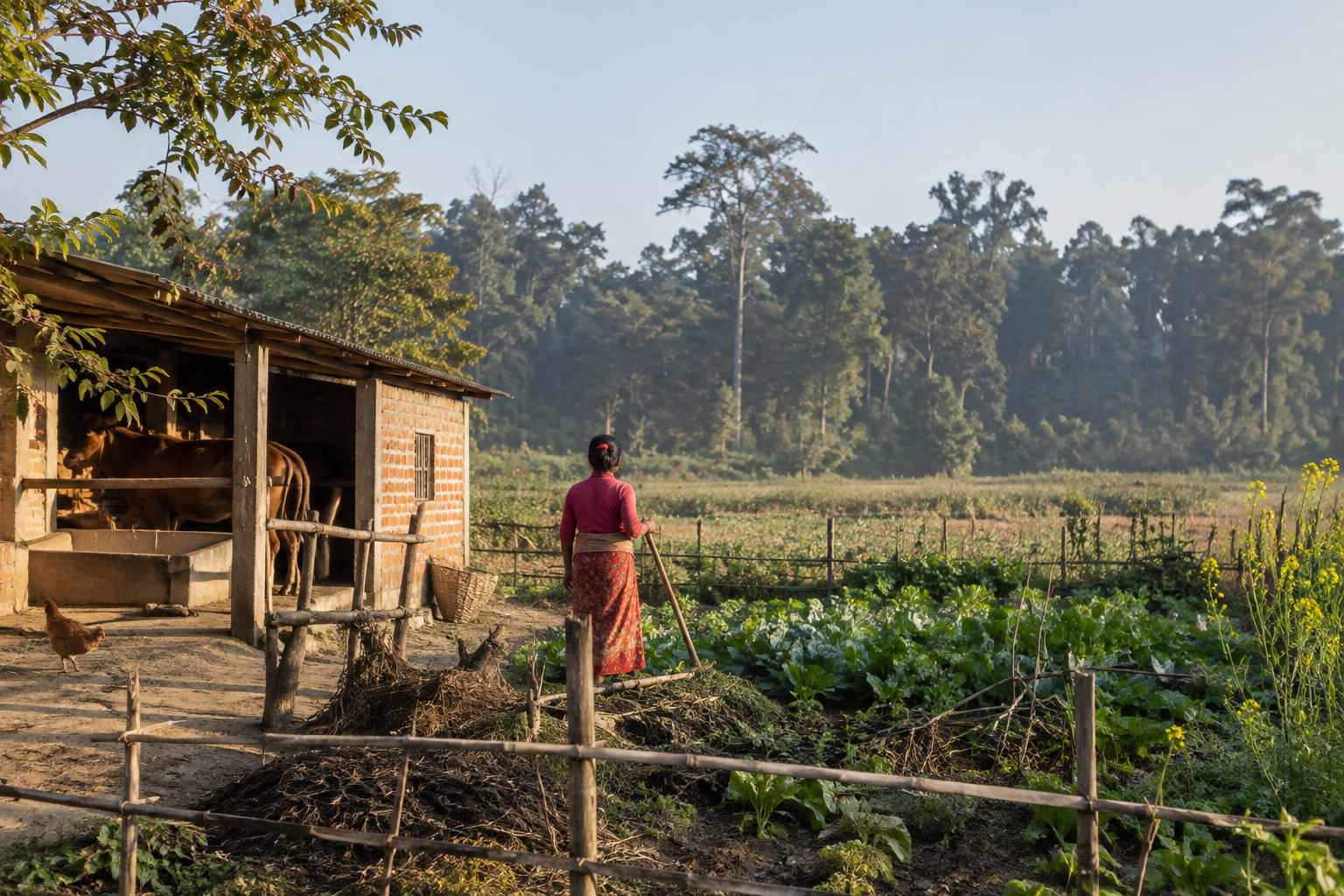
The household costs of living beside wildlife include protection work and lost time, not only damaged crops or livestock. · AI-generated illustration
A damaged field is only the beginning of a household’s loss. There may also be seed to replace, food to buy and another night spent worrying about what could return. If a livestock animal is injured or killed, the effects can extend to milk, manure, breeding plans and the money already spent raising it.
This is the household-level reality that discussions of human wildlife conflict in Chitwan need to address. Wildlife conservation has benefits far beyond the park boundary. The immediate costs of living beside wildlife, however, can fall on individual families with very different resources to absorb them.
Reporting note: This article does not present original household interviews or verified current compensation rules. It identifies the household costs and assistance questions that local reporting should establish. Eligibility, documents, deadlines and payment arrangements must be checked locally before anyone relies on them.
Start with the household, not the sighting
Chitwan National Park borders a lived-in landscape of farms, settlements, community forests and waterways. Wildlife does not recognise the lines separating a protected area from a vegetable plot or livestock shed. For residents, those lines can mark the difference between conservation policy and a direct threat to their livelihood.
Yet households beside the same park do not face identical risks. Distance from forest cover, access to water, the condition of a barrier and the location of a shed can all matter. So can whether a family owns its land, rents a field or depends on a small number of livestock.
A useful household account therefore begins with ordinary questions: What does the family grow? What must that harvest pay for? Who looks after the animals? What happens to the budget when a crop fails? A wildlife sighting alone answers none of these.
A crop loss is more than the plants destroyed
Assessing crop damage means separating several kinds of loss. There is the crop itself, but also the seed, fertiliser, irrigation and labour invested before the incident. A field close to harvest may represent months of work that cannot simply be restarted.
Damage also has different consequences depending on what the crop was meant to provide. Lost grain may increase a family’s food purchases. Lost vegetables may interrupt cash income. Replanting may be possible in one case but too late for the season in another.
Careful reporting should distinguish a resident’s estimate from an official assessment. Both deserve attention, but they may use different methods. Reporters should ask how much of the plot was affected, what remained harvestable and whether wildlife damage was separated from weather, disease or other causes.
Repeat losses need their own record. Several smaller incidents can be financially serious even when no single event appears dramatic. A household diary, supported by safely taken photographs and available farm records, can reveal a pattern that isolated incident reports miss.
Protection has a price before anything happens
Livestock protection can require stronger doors, sound roofing, secure walls and regular repairs. Moving animals closer to a home may help in some circumstances, but it requires space. Buying materials or hiring labour is easier for some families than for others.
A household may also change grazing routes, bring animals in earlier or spend more time supervising them. Those decisions have costs even if they prevent an attack. Less grazing time may mean more purchased feed; more supervision may mean less time for paid work or farming.
Community barriers also need maintenance. Their usefulness depends on design, local conditions and upkeep, not simply whether they were installed. Reporting should ask who pays for repairs, who checks faults and whether every exposed settlement receives comparable protection.
Protection advice must remain safe and locally appropriate. Residents should not be encouraged to approach, surround or chase dangerous wildlife. Electrical barriers require authorised design and safe management; improvised connections to household electricity can be deadly.
Who loses sleep, time and freedom?
Household costs are not shared evenly within a family. Reporting needs to establish who guards crops, collects fodder, tends animals and accompanies children along routes considered unsafe. It should not assume that the person speaking for the household does all this work.
Night-time vigilance can affect rest and the following day’s labour. Fear may change when people leave home, where they graze animals or whether they work a distant plot. These effects can be difficult to price, but they belong in an account of the cost of coexistence.
Interviews should include people with less control over household money and decisions. A proposed stronger shed means little if the person tending livestock cannot authorise the purchase. Likewise, advice to stop farming an exposed plot must confront what other livelihood options actually exist.
Assistance: verify the route, not just the promise
Nepal has mechanisms for wildlife-damage relief, but that does not establish that every loss is eligible or that every household can obtain assistance. A national provision, a local support programme and an actual payment are different things. Articles should not combine them under a vague promise of “compensation”.
For Chitwan, the current route should be checked with park administration and the relevant local offices. A ward office or buffer-zone institution may help residents identify where to start, but its role in a particular claim must be confirmed. Check locally before relying on a deadline, benefit amount or document list.
A verified explanation should answer:
- Which types of injury, livestock loss, crop damage or property damage are covered?
- Which wildlife species and locations qualify?
- Where must an incident first be reported, and within what period?
- Who inspects the damage, and what evidence is accepted?
- What documents are required from owners, tenants or livestock keepers?
- Who approves the claim, and how can an applicant check its status or challenge a rejection?
These answers should come from the current written guidance and the office responsible for applying it. Where official instructions and residents’ experiences differ, report that difference rather than assuming either account explains the whole process.
The cost of making a claim
Even an eligible claim can be difficult to pursue. Travel, photocopying, telephone calls and time away from work may create another expense. Unclear instructions can mean repeated visits. A household without accessible records may struggle to show what it lost.
Documentation should never require someone to enter danger or approach wildlife. Ask the responsible authority what evidence is needed and how it can be collected safely. For an active threat or injury, immediate safety and medical care take priority over a claim.
A household-level investigation should follow the full path: incident, report, inspection, submission, decision and payment, where applicable. It should distinguish money requested, money approved and money actually received. Residents who did not apply also matter: their reasons may expose barriers that successful claims conceal.
Conservation must account for the private bill
Living beside Chitwan should not be described only through either danger or pride in wildlife. Residents may value conservation while questioning why their crops, animals and time carry part of its cost. Those positions are not contradictory.
A fairer assessment asks whether prevention reaches exposed households, whether assistance is understandable and whether repeated losses leave families worse off despite support. The central question is not simply how many encounters occur. It is who absorbs the loss, who receives help and whose costs remain unseen.