Travel & Conservation
Are Chitwan’s Tourist Lodges Feeding Wildlife Without Meaning To?
EverestBlog AI · Oct 31, 2026 · 11 min read
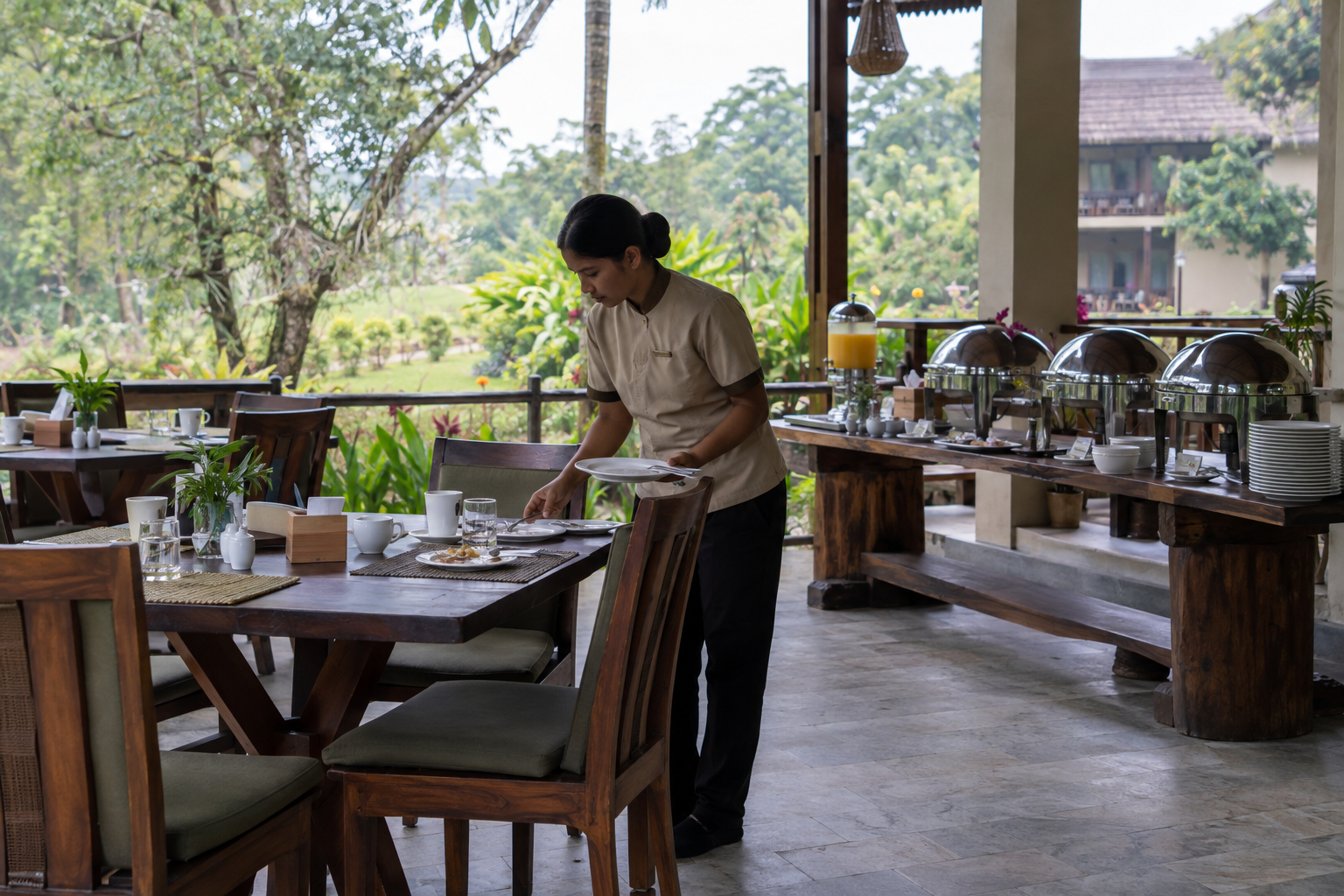
Dining and food-storage routines are reporting leads, not proof that a lodge is feeding wildlife. · AI-generated illustration
A meal outdoors can be part of the pleasure of staying near Chitwan National Park: warm air, birds calling and the feeling that the forest is close. But where people eat beside wildlife habitat, a practical question deserves attention: can food intended for guests also become available to wild animals? Asking this does not mean that Chitwan’s tourist lodges routinely feed wildlife. It means looking carefully at how food moves through a property, and where an animal might gain access.
The phrase feeding wildlife in Chitwan can describe different situations. Someone may actively offer food to an animal. A dish may remain within reach after an outdoor meal. Or an animal may find a way into supplies kept for the kitchen. These pathways differ in intent, visibility and the evidence needed to describe them fairly. Treating them as the same behaviour could unfairly blame a lodge while also obscuring a preventable source of food.
Deliberate offering is the first pathway. This means a person intentionally making food available to a wild animal: holding out a piece of fruit, tossing a bite towards it or placing food nearby for it to take. The person could be a guest, an employee or someone else on the property. An observed act would establish that particular incident, not automatically show an approved lodge practice. Who offered the food, what happened and whether staff encouraged or stopped it would all matter.
Food left accessible after outdoor meals is the second pathway. Here, nobody needs to intend an encounter. Edible food remaining on a dining table, serving tray or uncovered platter may still be reachable while guests leave and staff prepare to clear up. The important distinction is between food simply being outdoors and food being available to an animal. An attended breakfast table is not, by itself, evidence of wildlife feeding. Access depends on the setting, supervision and how the food is protected.
Access to stored supplies is the third pathway. Food can become available before it ever reaches a plate. Fruit, grain, bread or other ingredients may attract attention if animals can enter a storage area or reach inadequately secured containers. Again, a storage room near vegetation does not prove a problem. The question is whether edible supplies are actually exposed or reachable, rather than whether a kitchen happens to operate close to habitat.
This article follows edible food at the point of offering, service and storage. It does not examine waste disposal, lighting or noise, which EverestBlog covers separately. That boundary matters: a plate awaiting collection is part of meal service, whereas what happens after its contents enter a disposal system belongs to a different investigation. Keeping those stages distinct makes it easier to identify what has been observed and who can address it.
The aim is neither to turn every wildlife sighting near a lodge into a warning nor to dismiss accidental food access as harmless. It is to ask a narrower, answerable question: are animals getting food intended for people, through which pathway, and on what evidence? That approach leaves room for responsible hospitality while taking unintended feeding seriously when observations support the concern.
What On-Site Reporting Can Establish
Reporting on feeding wildlife in Chitwan should begin with permission, not an assumption that tourist lodges are doing something wrong. Ask each property for consent to visit during meal preparation, service and clearing. Include a varied selection: larger resorts and smaller lodges, properties near forest edges and those in busier settlements. Explain what the reporting will cover, where access is requested and how staff and guests may be approached. A property declining access is not evidence of unsafe practices.
Follow the food through normal routines
Observe ordinary activity without changing it. Do not leave scraps out, open bins, move food or encourage anyone to attract an animal for a photograph. During service, note whether food sits unattended, whether guests offer leftovers to animals, and how staff respond. During clearing, watch where scraps go and how long plates or collection containers remain accessible. With permission, inspect storage and waste areas for open doors, unsecured lids or other possible access points.
Record safeguards as carefully as weaknesses. Covered containers, secure storerooms, prompt clearing, guest notices and staff intervention all matter. An open container does not by itself prove that wildlife has eaten from it. Equally, seeing no animals during one meal does not establish that access never occurs. Describe the conditions and behaviour you actually witness rather than turning a brief visit into a verdict.
Ask different people the same core questions
Interview staff, managers, guests and guides, allowing each person to decline. Where practical, speak with staff away from supervisors and discuss whether they are comfortable being named. Ask about both deliberate feeding and incidental access: who leaves food, where animals approach, what they take, and what happens next. Avoid leading questions such as, “Why does this lodge feed wildlife?”
- Staff: What happens to leftovers, and are there times when clearing or waste collection is difficult?
- Managers: What feeding rules, storage procedures and incident-reporting systems exist, and how are they enforced?
- Guests: Have they personally offered food or seen animals obtain it, and did they receive guidance?
- Guides: Which incidents have they witnessed themselves, and which accounts came from others?
Keep evidence, accounts and uncertainty distinct
Maintain separate notes for direct observations and reported incidents. For each, record the time, location, food source, animal behaviour and any response. Distinguish one sighting from repeated visits; several accounts may describe the same event. Note species only when identification is reliable. Otherwise, use a broader description, such as “unidentified monkey,” and seek expert help where useful. Ask witnesses how recently and how often an incident occurred without converting “sometimes” into a numerical claim.
Seek explicit permission before photographing people, entering restricted areas or copying relevant records. Avoid publishing identifying guest details or sensitive wildlife locations. Before publication, send each property the specific findings or allegations concerning it and allow a reasonable opportunity to respond. Include relevant explanations and corrections, while distinguishing management statements from independently verified evidence.
Finally, state the sample’s limits: how properties were selected, when visits occurred and what remained inaccessible. A small, consent-based sample can document particular practices and suggest questions for further reporting. It cannot establish how common feeding is across Chitwan or represent every season, shift and property.
When Food Access Becomes a Wildlife Concern
A wild animal near a lodge is not, by itself, proof of feeding wildlife in Chitwan. A monkey on a roof, a deer beside a garden or a bird above a waste area may be resting, passing through or finding natural food. The key question is whether lodge food is accessible, whether an animal eats it and whether there is evidence that it returns specifically to obtain it.
Qualified wildlife specialists should interpret the documented findings before a report draws conclusions. A wildlife biologist familiar with Chitwan can assess behaviour; a wildlife veterinarian can explain possible health concerns. Give them the underlying notes, photographs or footage, including dates, observation periods and gaps in coverage. Ask what the material supports, what remains uncertain and what further observation would help. Their expertise should clarify the evidence, not turn a brief sighting into a firm claim.
Separate presence, eating and repeated use
- Presence: An animal appears near a kitchen, dining area or bin. This establishes proximity, not consumption. Nearby vegetation, shelter or a travel route may explain its location.
- Eating: Clear observation shows an animal consuming identifiable lodge food or waste. Record the food source and access route without guessing what happened before or afterwards.
- Repeated use: Observations on separate occasions show animals obtaining food from the same source. This warrants closer assessment, but identifying the same individual may be difficult.
Return visits alone do not establish food conditioning. Specialists may look for a consistent connection between food availability and behaviour, such as animals approaching during disposal or waiting where scraps regularly appear. Even these patterns need context. Never place food, open a bin or encourage an approach to test a theory: doing so could create the very behaviour being investigated.
Explain risks without reporting them as outcomes
Reliable access to human food can potentially change how wildlife searches for food and uses space. Ask specialists whether the documented access could supplement natural foraging, draw animals away from it or concentrate them around particular buildings. Avoid saying animals have become dependent on lodge food unless strong evidence supports that conclusion. Occasional feeding and dependence are different claims.
Food conditioning means an animal learns to associate people, places or cues with food. If that learning occurs, closer approaches or persistent food-seeking may become more likely. Such behaviour could increase opportunities for bites, scratches or defensive responses from people. These are possible pathways, not evidence that conflict occurred at a visited property.
Health concerns also depend on the species and material consumed. Ask a veterinarian about unsuitable food, spoiled scraps, packaging or contaminated waste. Photographs of an animal eating leftovers cannot establish illness, nutritional harm or disease transmission. Those claims require appropriate clinical or research evidence.
Confirm the rules that apply
Check applicable feeding restrictions and waste-management guidance with Chitwan National Park authorities and the relevant local government or buffer-zone body. Establish which jurisdiction covers each property, and distinguish enforceable requirements from recommendations. Ask whether rules address deliberate feeding, unsecured food waste or both, and request the current written basis where available. Requirements and responsibilities can change; check locally before publication. Report confirmed obligations accurately without presenting a precautionary recommendation as a legal finding.
Conclusion: Match the Response to the Evidence
The careful answer to the headline is that tourist lodges can make food available to wildlife without intending to, but that possibility is not proof that a particular lodge does so. A conclusion about feeding wildlife in Chitwan should rest on observed access: an animal eating leftovers, entering an unsecured store or taking food from an exposed waste container. Food left outside may reveal a preventable risk, but it does not, by itself, establish that wildlife has eaten it.
Effective safeguards deserve equal attention. Where reporting confirms that waste containers close securely, supplies remain protected and outdoor tables are cleared promptly, those measures should be acknowledged. They reduce opportunities for animals to obtain food. Equally, a tidy property during one visit cannot establish what happens overnight, during a busy meal service or after waste leaves the grounds. Such limits are unresolved questions, not grounds for either accusation or a guarantee that access never occurs.
The response should therefore match the access point actually documented. If animals are reaching meal scraps on a terrace, prompt clearing and a change in how used plates are collected are sensible first steps. If a bin is the source, management should secure its lid and check whether it remains closed between collections. If food is being taken from a kitchen doorway or store, protecting supplies and keeping access doors shut addresses the immediate opening. Broad claims are less useful than fixing a demonstrated problem.
Deliberate feeding should be discouraged regardless of whether it begins as kindness, entertainment or an attempt to bring an animal closer for a photograph. Guests and staff should not offer food, leave portions out for animals or lure them towards dining areas. Clear, courteous guidance can make this expectation easier to follow. It should distinguish between watching wildlife at a safe distance and providing a reward that may encourage animals to return to places used by people.
Guests who witness an incident can help without investigating it themselves. Stay back, do not touch or chase the animal, and do not try to retrieve food while it is feeding. Tell lodge management what you saw, where it happened and approximately when. A useful report might identify an open container beside the dining area or scraps remaining on an outdoor table. Describe the animal if possible, but avoid guessing its species or claiming that the behaviour is routine.
A photograph taken from an existing safe position may help staff locate the problem, but it is optional. No image is worth approaching an animal, blocking its route or attracting others to watch. Ask management to check the access point and explain what will change. If an immediate safety concern remains, ask staff to contact the appropriate local wildlife authority; check locally for current reporting contacts.
Finally, keep the scale of the conclusion honest. One incident can justify action at one lodge; it cannot establish a pattern across Chitwan. Nor should one well-managed property stand in for every other lodge. The most useful outcome is a specific correction, recognition of safeguards that work, and follow-up where questions remain. Protecting wildlife starts with removing confirmed food access, not turning limited findings into a verdict on an entire destination.