Travel & Conservation
After Dark in Sauraha: Can Tourist Lodges Make Room for Wildlife-Friendly Lighting?
EverestBlog AI · Oct 31, 2026 · 11 min read
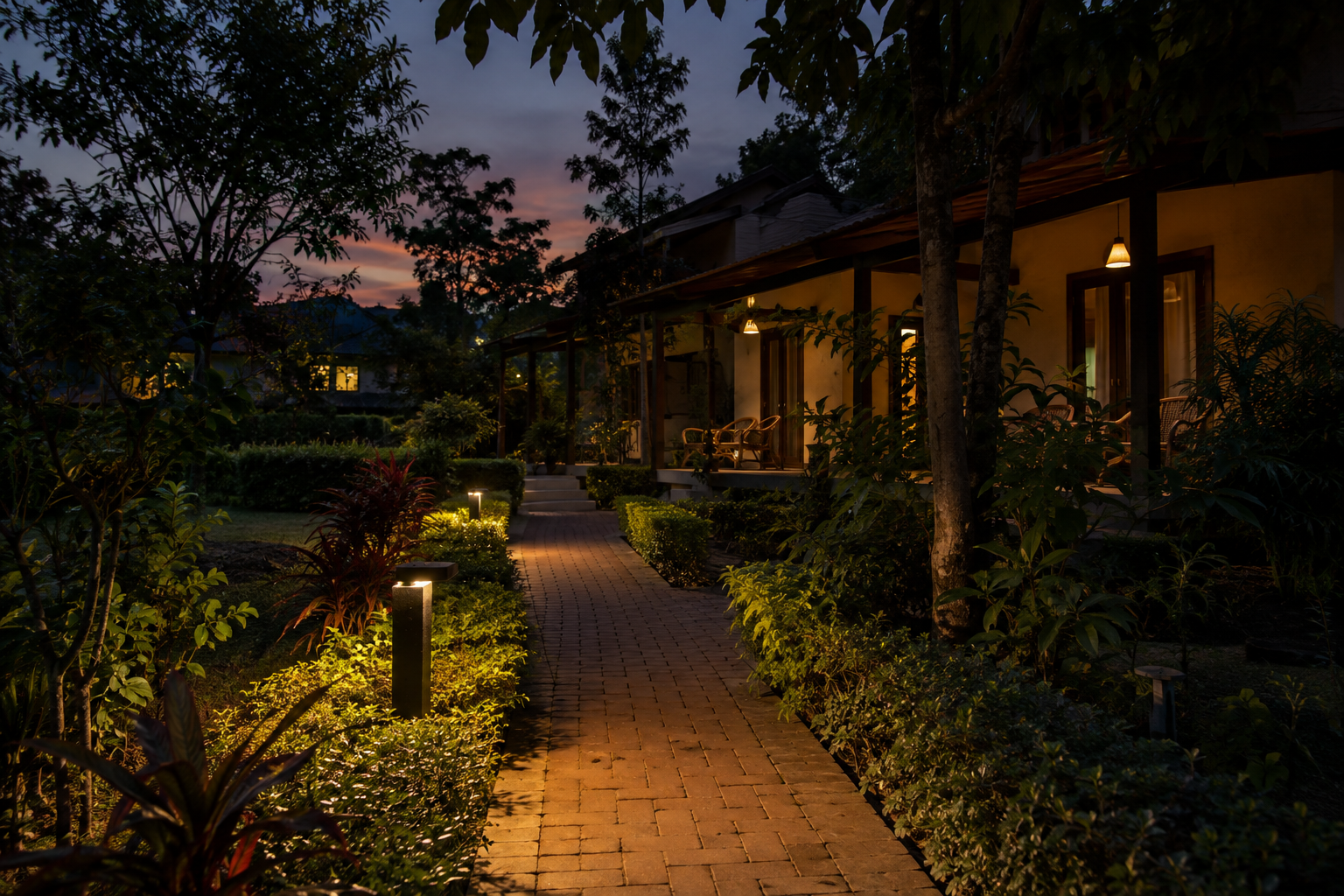
Outdoor lighting is a practical decision for lodges: where is light needed, and where could spill into surrounding vegetation be reduced? · AI-generated illustration
At a participating lodge in Sauraha after dark, the first question is simple: what does each outdoor light help someone do? The evening scene needs to be recorded, not embellished. Is a guest finding a step, a worker carrying supplies, or a security guard checking an entrance? Is another lamp shining into planting or beyond the property boundary without an obvious task? These are questions for direct observation. Without verified field notes, we cannot describe a particular lodge’s lights, visitors or wildlife as though we have watched them.
That distinction matters for an investigation into wildlife friendly lighting Chitwan. The aim is not to declare that every bright lodge is careless, or that darkness alone makes a property responsible. Outdoor lighting can help people move safely and staff work comfortably. But a light that serves an entrance may also spill well beyond it. A lamp needed during dinner service may have little purpose after the area closes. The useful question is where light is necessary, where it reaches and when its job ends.
Sauraha’s role as a gateway to Chitwan National Park makes those choices worth examining. Artificial light at night can affect wildlife, including the movement and behaviour of some insects, birds and bats. Effects vary with the species, the surroundings and the characteristics of the light. That does not establish that a particular lodge lamp is harming a particular animal. It does give lodges a reason to look carefully at avoidable illumination, especially where buildings meet gardens, vegetation or other habitat. Precaution should not be confused with proof.
The proposed investigation uses a voluntary lighting audit: participating lodges agree to a structured look at their outdoor lights and the reasons for using them. This is an invitation to examine decisions, not a surprise inspection or a public ranking. Staff knowledge is essential. A seemingly unused route may serve a late shift; an apparently decorative light may also reveal a change in ground level. Equally, a fitting may remain on because nobody has reviewed its timer or because its switch controls several unrelated areas.
Participation sets an important boundary around any findings. Lodges that volunteer may already be interested in conservation, may have more time to help, or may face different constraints from businesses that decline. Their buildings, grounds and guest needs may differ too. Participating lodges cannot represent all of Sauraha. An audit can describe what observers find at those properties during the visits made. It cannot establish how every lodge operates, how lighting changes across seasons, or whether an adjustment produces a measurable wildlife benefit without further evidence.
Nor should the exercise ask guests or workers to accept unsafe paths in exchange for a greener image. The starting point is to distinguish useful illumination from unnecessary reach, brightness or operating time, while listening to the people who rely on it. Any later trial should remain open to correction if access or working conditions suffer. For now, the investigation stays with a manageable question: can a lodge provide the light people need while reducing light that has no clear purpose? The answer should begin with observation and conversation, not a promise of wildlife recovery.
The Audit: What Is Lit, When and Why?
A useful audit begins with permission from the lodge owner or manager, not with switching lights off. Agree on which outdoor areas can be inspected, when staff can accompany the visit, and whether photographs are allowed. Avoid guest rooms, private spaces and neighbouring property without consent. For wildlife friendly lighting Chitwan projects, this first step should establish what each light does before anyone proposes changing it.
Map each light and its purpose
Draw a simple site plan covering paths, entrances, parking areas, signs and garden edges. Give every fixture a reference number and mark its position. Walk the site in daylight to inspect fittings safely, then return after dark to see where their light actually falls. Keep routes and conditions comparable between visits, and note temporary lighting separately.
For each fixture, use a checklist:
- Purpose: Identify the task, such as showing a step, lighting a reception entrance or displaying a sign. Ask staff whether the light serves more than one purpose.
- Direction and shielding: Record whether it points down, sideways or upward, and whether a cover or housing blocks light from unwanted directions. Note exposed lamps and glare from normal walking positions.
- Hours and controls: Record usual switch-on and switch-off times, manual switches, timers and motion sensors. Separate reported routines from operation witnessed during the audit.
- Technical details: Copy wattage and colour temperature only from readable labels, packaging or reliable maintenance records. Mark missing information as unknown; do not guess from brightness or appearance.
Check where the light travels
From permitted locations, document spill toward shrubs, trees, garden boundaries and neighbouring land. Mark the direction on the plan and describe what is illuminated beyond the intended area. Photographs can help compare conditions, but automatic camera settings can make a dim scene look bright. Record camera settings where possible and do not treat photographs as light measurements.
If taking readings, state the meter used, units, measurement positions, sensor height and orientation, time, weather and which lights were operating. Use the same method for later comparisons. Note moonlight and other nearby light sources. Phone apps may provide rough indications, but their readings should not be presented as calibrated measurements. Do not enter vegetation or disturb animals to obtain a reading.
Ask people, then establish the baseline
Speak with reception staff, guards, cleaners and maintenance workers, including those on late shifts. Ask where visibility matters, which fittings fail, and whether controls are practical. Invite guests to identify glare, confusing routes, steps or uneven surfaces. Include accessibility needs: a route that feels clear to one person may be difficult for someone with low vision or limited mobility. Record security concerns without assuming that greater brightness automatically resolves them.
Finally, gather baseline energy information where available. A dedicated outdoor-lighting meter offers measured consumption; a whole-lodge bill does not isolate lighting from cooling, kitchens or other loads. If estimating use, list each known wattage, fixture count and assumed operating hours, then show the calculation in kilowatt-hours. Label estimates clearly and flag unknown wattages or variable schedules. Ask about seasonal changes rather than treating one evening as typical. Keep dated records so a later trial can be compared with this baseline.
Alternatives Under Review: Evidence, Costs and Installation
The audit should turn a general wish for darker grounds into a shortlist of changes. For each fixture, ask what task it serves, where its beam falls and whether it needs to stay on all night. A path light, a kitchen entrance and a decorative tree spotlight have different purposes. Reviewing wildlife friendly lighting Chitwan options means testing those differences, not buying one “eco” bulb for every socket.
Ask what the evidence actually shows
Before choosing equipment, ask wildlife specialists familiar with Chitwan which species or behaviours deserve attention around the lodge. Could lights draw insects towards buildings, alter bat feeding routes or disturb animals using nearby vegetation? These are questions to investigate, not effects to assume. Ask specialists to identify supporting studies, field observations and gaps in knowledge.
Keep Chitwan findings separate from research elsewhere. A local observation should record the species, location, lighting conditions and behaviour, where possible. Studies from other regions can flag plausible risks, but differences in habitat, species and lamp characteristics limit direct comparisons. Even among bats or insects, responses can vary. If no relevant local evidence is available, say so and favour changes that reduce unnecessary exposure without compromising essential visibility.
Match each change to an audit finding
- Shield or reposition: Where light spills into trees, water or neighbouring habitat, assess shields and mounting adjustments that direct it onto the required surface. Check for glare and new dark patches along steps.
- Reduce output: If a fixture lights more area than staff or guests need, trial a lower-output lamp or compatible dimming. Assess visibility on site rather than relying on product descriptions.
- Use timers: Match operating periods to actual use. Decorative lights and closed service areas may not need lighting after activity ends; essential access routes need separate consideration.
- Set sensors carefully: Limit detection areas and use the shortest practical activation period. Vegetation, passing animals or traffic can cause repeated switching. Test sensitivity and positioning before wider installation.
- Switch fixtures off: Remove unnecessary lighting from the operating schedule first. Confirm that another lamp does not simply get added to compensate.
Warmer light is another candidate, not proof of wildlife safety. Colour temperature alone does not describe a lamp’s full spectrum or biological effects. Ask for product specifications, and consider warmth alongside brightness, direction and duration. A warm lamp shining into habitat all night may still create avoidable exposure.
Price the installation, then calculate cautiously
Obtain written quotes from local suppliers and electricians for suitable options; check locally. Request itemised equipment and labour costs, including shields, brackets, wiring changes and controls. Ask about rain and moisture protection, compatibility with existing fittings and dimmers, replacement availability, cleaning access and expected upkeep. Have an electrician assess outdoor electrical safety rather than treating a bulb change as the whole job.
Estimate energy savings only where fixture counts, wattage, operating hours and the applicable electricity tariff are documented. Calculate kilowatt-hours as watts multiplied by hours, divided by 1,000, then compare existing and proposed use. State assumptions, including seasonal schedules and sensor activation time. If these are unknown, measure them first. Separate electricity savings from installation costs and maintenance: a cheaper bill does not establish a wildlife benefit.
Conclusion: A Small Trial With Clear Checks
Sauraha does not need to change every lodge light at once. A useful next step is a voluntary trial at willing lodges, starting with a few paths, entrances and outdoor seating areas. For wildlife friendly lighting Chitwan needs local testing, not a label attached to a new bulb. The aim should be modest: find out whether lodges can limit unnecessary light while keeping guests and workers comfortable and able to move safely.
Begin with a baseline period before changing equipment or schedules. Each lodge should record which trial lights operate, their hours, electricity consumption where measurable, and where their light reaches. Note occupancy, weather and unusual events so comparisons have context. Then introduce changes in phases, such as redirecting one group of fittings before shortening operating hours elsewhere. Changing everything together would make it harder to understand what helped or caused problems.
Give each task a named owner. A lodge manager should approve the trial, keep records and handle complaints. A qualified electrician should install or alter fittings, check electrical safety and retain a practical way to restore essential lighting. A staff lead should explain controls, switching times and exceptions to reception, housekeeping, security and maintenance teams. A designated reviewer should compare results with the baseline. Wildlife specialists should design any animal monitoring; lodge staff should not be expected to invent a survey.
Agree on the checks before the trial begins, and use the same recording methods throughout:
- Path visibility: Walk trial routes after dark, checking steps, uneven surfaces, signs and entrances. Include staff who work late and, where possible, people with different mobility or vision needs. Record glare as well as dark patches.
- Guest feedback: Ask short, neutral questions about finding rooms, comfort and visibility. Keep complaints and positive comments together, and distinguish personal preference from a specific hazard.
- Operating hours: Log actual switching times, sensor activation and manual overrides. Repeated overrides may reveal a poor schedule, unsuitable controls or unclear staff guidance.
- Energy use: Use a dedicated meter where practical. Otherwise, clearly label estimates based on lamp wattage and recorded hours; whole-lodge bills cannot reliably isolate lighting changes.
- Light spill: Check agreed boundary points and nearby vegetation from consistent positions. Repeat photographs can document direction, but comparable light-meter readings need a consistent method and suitable equipment.
Where feasible, specialists could add wildlife monitoring with appropriate permissions and methods that avoid disturbance. Check locally on permissions and available expertise. Without a sound design, sightings around a lamp may be misleading: fewer insects could reflect weather, season or altered attraction rather than healthier populations. Reduced spill or electricity use alone does not demonstrate a wildlife benefit. Those are useful operational findings, not proof of ecological improvement.
At agreed reviews, keep changes that maintain visibility, work reliably and meet the trial’s measurable lighting goals. Adjust settings where feedback or checks expose fixable problems. Reverse changes promptly if they create hazards that cannot be resolved safely. Publish a short, honest summary of what improved and what remains unverified, including effects on particular species and longer-term outcomes. The trial should end with a better-tested practice—or a clear reason to reconsider—not a declaration that the wildlife question is solved.