Travel & Conservation
Before Booking an Elephant Activity in Chitwan: What Welfare Evidence Can Visitors Check?
EverestBlog AI · Oct 31, 2026 · 7 min read
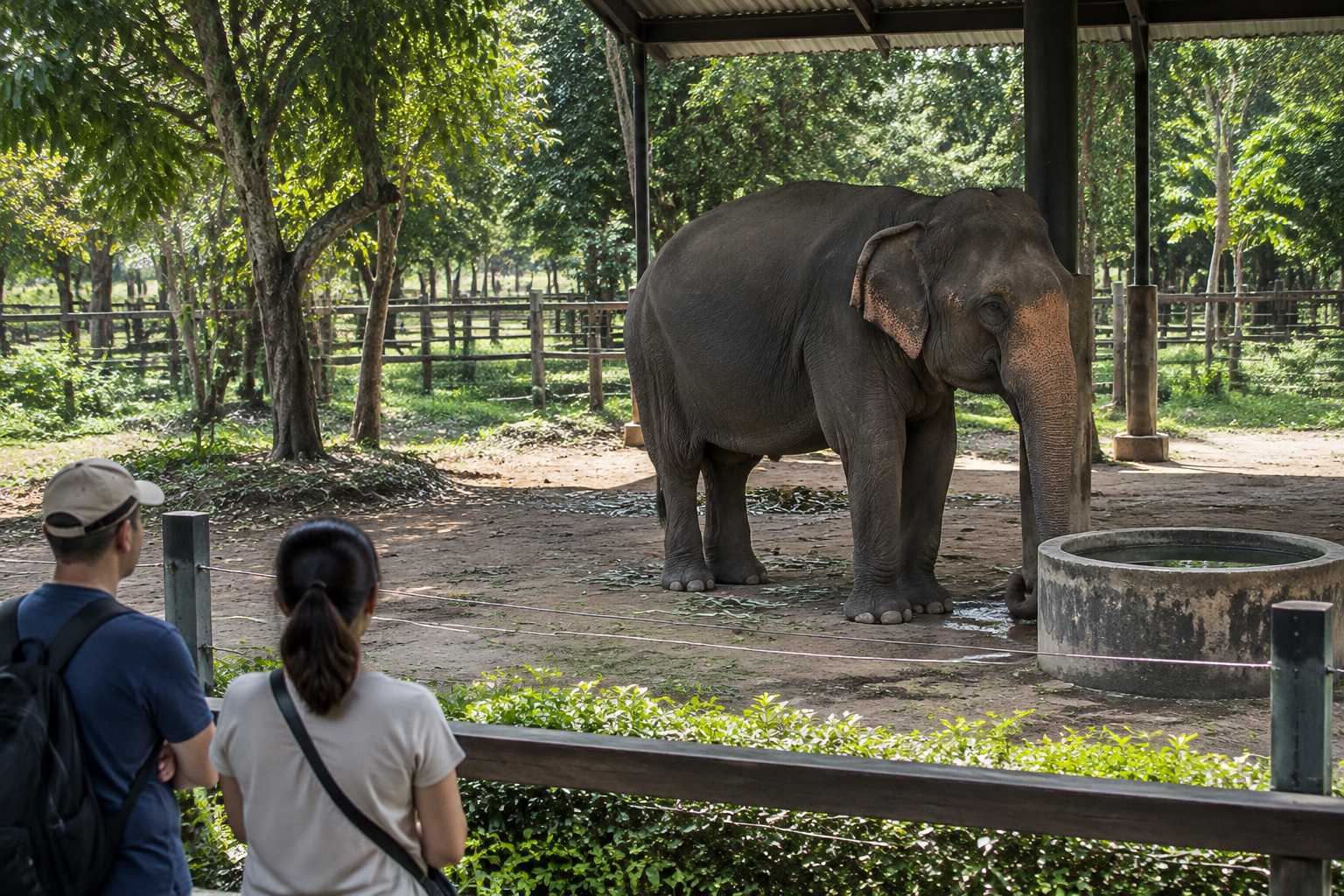
A brief visit reveals only part of an elephant’s day; visible conditions need to be considered alongside records and informed assessment. · AI-generated illustration
Before booking an elephant activity in Chitwan, start with a question that reaches beyond your time slot: what is this elephant’s life like during the rest of the day and night? A visitor may remember a close encounter, a photograph or a walk beside an animal. For the elephant, that encounter is one part of a routine shaped by movement, food, social contact, handling, rest and access to veterinary care. Those daily conditions matter more than how moving or enjoyable the experience feels to a guest.
Chitwan elephant tourism welfare is a question to investigate, not a promise attached to a destination or business. This article does not endorse an operator or assume that every activity has the same welfare consequences. Instead, it starts from a practical principle: a booking should rest on credible information about the elephants’ living conditions and care, not simply on appealing photographs, reassuring language or positive visitor reviews. A review can describe friendly staff and a memorable afternoon without revealing much about an elephant’s health or opportunities to make choices.
Words such as ethical, sanctuary and rescue can sound like welfare guarantees. On their own, they establish no standard of care. “Rescue” may describe an animal’s reported history, but it does not explain its present circumstances. “Sanctuary” may suggest refuge, yet the name alone tells you little about restraint, social arrangements or handling methods. Claims need supporting evidence, including a clear explanation of what they mean in practice. Where an operator cites an external standard or assessment, its scope matters more than the presence of a badge.
The same caution applies to no-riding. Removing rides changes one part of an elephant’s working life; it does not establish that all its needs are met. Feeding sessions, bathing encounters and photo opportunities also deserve scrutiny when they involve repeated demands, close contact or limited opportunities for the animal to withdraw. Equally, a quiet elephant is not necessarily a comfortable elephant. Visitors should avoid treating stillness, obedience or apparent friendliness as proof of good welfare. Behaviour needs context, and interpreting it reliably often requires specialist knowledge.
A short visit cannot provide a full welfare assessment. You may see only the public area, selected animals and a carefully scheduled activity. Overnight conditions, seasonal workloads, long-term health records and relationships between elephants may remain out of view. Some welfare concerns are visible; others are not. An absence of obvious injuries or distress is therefore not the same as evidence of good care. A brief observation can raise questions, but it cannot settle every question about an individual animal’s physical and mental wellbeing.
Your task is not to become an elephant specialist before travelling. It is to recognise the limits of marketing and your own impressions, and to give uncertainty weight in the booking decision. Activities and access arrangements can change; check locally rather than relying on old descriptions. Keep the focus on the elephant’s whole life, including the hours when no visitor is watching.
What to Observe, Ask and Verify
Checking Chitwan elephant tourism welfare means comparing what you can see with what staff say and what records support. Use a three-column checklist in your notes: direct observations, questions and supporting evidence. Keep these separate so a reassuring answer does not become a verified fact.
Observe only from permitted visitor areas. Never provoke an elephant to test its response, approach chains or other restraint equipment, or cross a barrier for a closer look. If access is restricted, ask for an explanation rather than attempting your own inspection.
Workload: check the whole day
- Direct observations: Note the activity, its duration, waiting periods, access to shade and water, and whether a break appears free from visitor demands.
- Questions: Request one identified elephant’s full daily schedule, covering every activity, including rides, bathing encounters, feeding sessions, training, travel, waiting and breaks. Ask how this changes during busy seasons, hot weather, illness or recovery.
- Supporting evidence: Compare the schedule with bookings and dated work logs where available. Check that entries refer to the same elephant and period. A short advertised session does not reveal how many sessions that animal completes.
Restraint: ask beyond visiting hours
- Direct observations: Record visible chains, tethers, fences or other barriers without approaching them. Note what movement they appear to allow, but avoid judging safety or suitability from appearance alone.
- Questions: Ask when restraint is used, for how long, whether it continues overnight, and why. What alternatives are available, and how are decisions reviewed for each elephant?
- Supporting evidence: Seek dated management records or written routines that clarify restraint periods and reasons. No visible restraint during your visit proves little about the rest of the day or night.
Social contact: proximity is not enough
- Direct observations: Distinguish elephants merely standing nearby from opportunities to interact and move away. Note barriers and space, without assuming that closeness means compatibility.
- Questions: Can compatible elephants choose contact and retreat? Ask about separation, introductions, social history and individual needs. Separation may have a specific care or safety reason; ask how that reason is assessed.
- Supporting evidence: Look for individual care plans and dated notes explaining social arrangements, compatibility assessments and reviews. A group photograph cannot establish the quality of social contact.
Transparency: examine the substance
- Direct observations: Notice whether staff identify the elephant discussed, acknowledge gaps and distinguish routine practice from exceptions.
- Questions: Who provides veterinary oversight, and how are concerns followed up? If an independent assessment is claimed, ask who conducted it and when.
- Supporting evidence: Request dated care records, evidence of veterinary oversight, and the assessment’s scope, criteria and findings—not simply a badge. Ask whether recommendations led to documented changes.
Records need context: missing entries, unusual days and treatment details require explanation. Behaviour needs qualified interpretation; stillness may have several causes. Neither a calm appearance nor one troubling observation establishes overall welfare. Note uncertainties, and seek clarification rather than treating a brief visit as a professional assessment.
Conclusion: Make the Booking Decision Match the Evidence
A booking decision should reflect what you could establish, not how reassuring a sales conversation felt. For Chitwan elephant tourism welfare, the practical goal is not to award an operator a visitor-made welfare score. A short visit cannot replace a professional assessment. Instead, separate your findings into three groups: supported information, unresolved questions and conflicting answers. This keeps both confidence and doubt tied to evidence.
- Supported information: Note what you directly observed and what relevant records or clearly identified sources support. Keep the limits visible: seeing water available during your visit does not establish that elephants always have access to it.
- Unresolved questions: Record important issues that remain unclear, such as overnight restraint, veterinary follow-up or whether an elephant can withdraw from an activity. An unanswered question is a gap, not a reassuring answer.
- Conflicting answers: Keep disagreements separate from missing information. If a booking agent promises one arrangement but staff describe another, ask which applies to your proposed visit and request clarification before paying.
Give greater weight to concerns that could materially affect the elephant’s daily life or your participation. A polished website, a friendly guide or a brief calm encounter cannot settle questions about handling, rest or care. Equally, avoid treating a single photograph or an unfamiliar behaviour as a complete diagnosis. Describe what you saw plainly rather than assigning motives or medical explanations you cannot verify.
Delay or decline the booking when important concerns remain unanswered. You do not need to prove mistreatment before deciding that the available evidence is insufficient for your purchase. If clarification may arrive later, ask whether you can decide after receiving it, and check cancellation terms before committing. If the answer remains vague or changes repeatedly, choosing not to participate is a reasonable boundary—not a claim that you have established every fact.
Limited access to records is not, by itself, proof of mistreatment. Records may not be available to visitors, and staff may lack authority to share them. Ask whether a relevant summary, an explanation from the responsible person or another credible form of verification is available. However, do not turn that possible explanation into presumed evidence of good care. Your conclusion can simply be: there is not enough supported information for me to book this activity.
Consider spending your time on activities without captive-elephant interaction, such as birdwatching, a guided nature walk where permitted, or a cultural visit arranged with local hosts. These are not automatically impact-free. Ask about wildlife disturbance, group conduct, waste and how local people benefit. Choose guides who follow applicable rules and avoid promises of close wildlife encounters.
Finally, confirm that any evidence applies to the operator, location and activity you are actually booking, rather than a different programme under similar branding. Current arrangements and access policies can change; check locally. Keep your decision open to credible new information, but do not let pressure to book replace the answers you need.