
Career & Wildlife
Becoming a Chitwan Nature Guide: Training, Entry Costs and the First Paid Season
EverestBlog AI · Oct 31, 2026 · 8 min read
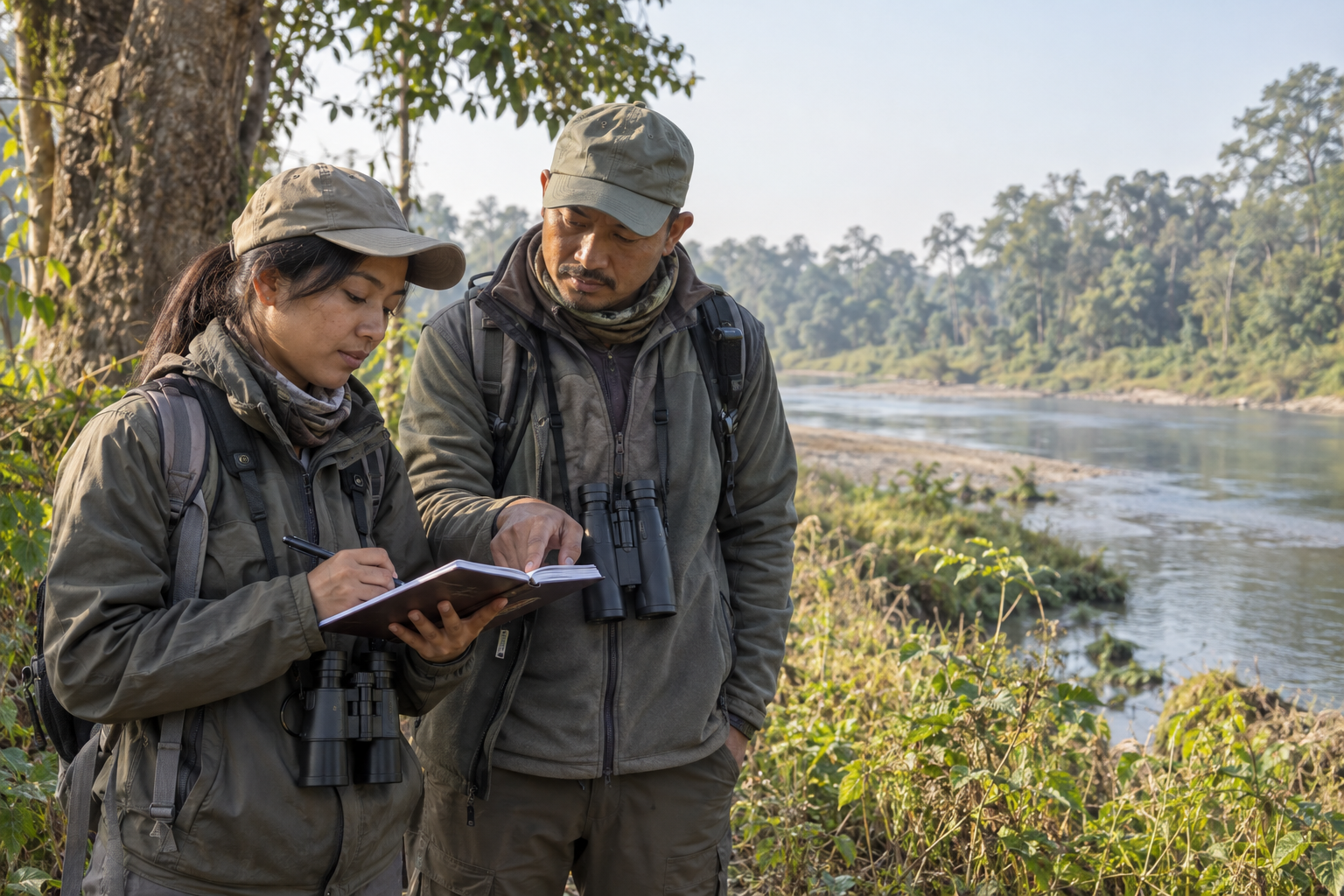
Learning in the field is one part of the journey into nature guiding; applicants also need to verify credentials, costs and employment terms. · AI-generated illustration
A new guide’s first supervised assignment could reveal more about entering this profession than a course advertisement. But describing that moment requires an interview: where the assignment took place, what the beginner was asked to do, who supervised them and what happened. No interview material was supplied for this introduction, so those details cannot responsibly be presented as a reported scene. The same caution applies to claims about training fees, recruitment promises and the time it takes to find paid work.
The question behind this investigation is practical: how to become a nature guide in Chitwan. For someone considering the work, the challenge is not simply learning animal names. It is understanding which preparation employers recognise, what permission is needed for particular duties, how beginners gain experience and when that experience becomes paid employment. Those are separate questions, and an answer from one organisation may not settle them all.
This is therefore a career investigation, not a safari itinerary. It does not rank wildlife excursions or tell visitors where to spend a holiday. Nor is it an earnings roundup built around an attractive monthly figure. A useful account must distinguish promised opportunities from actual assignments, and advertised pay from the conditions attached to it. Whether meals, accommodation, transport or equipment are included can matter alongside the payment itself; each arrangement needs direct confirmation.
The reporting scope should bring together four groups whose perspectives can be checked against one another:
- Recent entrants: people who can describe their own route into guiding, identify the training they completed and explain their first supervised and paid assignments. Their accounts should establish what they personally experienced, without turning one person’s route into a universal rule.
- Recruiters at lodges and guiding operators: the people who assess applicants and allocate work. Interviews should clarify what they require before recruitment, what they teach on the job and whether a beginner starts by observing, assisting or leading.
- Training providers: organisations that can explain entry requirements, course content, assessment and current charges. Their descriptions should also clarify what a certificate demonstrates—and what it does not authorise or guarantee.
- The relevant park authority: the official source for verifying rules governing guiding activities in Chitwan National Park, including any applicable permissions, restrictions and renewal requirements. These should not be inferred from a recruiter’s advice alone.
Entry costs deserve the same careful treatment. A quoted course fee may not represent everything an applicant must spend before accepting work. Reporting should ask about travel, lodging, required documents and equipment, while separating compulsory expenses from optional purchases. Where fees or procedures change, check locally and request a current written breakdown before committing money.
The central distinction is between completing training, being authorised for a particular activity and being hired. This investigation will examine how those stages connect, where supervision fits and what evidence supports each claim. Its purpose is to give prospective guides a clearer basis for decisions—not to promise that a qualification automatically leads to a first paid season.
From Training to a First Paid Season: What Employers Require
Understanding how to become a nature guide in Chitwan means separating three things: a training certificate, any authorisation required for the proposed duties, and an employer’s hiring preferences. They are not interchangeable. No current official notices, recruiter interviews or consented employment documents were supplied for this section, so specific eligibility rules, fees and hiring practices cannot be presented as verified findings.
Check permission before paying for training
Ask the Chitwan National Park office which authority approves guides for your intended activities and where that permission applies. Request the current written requirements for age, education, identity documents, training, assessment, registration and renewal. Confirm whether requirements differ for park entry, walking activities and work outside the park. Check locally: completing a course should not be treated as proof that you may independently lead visitors.
Before enrolling, ask the training provider for its next confirmed intake, entry criteria, syllabus, practical field hours and assessment process. Establish who issues the certificate and whether the relevant authority recognises it. Ask about retakes and whether first-aid training includes a practical assessment, a separate certificate and an expiry date.
Then compare those answers with a recruiter’s written criteria. Does the employer require current authorisation, first aid, previous guiding experience or a practical trial? Which languages must you speak, and how are they assessed? Ask whether candidates must demonstrate wildlife identification, habitat knowledge, visitor briefings, safe wildlife distances and emergency communication. These are useful questions, not a verified list of universal hiring requirements.
Calculate the full entry cost
No documented, dated amounts are available here. Build a budget using written quotations, recording the date and what each charge includes:
- Fees: course, assessment, retake, certificate, first aid, application and renewal—check locally.
- Travel: journeys for applications, classes, assessments and interviews—check locally.
- Accommodation and meals: costs during training and job searches—check locally.
- Equipment: required clothing, footwear, rain protection, binoculars and communication equipment; confirm what employers supply—check locally.
- Unpaid time: lost earnings during training, waiting periods and any unpaid placement, plus living expenses before the first payment.
No new-guide interviews were available to establish who actually paid. That evidence needs individual attribution: whether a guide used savings, family support, borrowing or employer sponsorship, and which credential the recruiter explicitly valued. One person’s route would not establish an industry-wide pattern.
Examine the first offer, not just the job title
Do not assume shadowing, assistant jobs or supervised placements exist. For any offer, establish duties, named supervision, limits on independent work, wildlife-encounter procedures, emergency contacts and evacuation arrangements. Confirm whether it is paid, who covers expenses and what happens after an incident.
Request written terms covering hiring dates, contract length, guaranteed days versus on-call work, payment rates and schedules, tips, meals, lodging, insurance, equipment, cancellations and off-season arrangements. Check insurance scope and exclusions, not merely its presence. Recruiter accounts should be compared with consented, anonymised contracts or payment records. Without those sources, neither a typical hiring window nor reliable first-season earnings can be established.
Conclusion: What the Reporting Establishes—and Leaves Unclear
The practical verdict on how to become a nature guide in Chitwan is cautious: the pathway should not be called clear or financially accessible unless current entry rules, permission to work and realistic hiring opportunities can be verified together. Knowing where training begins is not the same as knowing how a beginner reaches a paid role. Likewise, an affordable course does not necessarily mean an affordable transition into employment.
The evidence available for this conclusion is insufficient for a firm finding. No underlying interviews, official notices, training documents or employer records have been supplied here. It is therefore not possible to confirm what the reporting establishes about current access, or to attribute disagreements to particular sources. Presenting a settled answer would risk turning assumptions about the industry into advice that readers might spend money following.
The most important distinction to resolve is between completing instruction, being authorised to guide in a particular setting and being selected by an employer. These are separate questions, even when a provider describes them as one pathway. Any account that treats a training certificate as proof of permission to work needs comparison with the relevant authority’s current requirements. Any suggestion of recruitment needs confirmation from the employer concerned, rather than reliance on promotional language.
There are also potential source conflicts that need investigation, not reporting as established disagreements. A training provider’s description of “job support” may mean introductions, while an applicant may understand it as placement. An employer’s statement that beginners are welcome may still involve experience preferences or limited vacancies. Verbal guidance and written requirements may differ in scope or currency. Without the original statements and their context, this section cannot determine whether such differences actually occurred or which account should carry more weight.
Financial accessibility remains especially uncertain without evidence about the interval between paying to prepare and receiving dependable earnings. The unanswered question is not simply whether someone can enrol, but whether they can manage a period of uncertain work without harmful borrowing. That assessment would require information about paid opportunities, payment arrangements and the experience of applicants who did not secure work—not only accounts from successful guides. Individual success stories cannot establish typical outcomes.
For a prospective applicant, the safest response to these gaps is to seek written clarification before making a financial commitment. Ask who makes the final decision about work eligibility, what any placement promise actually covers and whether an employer is offering paid work or merely considering candidates. Where arrangements change, check locally and confirm that the answer applies to the specific role and workplace being discussed.
This conclusion is therefore limited by missing source material, unverified current conditions and the absence of documented employment outcomes. It cannot establish a reliable likelihood of securing work or recovering entry expenses. Training may support preparation, and supervised experience may help someone demonstrate skills, but neither should be presented as a guarantee of paid employment. A first paid season remains an outcome to verify, not a promise to attach to enrolment.