Wildlife & Conservation
Fishing Gear and Wildlife in Chitwan: What Happens After an Accidental Catch?
EverestBlog AI · Oct 31, 2026 · 16 min read
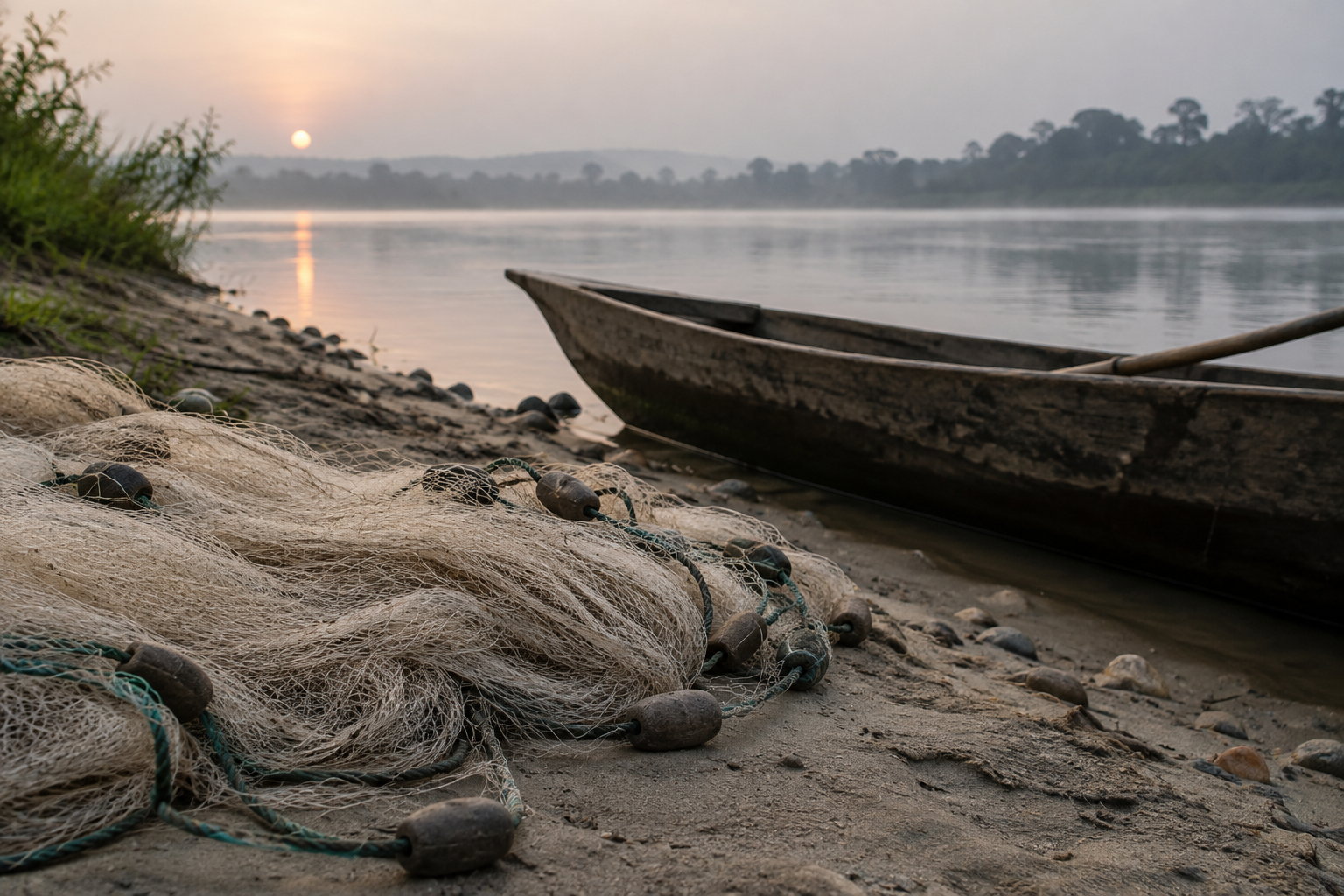
Fishing gear provides the starting point for investigating accidental wildlife catches and the options available to fishers in Chitwan. · AI-generated illustration
A fishing net does not always catch only the fish a fisher wants. It may also trap an animal that was never the target: a turtle, a waterbird, or another creature sharing the river. This unintended capture is called bycatch. The term can also include fish caught unintentionally, but this article focuses on wildlife caught or entangled during fishing. An accidental catch creates an immediate problem: what can the fisher safely do, whom can they tell, and what help might follow?
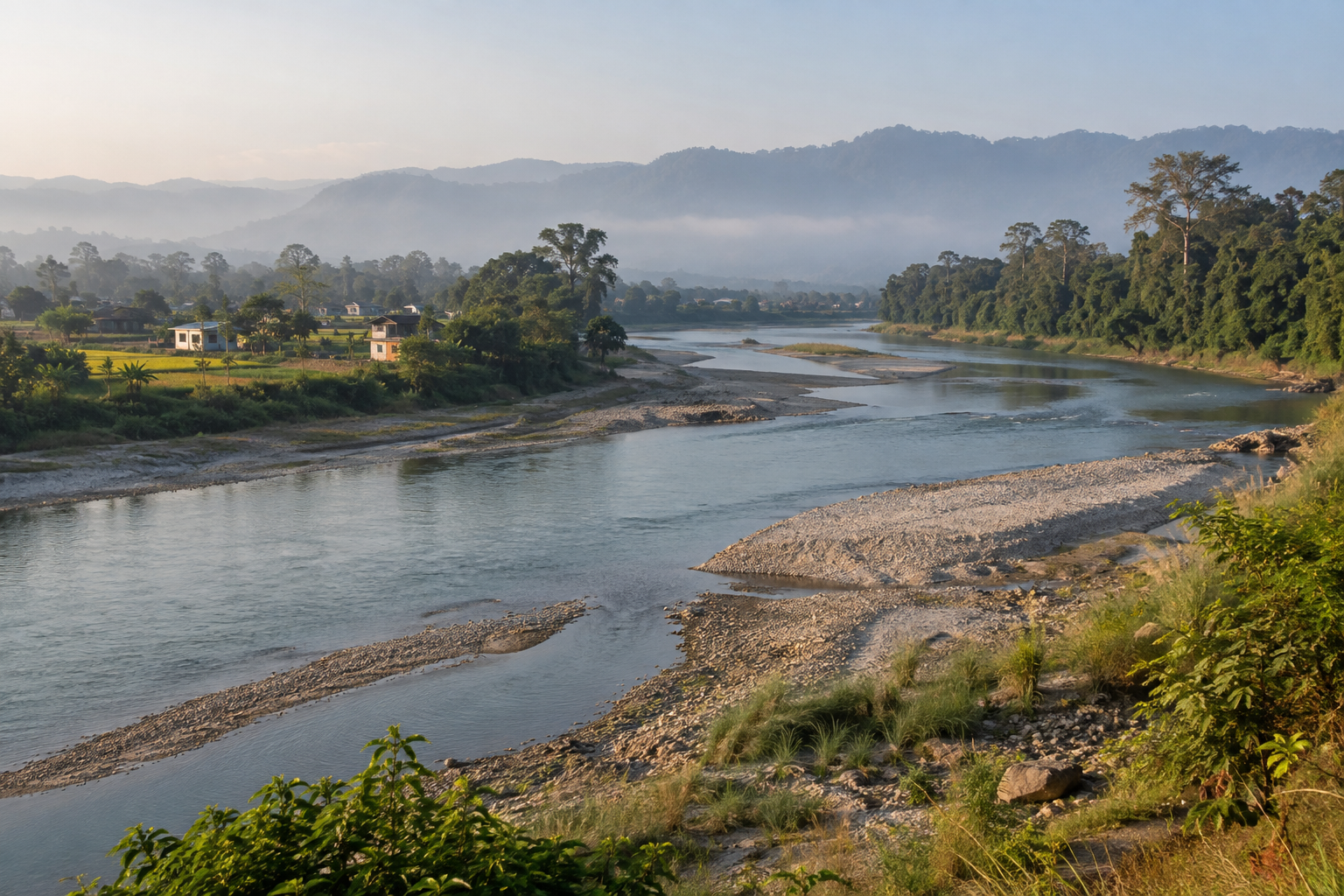
In Chitwan, that question belongs to a landscape where rivers support both wildlife and people’s livelihoods. The Rapti and Narayani are important parts of this setting, alongside smaller waterways and places where people fish. Yet sharing a river does not tell us how often animals become caught in fishing gear. This investigation does not assume that accidental catches are frequent in Chitwan. It asks what local evidence can establish, and what practical options are available when an incident does occur.
Searching for fishing bycatch Chitwan can bring together very different kinds of information: accounts of fishing activity, wildlife rescues, conservation concerns, and rules about access to rivers. These are not interchangeable. A rescue report does not, by itself, show that fishing gear caused the animal’s distress. Finding discarded netting does not establish how many animals it has caught. Likewise, a warning about a possible risk is not proof of a documented local incident. Keeping these distinctions clear is essential to a useful account.
For a fisher facing an unexpected animal in a net, however, the problem is not just a question of evidence. There may be an animal struggling, gear under tension, and uncertainty about approaching safely. The fisher may be alone, far from a landing place, or unsure whether a phone call will reach someone able to help. An animal that looks manageable can still bite, scratch, or pull a person towards deeper water. Protecting people must come before attempting a hands-on rescue.
There is no single release method that is safe for every animal or every type of entanglement. Pulling harder, lifting an animal by a trapped limb, or trying to remove a hook without suitable knowledge can worsen an injury. Equally, leaving gear attached may create further danger. Rather than offering a universal rescue recipe, this article examines the route from noticing an accidental catch to seeking appropriate guidance. It treats safe observation and clear reporting as separate tasks from handling wildlife.
A useful report begins with facts the witness can provide without taking extra risks: where the incident happened, what animal appears to be involved, whether it is still caught, and what kind of gear is present. A photograph taken from a safe position may help identification, but getting an image should never require approaching a dangerous animal or entering unsafe water. Describing uncertainty honestly is better than guessing a species or claiming an injury that cannot be seen.
The next question is whether a clear, locally workable reporting pathway exists. Who receives the first call? Does the location affect which office or team should respond? What should a fisher expect after reporting? Contact details, staff availability, and arrangements can change, so these require verification; check locally before relying on a number or promised service. The investigation will distinguish a confirmed reporting option from a general suggestion to “contact the authorities.”
The focus throughout is fishing practices and reporting: how an unintended capture is recognised, what makes asking for help easier or harder, and which prevention advice has local support. This is not an investigation into water allocation, nor a collection of species profiles. Its purpose is narrower and practical: to establish what a fisher in Chitwan can reasonably know and do after an accidental catch, while making clear where the available evidence leaves questions unanswered.
What Local Evidence Shows About Fishing Gear and Accidental Catches
Understanding fishing bycatch Chitwan requires more than a photograph of an animal beside a net. Bycatch means an animal was caught unintentionally during fishing. A wildlife sighting near fishing gear, an injury of uncertain origin, or a carcass found on a riverbank does not establish that bycatch occurred. The strongest local evidence connects an identifiable incident with a date, a location, a description of the gear and a clear account of what happened.
Start with records that can be checked
Dated incident reports and wildlife rescue logs are useful starting points. Relevant records may be held by Chitwan National Park authorities, other responsible forest offices, or organisations involved in a particular rescue. Their existence, accessibility and coverage need checking; a public news report is not a substitute for the underlying record. Where possible, match a report with photographs, field notes, veterinary findings or confirmation from someone who attended.
Each source answers a different question. A rescue log may confirm that an animal was freed from mesh but say little about how the gear was being used. A veterinary note may describe injuries without establishing their cause. A newspaper story may repeat an initial identification that was later corrected. These differences should remain visible rather than being combined into a more certain account than the evidence allows.
Describe gear and fishing practices precisely
“Fishing net” is often too broad a description to explain an accidental catch. Where documentation allows, record whether the gear was a cast net, a gillnet, another net type, or a hook-and-line arrangement. Mesh size, setting depth, anchoring and how long gear remained in the water may matter, but none should be guessed from an unclear image. A fisher’s explanation can help interpret equipment, provided it is attributed and checked against available evidence.
- Active gear: Establish whether someone was operating, setting or retrieving it. Gear temporarily left in place may still be actively fished.
- Lost or abandoned gear: Look for evidence that it was no longer being used. An unattended net is not automatically abandoned.
- Uncertain status: Keep this category when ownership, use or time in the water cannot be established.
These distinctions matter because accidental capture during fishing and entanglement in discarded gear involve different circumstances. A net fragment wrapped around an animal may establish entanglement, but not where it happened or who originally used the net. Likewise, a recovery site is not necessarily the capture site: water movement or an animal’s movement can separate the two.
Use research and fisher accounts with clear limits
Relevant research should be checked for its study area, fieldwork dates, sampling method and definition of bycatch. Findings from another Nepalese river cannot automatically describe Chitwan. Even research within the wider landscape may cover only selected river stretches, seasons or fishing households. Distinguish animals directly observed in catches from incidents recalled during interviews, and check whether several publications describe the same event.
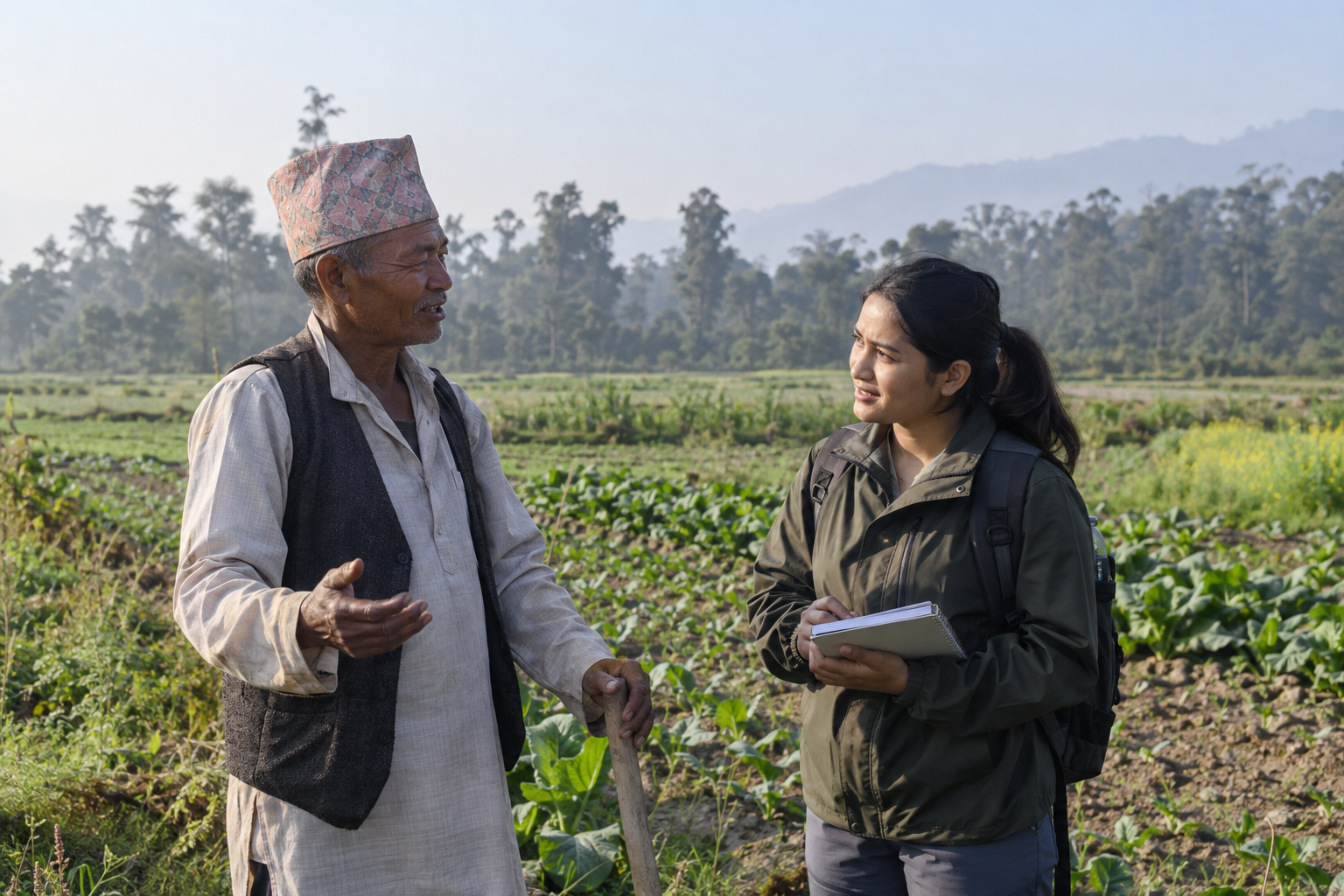
Consent-based fisher interviews can explain practices that official records miss. Before interviewing, explain the purpose, intended publication and whether names or locations will appear. Ask separately what the person witnessed and what they heard from others. A direct account deserves careful documentation; hearsay is a lead to investigate, not a confirmed incident. Avoid publishing details that could expose interviewees or sensitive wildlife sites unnecessarily.
Explain coverage before claiming a pattern
No verified incident count or trend can be established here without a reviewed set of local records. Rescue logs capture reported responses, not every accidental catch; interviews may miss unreported events or misremember dates. Before describing bycatch as common, rare, increasing or declining, state the years, waterways, sources and missing records covered. Counts also need context about fishing effort and reporting changes. More reports could reflect better documentation rather than more captures. Until those gaps are addressed, specific verified incidents support descriptions of those events—not a Chitwan-wide estimate.
Who Can Fishers Contact, and What Happens After a Report?
When wildlife becomes caught in fishing gear, knowing whom to contact matters. But a reporting route must be current and appropriate to the location. For fishing bycatch Chitwan, this section does not provide a verified hotline or promise a particular rescue response. Public numbers, duty hours and local arrangements need confirmation with Chitwan National Park staff and the authorities responsible for the place where the incident occurred—check locally.
Confirm the right contact for the location
Ask Chitwan National Park staff which office or duty post receives reports from the specific river stretch or fishing location. Describe the nearest settlement, riverbank and recognisable landmark. Do not assume that one contact covers every site around Chitwan, or that an office receiving a report is also responsible for sending responders.
For sites where responsibility is unclear, ask park staff and the relevant local government office to identify the responsible authority. Confirm who takes the lead, who can redirect a misplaced report and whether another office must also be informed. Administrative boundaries may not be obvious from the riverbank; a useful contact list should name the locations each reporting route covers.
Community representatives may be useful links, but their role needs checking rather than assuming. Ask whether the ward office, a buffer-zone community representative or a local fishing-group representative actually helps forward wildlife reports. Establish whether they only provide contact details, relay messages or have an agreed coordination role. A referral should not be mistaken for confirmation that help is coming.
Check availability before relying on a number
For every proposed contact, verify that the number is publicly shareable, currently answered and intended for these incidents. Ask about normal office hours, arrangements outside those hours and a backup route if nobody answers. Also confirm whether calls, text messages or another channel are accepted. For changing contact arrangements, check locally; an old notice or saved number is not enough.
Ask what information the receiving office actually requires. A report checklist can then reflect its instructions. Points to confirm include:
- Location: river name, nearest landmark, access point and a map pin if available.
- Incident details: when the catch was noticed, the gear involved and whether the animal remains caught.
- Animal description: what the fisher can see, without requiring a confident species identification.
- Visible risks: people nearby, difficult access, water conditions or an apparent injury.
- Return contact: a number responders can reach and whether photographs are useful, provided they can be taken without approaching or disturbing the animal.
Ask what happens after the report
When someone answers, ask them to confirm that they have received the location and understood the incident. Establish whether they will assess it remotely, refer it elsewhere or arrange attendance. Ask who is responsible for the next step and how the fisher will receive an update. Do not describe a response time, rescue service or transport arrangement as guaranteed unless the responsible office has confirmed it.
Follow-up also needs a clear route. Ask whether the office gives a reference number or another way to identify the report, whom to contact if circumstances change, and whether it can later confirm the outcome. Record the reporting time and the office contacted. If a referral is made, clarify whether the first office forwards the details or expects the fisher to call again.
Get handling advice from qualified responders
Ask the receiving office to connect the fisher with a responder qualified to advise on the animal involved. Describe its condition and follow that responder’s specific safety instructions. Do not improvise advice to pull hooks, cut entangling gear, restrain, carry or release wildlife. This section offers no substitute handling method. Before publishing local guidance, confirm exactly what qualified responders tell callers, including what to do while waiting, and distinguish that advice from unverified community practice.
Reporting Barriers and Locally Available Prevention Advice
Understanding fishing bycatch Chitwan means asking what makes an accidental catch difficult to report, not simply telling fishers to call someone. Phone access, language, waiting time, equipment loss and fear of enforcement are possible barriers to investigate. They should not be presented as established local findings without confidential interviews and supporting evidence.
Ask privately, without promising protection you cannot provide
Fishers should be able to speak away from officials, employers, buyers or neighbours who might influence their answers. Explain why the questions are being asked, how answers will be used and whether notes or recordings will be kept. Ask permission before recording anything. Avoid collecting names, exact fishing locations or other identifying details unless genuinely necessary and freely agreed to.
Confidentiality is not the same as legal protection. A journalist or researcher should not promise that reporting an accidental catch will prevent penalties, secure compensation or recover seized equipment. In a small fishing community, even an unnamed account may identify someone through its details. Let participants decline questions and remove unnecessary identifying information before publication.
Useful questions focus on practical experience rather than blame:
- Can you reach a working phone while fishing, and is there a usable signal where you operate?
- Would you feel comfortable explaining an incident in the language used by the person answering?
- If you have reported before, did anyone respond, and what happened while you waited?
- Could reporting mean losing fishing time, leaving equipment unattended or paying for travel or calls?
- Would concern about enforcement affect your decision to report? What information would help you understand the process?
Ask about lost or damaged gear separately. A net may represent an important working asset, but its cost and the consequences of losing it should come from the fisher, not an assumed figure. Seek permission before comparing their account with an agency’s account. Differences between accounts deserve careful attribution, not an automatic conclusion that either side is wrong.
Check prevention options independently
Reporting barriers and bycatch prevention are related, but they require separate checks. An interview about fear of reporting does not establish that a particular net design works. Likewise, a training announcement does not prove that fishers can attend it or that it reduces accidental catches.
Ask relevant park staff, fisheries offices, community organisations and fishers whether any gear modification, handling course or prevention guidance has actually been tested locally. Request the instructions, trial records or evaluation where available. Establish which river stretch, fishing method and wildlife species the advice concerns. A result from another setting may not transfer to Chitwan’s waters.
For each option, check who can use it. Is participation limited by residence, permits, group membership or literacy? Is instruction available in languages participants understand? Are replacement materials obtainable nearby? Any current programme, contact arrangement, fee or material price needs confirmation: check locally.
Also ask what adopting the measure requires: purchasing equipment, repairing it more often, spending longer checking gear, travelling to training or changing fishing hours. Could it reduce the intended catch or shift effort elsewhere? These are questions to investigate, not reasons to reject prevention. Fishers’ assessments matter alongside technical claims.
Label the evidence and verify the rules
Describe an option as locally demonstrated only when evidence supports that wording. Identify a suggested trial as a proposal. Label guidance drawn from elsewhere, and explain that local suitability remains unverified. Do not turn general ideas into instructions for freeing dangerous wildlife; untrained handling may harm both people and animals.
Before recommending any change, verify the applicable fishing rules with the responsible authority for the exact waterbody and jurisdiction. Check permission requirements, permitted gear, restricted areas, seasonal conditions and obligations after catching protected wildlife. Rules and implementation may change; check locally. A modified net is not automatically lawful, and attending training does not itself grant fishing permission.
Conclusion: What Is Verified, and What Still Needs Work?
The clearest conclusion about fishing bycatch Chitwan is that reporting, response and prevention must be discussed separately. Knowing where to raise an incident does not establish how quickly help will arrive. A reported accidental catch does not show how common such catches are. General advice about safer fishing does not prove that equipment, training or financial help is available locally. Keeping these distinctions clear gives fishers and readers a more useful picture than either reassurance or alarm unsupported by evidence.
The reporting pathway should rest on an official, locally confirmed contact. For an incident connected with Chitwan National Park, the park administration is the appropriate institution to clarify the responsible reporting point and any referral arrangements. Current telephone numbers, office availability and responsibility for a particular river stretch need confirmation: check locally. A contact list should not be presented as a guaranteed rescue service. Equally, passing information to an intermediary should not be described as an official report unless receipt by the responsible authority is confirmed.
What happens after that report is a separate evidence question. A reliable account should distinguish between information being received, advice being given, staff attending and an animal’s eventual outcome. Those stages are not interchangeable. Where follow-up is unavailable, the outcome remains unknown; it should not become an assumed rescue, release or death. Nor should reporting be described as bringing automatic permission, compensation or protection from penalties. Any explanation of those issues needs an identified rule or confirmation from the authority responsible for applying it.
The evidence limits also matter. Individual incidents can establish that an accidental catch occurred, but they cannot, on their own, measure the wider problem. A useful estimate would need a clear definition of bycatch, a stated area and period, and information about how cases were found and recorded. Without that foundation, scattered accounts should remain scattered accounts. Missing reports do not prove that incidents are rare, while concern about unreported catches does not justify inventing a larger total. The honest conclusion is narrower: the available evidence has limits.
Several unresolved questions deserve direct answers. Is there one recognised reporting route, or does it differ by location? Who receives reports outside normal office hours? Is there a shared record of incidents, and can outcomes be checked later? What information is necessary, and how is a fisher’s identity handled? Chitwan National Park administration could clarify its own procedures and responsibilities. Relevant local governments could clarify any municipal contacts or referral role. Where responsibilities overlap, those institutions should confirm the division rather than leave fishers to guess.
Practical support needs the same careful treatment. Advice is only useful if people can follow it with the skills, equipment and options actually available to them. The remaining questions include whether locally relevant guidance exists, who is qualified to provide it, and whether any advertised assistance is currently operating. Park staff, relevant fisheries offices and organisations named as support providers could clarify their respective roles. Their involvement should be confirmed, not assumed. For changing details about training, equipment or other assistance, check locally.
Prevention advice also needs a clear basis. A recommendation should explain which risk it addresses, whether it fits local fishing conditions and whether it is consistent with applicable rules. It should not promise that one adjustment eliminates accidental catches. Where a measure has not been assessed locally, that uncertainty belongs alongside the advice. Fishers’ practical experience can help identify obstacles, but it should not be presented as evidence that a proposed measure works everywhere.
The priority, then, is not a dramatic claim about scale. It is a reporting route people can verify, follow-up that separates known outcomes from unknown ones, and prevention advice that is lawful, understandable and workable. Reliable reporting and usable support matter more than unsupported claims about the size of the problem.