
Health & Wellbeing
How to Improve Your Sleep Naturally: 10 Science-Backed Tips You Can Try at Home
EverestBlog AI · Oct 31, 2026 · 8 min read
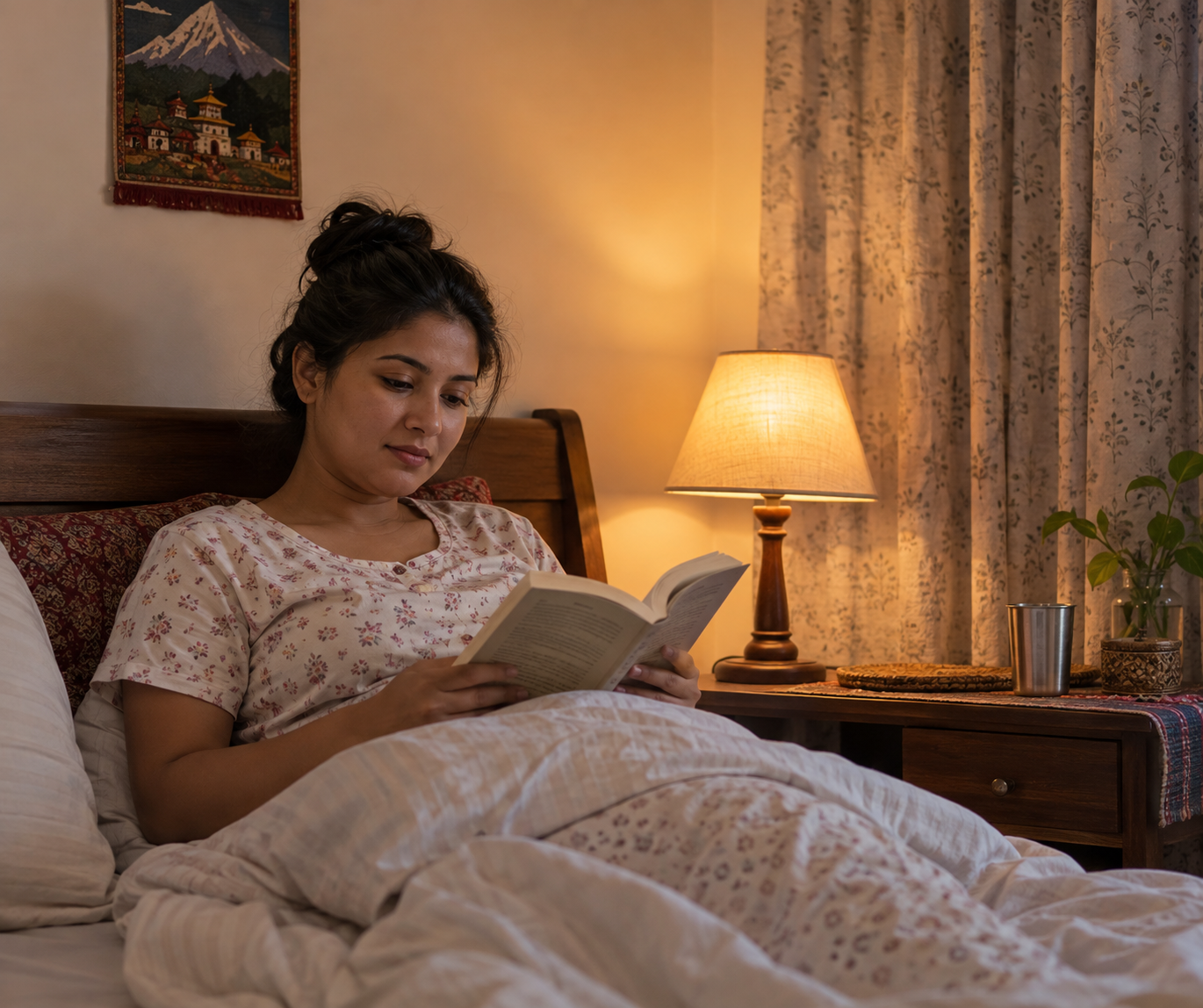
A quiet evening routine can help prepare you for sleep, but persistent sleep problems may need additional support. · AI-generated illustration
You feel tired all evening, but the moment you lie down, sleep seems to move further away. Your mind replays a conversation, tomorrow’s tasks grow louder, and checking the clock adds another layer of worry. It is a frustrating experience, especially when you know you need rest. Yet trying harder to sleep can make you feel more alert. A useful starting point is to reduce that pressure rather than treat bedtime as another task you must get right.
If you are wondering how to improve sleep naturally, this guide focuses on everyday habits and your sleeping environment—not products, supplements or expensive equipment. “Naturally” here means working with the systems that help regulate sleep, including your body clock and the sleep pressure that builds while you are awake. It does not mean that natural remedies are automatically safe, or that lifestyle changes can solve every sleep problem. This is a practical starting point, not a promise of a cure.
Sleep is influenced by more than what happens after you switch off the light. Daylight, activity, stress, substances such as caffeine, and the timing of your day can all play a part. So can pain, medicines, shift work, caregiving and a noisy home. Recognising these influences helps move the question away from “Why am I bad at sleeping?” towards “What might be making sleep harder for me?” Some factors are adjustable; others need support, accommodation or medical attention. Poor sleep is not a personal failure.
It also helps to distinguish an occasional restless night from chronic insomnia. Chronic insomnia generally involves difficulty falling asleep, staying asleep or waking too early at least three nights a week for at least three months, despite adequate opportunity for sleep, with effects during the day. Supportive habits can create better conditions for rest, but sleep hygiene alone is not considered an adequate treatment for chronic insomnia. Cognitive behavioural therapy for insomnia, known as CBT-I, is a recommended first-line treatment. It addresses patterns of thinking and behaviour that can keep insomnia going.
The ten habits that follow should therefore be read as options to consider, not a rigid bedtime rulebook. Their usefulness will depend on your circumstances, and the evidence is not equally strong for every approach. A study showing better self-reported sleep does not necessarily show treatment of a diagnosed sleep disorder. Likewise, a plausible explanation for why a habit might help is not proof that it will help everyone.
Editorial evidence note: This plan does not constitute live research verification. Before publication, check the original studies, systematic reviews and current clinical guidelines behind each recommendation. Retain the title’s “science-backed” claim only if every tip is accurately supported, with wording that matches the population studied and the outcomes measured. Label indirect, mixed or limited evidence clearly rather than presenting all recommendations as equally established.
The aim is to make sleep feel more manageable, without adding guilt or encouraging you to delay appropriate care when a sleep problem persists.
10 Practical Sleep Habits: Actions, Evidence and Limits
Learning how to improve sleep naturally means testing manageable changes, not following rigid rules. These habits can support sleep, but sleep hygiene alone is not an established treatment for chronic insomnia.
1. Keep a consistent wake-up time
Choose a wake-up time you can sustain daily, including weekends. Regular timing helps anchor your circadian rhythm, or body clock. However, evidence for a fixed wake time as a standalone treatment is limited, and shift work may require a more flexible plan.
2. Get outdoor daylight after waking
Step outside after waking, perhaps for breakfast or a short walk. Light helps set body-clock timing and support alertness. Timing matters: exposure at different biological times can shift sleep differently. Ordinary outdoor daylight is not equivalent to prescribed, carefully timed light therapy.
3. Move regularly
Try walking, dancing or another activity you enjoy. Systematic reviews of exercise trials generally find improvements in self-reported sleep quality, although objective measurements and individual results vary. Vigorous late exercise bothers some sleepers but not others; adjust its timing if you notice difficulty settling.
4. Move caffeine earlier
Trial avoiding caffeine from early afternoon, including energy drinks. Drake and colleagues’ 2013 controlled study found that 400 milligrams disrupted sleep even six hours before bedtime. That substantial dose and differences in sensitivity mean the study cannot establish one universal cutoff for everyone.
5. Avoid alcohol as a sleep aid
Choose an alcohol-free evening drink rather than a nightcap. Sleep research shows alcohol can cause initial drowsiness while disrupting later-night sleep. Effects depend on dose, timing and the person. If you have alcohol dependence, seek medical advice before stopping abruptly: withdrawal can be dangerous.
6. Reduce bright evening light and stimulating screens
Dim lights and try a screen-free wind-down. Chang and colleagues’ 2015 PNAS experiment found delayed circadian timing and poorer next-morning alertness after evening light-emitting e-reader use. Its prolonged, controlled exposure does not establish that brief everyday phone use has the same effects.
7. Try a comfortably warm bath or shower
Try bathing one to two hours before bed, avoiding uncomfortably hot water. Haghayegh and colleagues’ 2019 systematic review linked warm bathing with faster sleep onset and some improved sleep measures. Studies were limited and heterogeneous, so benefits are possible, not guaranteed.
8. Make the bedroom comfortable
Use curtains, reduce household noise and choose bedding that prevents overheating. Environmental research supports limiting disruptive light, noise and thermal discomfort. However, it does not prove that one exact room temperature treats insomnia. Aim for dark, quiet and comfortably cool rather than chasing a number.
9. Practise gentle relaxation
Try slow, comfortable breathing or progressive muscle relaxation. The American Academy of Sleep Medicine’s 2021 guideline conditionally supports relaxation therapy for chronic insomnia, reflecting limitations in the evidence. Treat practice as rest, not a performance test or a demand to fall asleep immediately.
10. Reconnect bed with sleep
Go to bed when sleepy. If persistently awake and frustrated, briefly do something quiet elsewhere, returning when sleepy. Stimulus control has conditional support in the 2021 guideline. This simplified tip is not full cognitive behavioural therapy for insomnia (CBT-I); adapt it for mobility and nighttime safety.
Conclusion: Start Small and Know When to Seek Help
Learning how to improve sleep naturally is not about building a flawless routine or earning a perfect sleep score. It is about making rest easier and helping you feel and function better during the day. Start with one manageable change from this guide that fits your life. Give yourself room to practise it without treating every difficult night as a failure.
Notice broad patterns rather than judging each morning in isolation. Are you spending less time struggling to sleep? Is getting through work, study or household tasks becoming easier? Do you feel more alert or less distressed about bedtime? A brief note about your sleep and daytime energy may help you spot progress. If tracking makes you anxious, simplify it or stop. Consumer sleep trackers offer estimates, not diagnoses, and their scores do not need to become another source of pressure.
Progress can be uneven. Stress, illness, caregiving and changing schedules can interrupt sleep even when you are doing things that usually help. A setback does not mean you need to overhaul everything. Instead, consider whether your chosen change remains practical and whether it is helping overall. The goal is a workable relationship with sleep, not complete control over it.
When home changes are not enough
Seek professional assessment if sleep problems persist or affect daily life. You do not have to wait until you are exhausted or unable to cope. A clinician can explore possible contributors, including pain, mood symptoms, medicines and sleep disorders. Describe both your nights and your days: difficulty concentrating, irritability, missed responsibilities and unplanned dozing can all be relevant. Mention any sleep remedies or supplements you use, because “natural” does not automatically mean safe or suitable.
Loud snoring with gasping, choking or pauses in breathing noticed by someone else deserves medical attention, as it can suggest obstructive sleep apnoea. Marked daytime sleepiness also needs assessment, especially if you struggle to stay awake during ordinary activities. These signs are not simply evidence that you need more discipline around bedtime. Do not drive when sleepy. If sleepiness develops while driving, stop somewhere safe and arrange a safer way to continue; opening a window or turning up music is not a reliable solution.
For chronic insomnia, cognitive behavioural therapy for insomnia (CBT-I) is a first-line treatment supported by clinical guidelines. It is more than general lifestyle advice. CBT-I can address thoughts and behaviours that keep insomnia going, using a structured approach that may include adjusting time in bed and rebuilding the connection between bed and sleep. Some elements need individual guidance, particularly when other health conditions or safety concerns are present.
In Nepal, check locally for qualified services through a trusted clinician or health facility. Ask whether a provider has training in CBT-I or can arrange assessment for suspected sleep apnoea. Availability varies. Seeking help is not giving up on natural sleep improvement; it is a way to find care that matches the cause of your difficulties.
Up next

Wildlife & Travel
The World’s Most Beautiful Butterflies and Where to Find Them: A Wild-Sighting Guide

Travel & Destinations
20 Most Beautiful Places in the World You Must Visit: When the Famous View Is Actually Visible

Travel & Budget Planning