
Culture & Heritage
10 Unique Cultural Traditions Around the World—and What They Mean to the People Who Keep Them
EverestBlog AI · Oct 31, 2026 · 11 min read
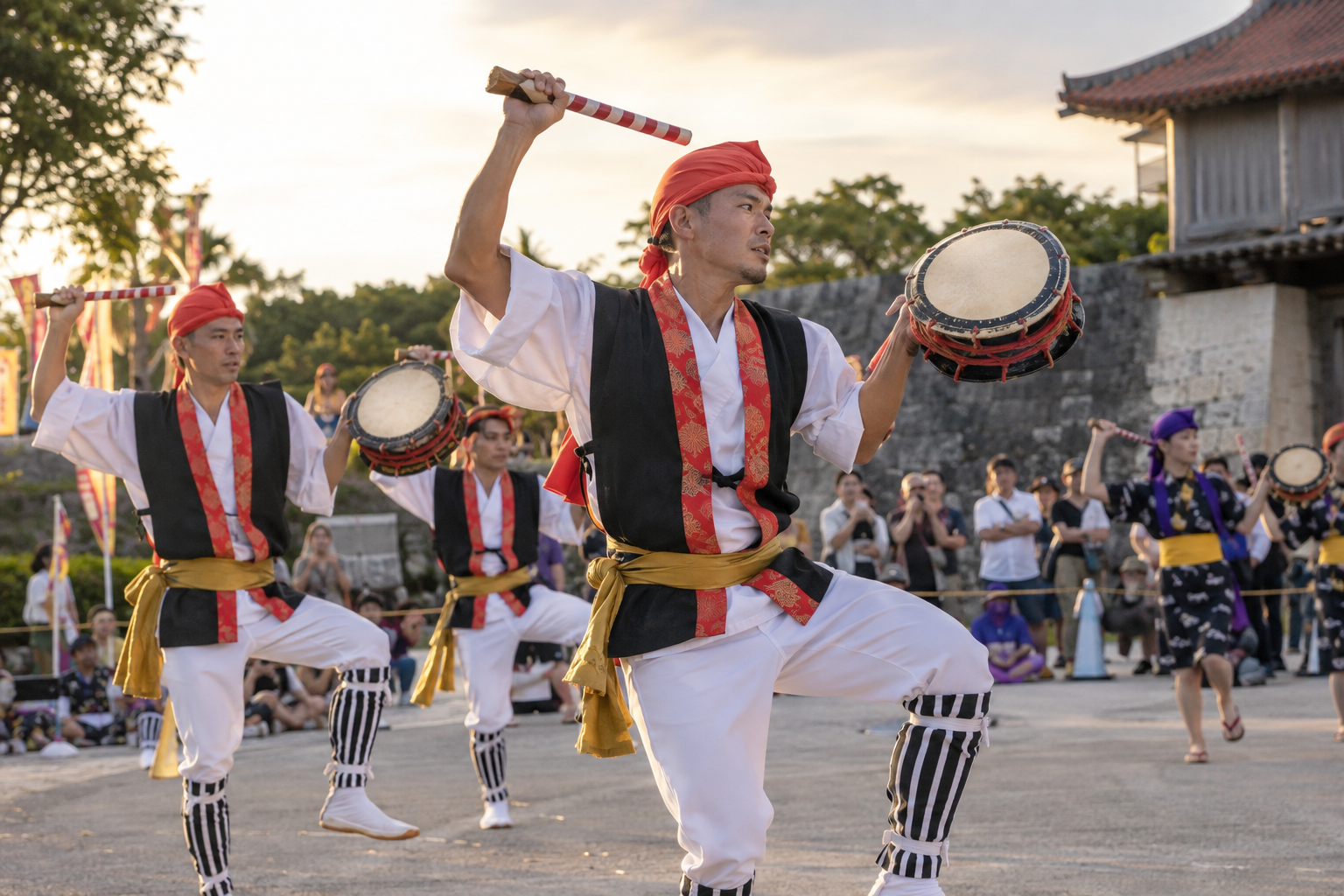
Eisa in Okinawa offers one example of a living tradition whose meaning is best explained by the people who practise it. · AI-generated illustration
A shared meal, a carefully taught craft, or a gathering to remember the dead can hold meanings that a visitor cannot see at first glance. Exploring unique cultural traditions around the world means looking beyond what makes an event memorable in a photograph. It means asking what people are doing, whom they are doing it with, and why keeping the practice matters to them. The most useful starting point is not surprise, but attention.
Here, unique means locally distinctive—not strange, isolated, or unchanged. Similar gestures may appear in different places while carrying different histories and responsibilities. Within one community, a tradition may also vary between families, generations, neighbourhoods, or religious groups. Migration, changing livelihoods, and new tools can reshape how people take part. Those changes do not automatically make a practice less meaningful. A living tradition belongs to people making decisions in the present, not only to an imagined past.
The ten profiles in this article will stay outside Nepal. For EverestBlog readers, that creates room to encounter other cultural settings without repeating our Nepal festival and Tharu coverage. Five profiles will explore remembering, renewing, and gathering; five more will consider welcoming, making, and passing knowledge on. These are reading guides rather than rigid categories: a single gathering may honour ancestors, welcome relatives, teach children, and strengthen everyday ties at the same time.
Our approach puts participants’ explanations before outsiders’ labels. Each profile will draw on verified interviews or clearly attributed first-person accounts, identifying the speaker’s community and relevant role as they describe it. A craft maker, organiser, elder, apprentice, or returning family member may understand the same occasion differently. Readers should be able to tell whose experience they are hearing and where that account comes from. We will not invent quotations, turn an unattributed anecdote into evidence, or suggest that one person speaks for everyone.
Listening carefully also means separating personal meaning from broader claims. Someone may describe a ceremony as a source of comfort; that does not establish its historical origin or prove that every participant feels comforted. Historical context needs reliable supporting sources, while uncertain or disputed explanations should remain visibly uncertain. Where accounts differ, the aim is to explain the difference rather than choose the tidiest story. Community members are interpreters of their own lives, not decorative voices added to a travel description.
There are limits to what an article should ask or show. Sacred or private knowledge will not be requested or reproduced without permission from those entitled to share it. Permission to attend does not necessarily include permission to photograph, record, publish, or explain a ritual. Material already circulating online is not automatically appropriate to repeat. When a boundary is unclear, leaving something out is more respectful than treating access as a right.
For travellers, this approach offers a practical habit: pause before joining in. Ask whether visitors are welcome, who can explain expectations, and whether observation is appropriate at all. Attendance rules, schedules, and photography permissions can change; check locally. Understanding a tradition does not require access to every part of it. Sometimes the clearest sign of learning is knowing when to listen, when to ask, and when to step back.
Remembering, Renewing, and Gathering: Five Community Traditions
These five unique cultural traditions around the world connect remembrance with the work of keeping communities together. Their meanings are not identical for everyone involved: family responsibilities, religious commitments, and neighbourhood ties shape how people participate. Listen for those differences rather than expecting one explanation to speak for an entire place.
1. Eisa in Okinawa City, Japan
In Okinawa City, youth associations sustain eisa through drumming, singing, and dancing associated with Obon, a period of honouring ancestral spirits. Preparing together also builds neighbourhood relationships: learning rhythms, attending rehearsals, and carrying responsibilities can matter as much as the performance itself.
Ask dancers how they understand the connection between Obon, remembrance, and belonging. Some may emphasise ancestors; others may discuss friendships or pride in their association. Associations have distinct repertoires, movements, and drumming styles. A community performance within the Obon observance should not be treated as interchangeable with a festival-stage presentation. Check locally before attending rehearsals or following performers through residential streets.
2. Noche de Muertos Around Lake Pátzcuaro, Mexico
Among Purépecha families around Lake Pátzcuaro, Noche de Muertos can involve preparing offerings, tending graves, and spending time remembering deceased relatives. Food, flowers, candles, and careful preparation are not simply a striking scene: they form part of relationships with particular people who have died.
Centre family explanations by asking what an offering means or how preparations were learned, if conversation is welcome. Household arrangements, cemetery observances, and village practices differ; no single island or lakeside community represents the whole region. Some families welcome questions, while others need privacy. Check locally about visiting, and seek permission before photographing mourners, graves, or offerings.
3. Homowo in Teshie, Ghana
For Ga residents of Teshie, Homowo recalls ancestral hunger and its overcoming. Its name is commonly translated as “hooting at hunger.” Preparing and sharing food, including the maize-based dish kpokpoi, links that remembrance with gratitude, kinship, and community renewal.
Residents’ own accounts are essential: ask how food is shared, who takes responsibility for preparations, and what renewal means within their family. Ceremonial roles and participation are not the same for everyone. Teshie also has its own expressions of Homowo, while other Ga towns follow distinct arrangements. Check locally about observances and restrictions rather than assuming a public gathering makes every activity open to visitors.
4. Galungan in Gianyar, Indonesia
Balinese Hindu households in Gianyar observe Galungan through offerings, prayer, and obligations to family and sacred places. It celebrates the victory of dharma over adharma, often understood as right order overcoming disorder, and is associated with ancestral visits.
Ask participants how they understand welcoming ancestors and fulfilling obligations. Household resources, inherited practices, and local customary rules shape preparations, so one family’s offerings or temple visits are not a universal template. Check locally about appropriate dress and access.
5. Nowruz in Yazd, Iran
Among Zoroastrian households in Yazd, Nowruz brings renewal, family connection, and religious meaning together. Cleaning, visiting relatives, and prayer may carry different weight in different homes. Nowruz is also celebrated widely beyond Zoroastrian communities.
Ask household members what makes the occasion meaningful to them. Older and younger relatives may approach inherited customs differently, without either speaking for everyone. Check locally before seeking access to religious gatherings or family celebrations.
Welcoming, Making, and Passing Knowledge On: Five More Traditions
These five unique cultural traditions around the world connect welcome, skilled work, music, and everyday care. Understanding them starts with the people who practise them—not with a visitor’s checklist of what looks unusual.
6. Pōwhiri at Ōrākei Marae, Aotearoa New Zealand
The practice: At Ōrākei Marae, a pōwhiri is a formal welcome grounded in the tikanga, or customary practices, of Ngāti Whātua Ōrākei. It establishes relationships between hosts and visitors rather than simply opening an event.
What to explore: Invite hosts to explain what welcome involves, how relationships develop, and what responsibilities follow. Let them decide which elements need explanation and which knowledge is appropriate to share.
How to approach it: Arrange attendance with hosts and follow their guidance. Tikanga differs among marae; this account is not a universal visitor script. Ask before photographing or recording, and check locally about arrangements.
7. Sámi Duodji in the Inari Region, Finland
The practice: Duodji connects skilled making with usefulness, knowledge of materials, and Sámi identity. Work may involve wood, antler, leather, textiles, or other materials, depending on the maker and their training.
What to explore: Ask makers how they learned, what makes an object work well, and how they teach others. Distinguish their language backgrounds: Inari Sámi, Northern Sámi, and Skolt Sámi have different terms and traditions. Confirm whether “duodji” is their preferred word.
How to approach it: Do not assume one material or style represents everyone. Ask how each maker approaches innovation, and seek permission before reproducing designs or documenting teaching.
8. Mola-Making in Guna Yala, Panama
The practice: Guna women make molas using layered cloth, often cutting back and stitching layers to reveal patterns beneath. Mola panels form part of women’s blouses, while makers also produce work for sale.
What to explore: Ask women how clothing, creativity, identity, and income meet in their work. An individual design may reflect close observation, personal experimentation, or shared visual knowledge; its meaning should not be guessed from appearance.
How to approach it: Distinguish pieces made for personal wear from those intended for sale without ranking their authenticity. Ask who made each piece, confirm terminology, and request permission before photographing or copying designs.
9. Canto a Tenore in Bitti, Sardinia, Italy
The practice: Canto a tenore brings four vocal parts into a closely coordinated ensemble. In Bitti, singing in Sardinian links vocal skill with local language, poetry, and relationships among singers.
What to explore: Ask how singers listen to one another, develop balance, and learn through repeated listening and participation. Their accounts can reveal knowledge that musical notation alone cannot explain.
How to approach it: Compare groups, generations, and settings carefully. Informal singing and staged performances need not serve identical purposes. Confirm vocal terminology with singers and obtain permission before recording or sharing a performance.
10. Qulliq Lighting in Iqaluit, Nunavut, Canada
The practice: The qulliq is a stone oil lamp with a practical history of providing light and heat, supporting cooking, and helping dry clothing.
What to explore: Ask Inuit practitioners what tending the flame means to them today, distinguishing personal, family, and public ceremonial uses.
How to approach it: Do not imply all Inuit practise identically. Confirm terminology and respect restrictions on recording, participation, and knowledge-sharing.
Conclusion: Listen Before You Label
Calling something “unique” can open a door to curiosity, but it can also keep people at a distance. A ceremony becomes a spectacle; a handmade object becomes a souvenir; a community becomes a backdrop. The better question is not simply, “What makes this different?” It is, “What does this mean to the people involved, and who gets to explain it?” Exploring unique cultural traditions around the world should bring us closer to people, not just give us more things to describe.
That begins with listening to named people rather than treating “the community” as a single speaker. Where someone agrees to be identified, learn their name, their role, and their relationship to the practice. A maker, an organiser, an elder, and a young participant may offer different accounts because they carry different responsibilities. Attribution makes those perspectives visible. It also reminds us that one person’s explanation is not automatically a statement on behalf of everyone.
Listening does not require people to agree. Some may see a change as necessary for a tradition to survive; others may feel that the same change weakens its meaning. People may also disagree about who can participate, what can be photographed, or whether visitors should be present at all. Those tensions are not proof that a culture is confused or less “authentic.” They are part of living heritage. An honest visitor or writer leaves room for disagreement instead of selecting the most convenient voice and presenting it as the final answer.
Communities also have authority over how their heritage is shared. An invitation to watch is not necessarily permission to record, publish, copy, or sell. Something visible in a public place may still carry expectations that an outsider cannot read. Some knowledge belongs within particular relationships, while some occasions include moments that are not for visitors. Ask who can give permission for the specific thing you hope to do. A guide’s approval may not replace a participant’s consent, and one participant cannot necessarily authorise access to everything.
These principles become useful when they shape ordinary travel decisions. Before lifting a camera, buying an object, or joining an activity, pause long enough to understand what is being offered—and what is not.
- Seek permission before photographing. Ask the people who will be identifiable, and explain if you intend to publish or share the image online. Check event rules too. Accept a refusal without bargaining, and remember that permission for one photograph is not permission for unrestricted recording.
- Credit makers. When sharing their work, use the maker’s preferred name and description, with permission. Ask how they want their community or workshop identified. Do not substitute a shop’s location for the work’s origin, or claim a production method you have not verified.
- Respect limits on participation. Follow instructions about access, clothing, movement, and recording; check locally because arrangements can change. Do not enter restricted spaces or imitate actions simply because others are doing them. If an invitation is unclear, ask rather than assume.
The most meaningful encounter may leave some questions unanswered. That is not a failure of travel. Respect means accepting that understanding grows through relationships, and that nobody owes us complete access to their life.
Up next

Travel & Conservation
How Quiet Is Chitwan’s Tourism Edge? Investigating Noise Around Sauraha

Wildlife & Conservation
Royal Bengal Tigers in Chitwan National Park: How Habitat Shapes Hunting and Conservation
Travel & Food