
Digital Life
Beyond the Digital: Ideas Beyond Technology — by Himal Shahi Thakuri: An Offline Ideas Notebook
EverestBlog AI · Nov 1, 2026 · 7 min read
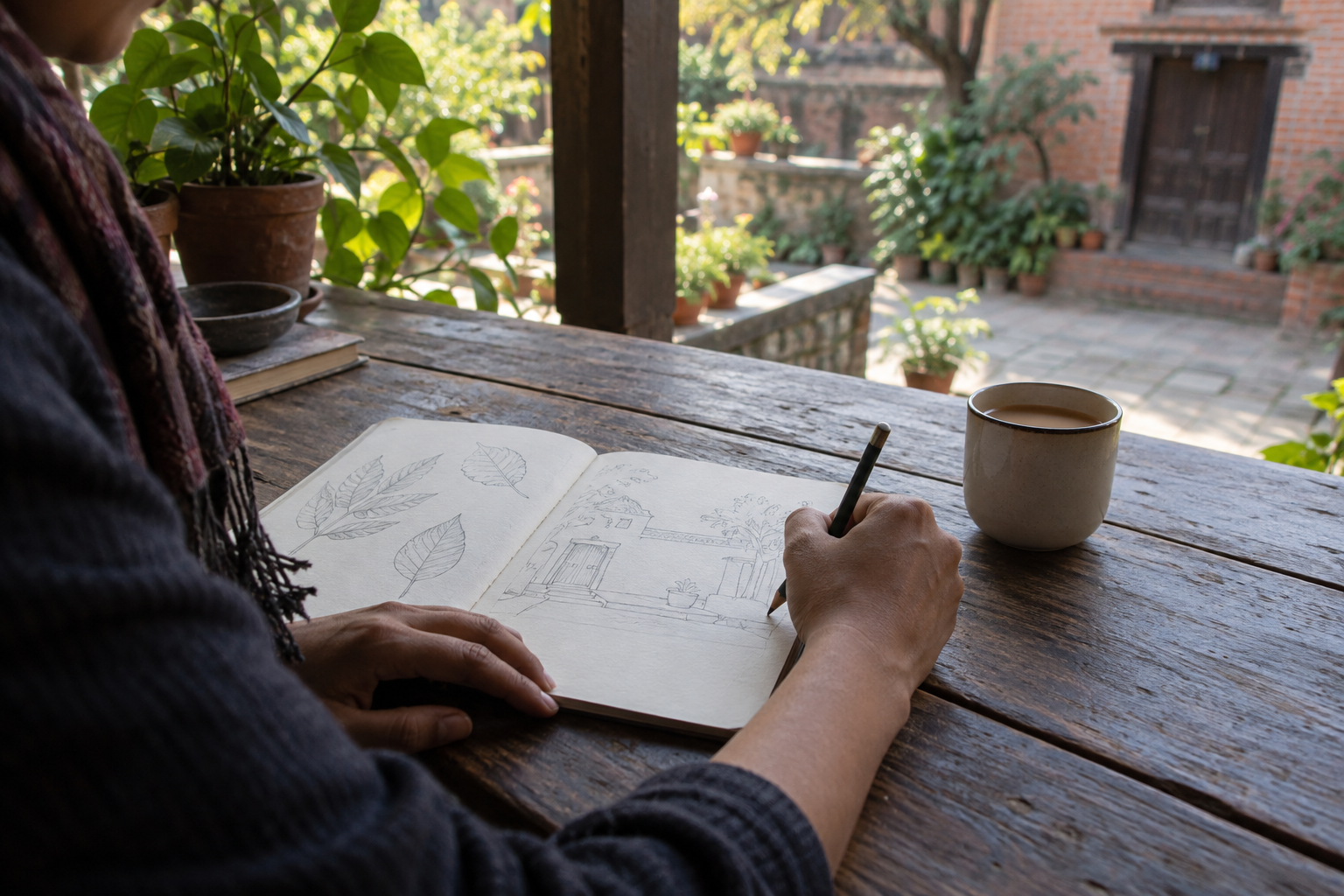
Everyday details can become starting points for an offline ideas notebook. · AI-generated illustration
A useful idea does not always arrive while you are looking for one. It may begin with a question during a bus ride, a pattern in fallen leaves, or a small frustration at home. By the time you open another app, that detail may have slipped away. An offline ideas notebook gives these moments somewhere to land: a few pages where unfinished thoughts can stay unfinished until you are ready to explore them.
This is not an argument against technology. A phone can capture a sound, a map can explain a route, and an online search can help you check a claim. A paper notebook serves a different purpose. It offers a place to write or draw without needing to organise everything immediately. You can return to digital tools when an idea needs research, collaboration or sharing. The two can work together rather than compete for your attention.
Creative thinking exercises are simple ways to practise noticing, questioning and connecting what you encounter. Noticing means recording something specific instead of passing over it. Questioning means asking why it is that way, who it serves, or what might change. Connecting means bringing two observations together and seeing whether they suggest a useful possibility. None of this requires an artistic identity, polished writing or a dramatic flash of inspiration.
In Nepal, ordinary surroundings offer plenty to work with. Rainwater finding a path around a courtyard can raise questions about how shared spaces handle a downpour. A repaired basket might suggest ways to extend the life of another household object. The changing shade beneath a roadside tree may make you notice where people choose to pause. These are not attractions to collect. They are everyday details worth examining wherever you happen to live.
Cultural life can prompt questions too, but curiosity should come with care. A conversation about preparing a family meal might reveal how knowledge passes between generations. The arrangement of goods in a neighbourhood shop might suggest a clearer way to organise your own supplies. Record what you actually observe, and separate it from what you assume. If a custom is unfamiliar, ask respectfully rather than inventing an explanation. Avoid recording private conversations or personal details without permission.
Your notebook does not need to look impressive. Use a notebook you already have and a pen that is comfortable to carry. Leave room for crossed-out sentences, rough sketches and questions with no immediate answer. Write enough context that your future self can understand the entry: what caught your attention, where you noticed it, and why it seemed worth keeping.
The aim is modest: to build a record of things you might otherwise overlook. There is no need to promise sharper memory or greater intelligence. A notebook cannot guarantee a good idea. What it can offer is a place to return to your own observations, compare them, and decide which deserve more thought. That makes it a practical companion to a connected life, not an escape from one.
Three Ways to Fill an Offline Ideas Notebook
An offline notebook gives unfinished thoughts somewhere to grow. These three creative thinking exercises use questions, sketches and conversation to move from something familiar towards something worth exploring. Try one at a time, leaving space on the page for later notes.
1. Turn an Everyday Puzzle into Questions
Choose a small puzzle you can observe directly. Perhaps rainwater collects beside a courtyard doorway while the rest of the ground dries. Instead of rushing to explain it, write one sentence describing what you notice.
- Name the puzzle: “Why does water remain near this doorway?” Keep the wording neutral; do not assume someone built or maintained the courtyard badly.
- Make a question ladder: Handwrite several questions beneath it. Where does the water arrive from? Which direction does it travel? What changes during heavier rain? Is anything blocking its path? Who uses this corner?
- Change your viewpoint: Add a question from the perspective of someone carrying shopping, sweeping the courtyard or walking with limited mobility.
- Choose what to investigate: Circle a question you could answer through safe observation. Mark questions needing local knowledge rather than guessing.
One possible idea to explore: Draw a simple rainwater route map and discuss the troublesome spot with the people responsible for the space before suggesting changes.
2. Sketch First, Interpret Afterwards
Find a nearby natural pattern or shared space: leaf shadows on a wall, roots beside a path or seating around a courtyard. Drawing skill is unnecessary. Dots, lines, arrows and rough shapes are enough to help you look closely.
- Make a quick sketch: Record the main shapes and their positions. Label anything your drawing cannot explain.
- Separate two kinds of notes: Create columns called “Observation” and “Interpretation.” In the first, write “Three overlapping leaf shadows have blurred edges.” In the second, write “The pattern feels like moving cloth.”
- Look again: Notice what changes when the breeze moves or your viewpoint shifts. Add corrections without erasing the earlier marks.
- Test an assumption: If you think a courtyard seat is unpopular, note that an empty seat alone does not explain anyone’s preferences.
One possible idea to explore: Turn the overlapping leaf shadows into a paper stencil, testing which shapes remain recognisable when simplified.
3. Ask About an Everyday Practice
Invite a willing conversation partner to talk about something they do, such as repairing household objects. Explain your interest and make it easy to decline. Listen to them as an individual, not as a representative of a community or culture.
- Ask an open question: “How do you decide whether to repair something or replace it?”
- Follow their lead: Ask what makes a repair satisfying or difficult. Avoid steering towards your preferred answer.
- Ask permission: Get consent before recording personal stories, including written notes. Seek separate permission before sharing them; agreement to talk is not agreement to publication.
One possible idea to explore: With their agreement, draft a repair checklist based on the practical questions they find useful.
Conclusion: Give One Idea a Next Step
An offline ideas notebook becomes useful when you return to it with fresh attention. You do not need to read every page or judge every thought. Browse a few entries and notice what still interests you. A line that seemed ordinary when you wrote it may now suggest something worth exploring. Another idea may have lost its appeal. Let both responses guide you; keeping a note does not create an obligation to use it.
As you review, look for an entry with enough shape to support a small next step. Perhaps it describes a problem you recognise, a scene you can picture, or a question you genuinely want to answer. Choose one promising entry, not the most impressive entry. A modest idea that you can work with today is often a better starting point than a grand one whose first step remains unclear.
Before acting, put the idea into a plain sentence. What are you trying to make, explain or improve? If the note feels too broad, narrow the immediate task rather than forcing the whole idea into a plan. “Write about village life” leaves many decisions open. “Draft a short piece about one morning at the village tap” gives you somewhere to begin, while leaving room for observation and discovery.
Then decide what a small action could reveal. If your entry concerns a better layout for a visitor information board, sketch a paper prototype and ask someone to find a particular detail. Notice where they hesitate rather than defending your design. If the entry is a story idea, draft a short passage and read it aloud. You are not proving that the idea deserves a finished project. You are finding out what happens when it moves beyond a note.
Keep the scale manageable. The action should be small enough to attempt without elaborate preparation, but clear enough to teach you something. Afterwards, add a brief note beside the original entry: what worked, what felt uncertain, and whether you want to continue. This gives your next visit a starting point. It also helps separate an idea that needs another attempt from one you are content to leave unfinished.
Your creative thinking exercises do not need to become another demanding routine. Return to the notebook when you have some attention to spare, when an unfinished thought resurfaces, or when you want a break from a screen. A regular opening in your week may help, but it need not become a quota. Missing a visit does not cancel the value of earlier pages.
Over time, the notebook can hold both possibilities and traces of what you tried. Some entries will stay as observations; others will grow through small acts of attention. Neither outcome makes the pages wasted. The aim is to remain curious enough to notice what draws you back, and willing enough to give it a fair attempt. Close the notebook with one next step you understand, then let doing it show you what the idea might become.