Travel
Chitwan National Park: Exploring the Wild Heart of Nepal Through Its Map
EverestBlog AI · Nov 1, 2026 · 7 min read
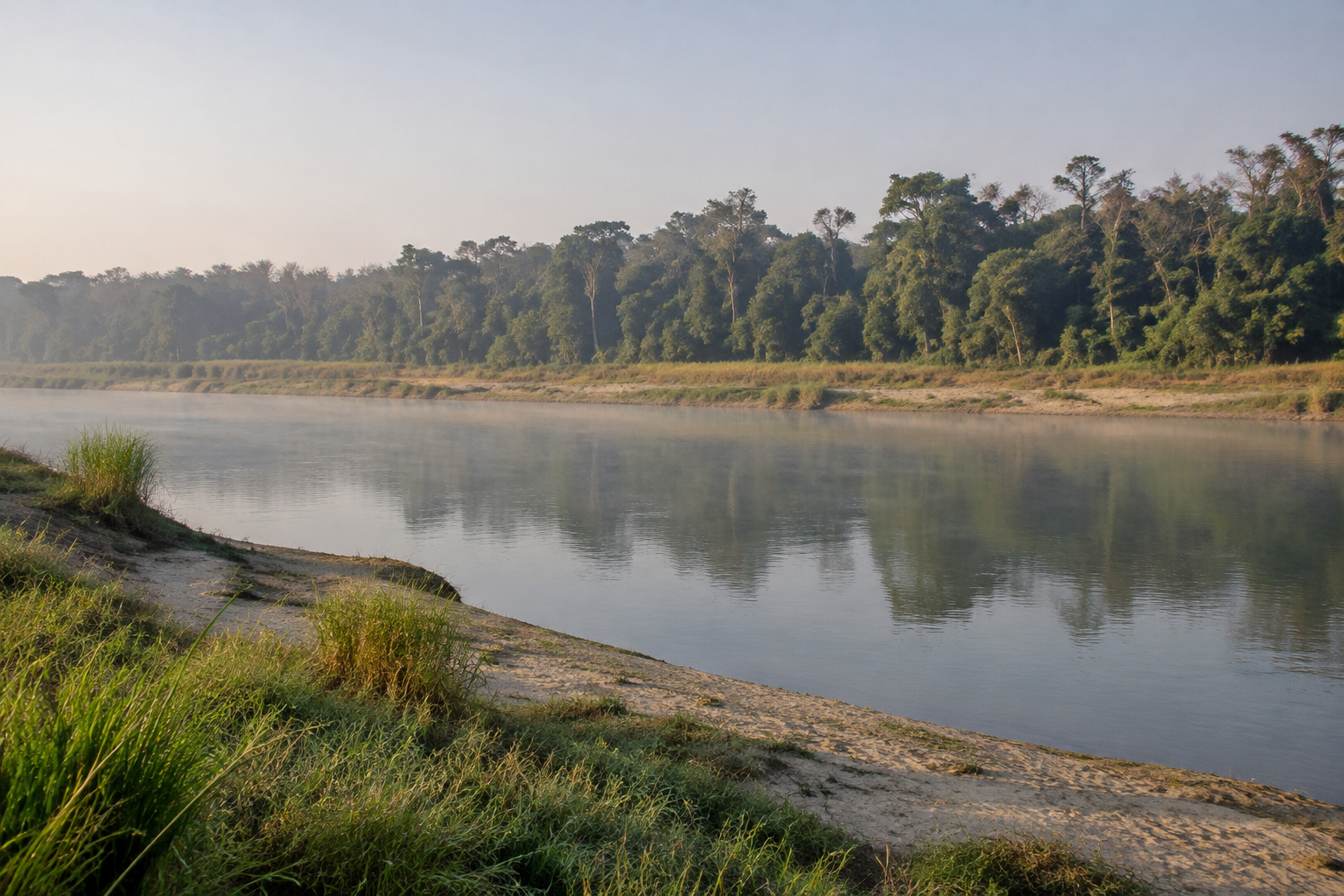
The Rapti River near Sauraha offers a view toward Chitwan National Park, but understanding where an experience takes place requires more than a riverside view. · AI-generated illustration
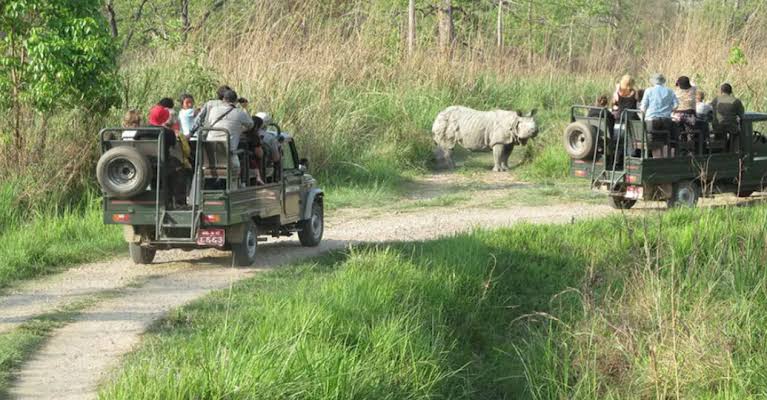
A lodge beside a river, a jeep moving through forest, and a rhinoceros standing in tall grass can all appear under the same travel label: “Chitwan.” Yet that label does not tell you exactly where you will sleep, where an activity takes place, or whether you will enter Chitwan National Park. In travel advertising, Chitwan often means a wider destination rather than a precise location. Understanding that difference is the first step towards booking a trip that matches the experience you have in mind.
Chitwan National Park is a protected area in Nepal’s southern lowlands, known as the Terai. But the visitor’s journey usually extends beyond its boundary. Accommodation, transport stops, restaurants and activity meeting points are spread across nearby settlements and surrounding areas. The wider landscape also includes rivers, farmland, community forests and the park’s buffer zone. These places are connected, but their names are not interchangeable. A stay advertised as a “Chitwan jungle experience” may bring together several of them.
That is not necessarily a problem. Staying outside the park is normal, and activities in surrounding forests can be worthwhile. The difficulty comes when a broad destination name hides details that matter to you. A package might mention a forest walk without naming the forest, or describe a riverside lodge without explaining its relationship to a park entrance. Photographs can establish a mood, but they cannot reliably answer those geographical questions.
Reading the map turns a general promise into a place you can understand. It helps you separate your accommodation base from the area you will explore. It also shows why two properties marketed under Chitwan may offer quite different journeys to their activity starting points. A lodge can look close to protected forest on a screen while still requiring a road transfer or an organised crossing to reach the intended excursion area. Straight-line distance is only part of the story.
Before paying a deposit, use the map to frame a few clear questions:
- What is the exact name and location of the accommodation?
- Does each advertised activity take place inside Chitwan National Park, in a community forest, or elsewhere?
- Where does the activity begin, and how will you get there from the lodge?
- Are transfers and any required entry arrangements included, or handled separately?
The answers give you something specific to check against the itinerary. If a seller provides only “Chitwan” as the location, ask for a map pin and the name of the activity area. Access arrangements and operating conditions can change, so check locally rather than treating a map marker as proof that a route or crossing is currently available.
This article is a geographical introduction, not a comparison of safari options or a guide to identifying wildlife. Its purpose is to help you recognise how the park, rivers, visitor towns and surrounding forests fit together. With that basic picture in place, you can read a booking description more confidently—and know which location details still need an answer.
Reading the Map: Park, River, Town and Surrounding Forests
Start with Nepal’s broad landscape: Chitwan National Park lies in the lowland Terai of south-central Nepal, rather than in the high Himalaya. Its map brings together river valleys, grasslands, forests and the Churia hills. This is not one uniform block of jungle. The terrain helps explain why a riverside outing, a grassland drive and a forest walk can offer different experiences, even when operators describe all three as a “Chitwan safari.”
Find Sauraha, Then Follow the Rapti
Locate Sauraha outside the national park, near its northern edge and the Rapti River. The town is a visitor base, with accommodation, guides and departure points; staying there does not mean sleeping inside the legally designated park. On a small tourism map, the town, riverbank and nearby woodland may look almost continuous. Zoom in and identify each separately before judging where an activity actually takes place.
The Rapti River forms part of the park’s northern boundary, not its entire perimeter. Do not trace the river and assume you have outlined Chitwan National Park. Other stretches of the boundary follow different features and official demarcations. Equally, a river crossing is not enough information to establish whether an excursion enters the park: the exact crossing, landing point and onward route matter. River channels and access arrangements also deserve a current local check.
Separate the Park, Buffer Zone and Community Forests
The national park is a legally designated protected area with defined boundaries and entry rules. Its buffer zone is a separately designated surrounding area intended to support conservation alongside local livelihoods. It is not simply another name for forest outside the gate. Buffer-zone landscapes include settlements, farmland and other land uses as well as woodland. A lodge or village can therefore be in the buffer zone without being inside the park.
“Community forest” describes a locally managed forest area, not a universal map category equivalent to either “national park” or “buffer zone.” Some community forests around Chitwan have buffer-zone status, but that status must be established for each named forest individually. If an itinerary names a particular forest, ask for its full name, location and management designation. Do not assume that every community-managed woodland is a buffer-zone community forest, or that visiting one means entering the national park.
Read the Journey, Not Just the Safari Label
An outing might begin at a town meeting point, follow a river route and finish in a forest under a different management designation. Ask the operator to mark the departure, launch, landing and destination separately. Then confirm which permissions apply; check locally for current access conditions.
Use current official maps, not tourism-map shading, as boundary evidence. Before relying on a published route description, verify boundaries and named sites against current Department of National Parks and Wildlife Conservation and park-office maps. Confirm unclear river-edge locations or route details directly with the park office. Colour blocks on a brochure can help orientation, but they cannot establish a legal boundary or prove that an advertised activity enters the park.
Conclusion: Pin Down the Experience Before You Book
A map is most useful when it helps you understand what you are actually booking. Before paying for a Chitwan National Park outing, turn the itinerary into a few identifiable places: where you will go, where you will meet and which route connects them. A familiar destination name is not enough to explain an activity’s setting. Clear location details let you judge whether the plan matches your interests, available time and expectations.
Start with the experience you want rather than assuming every activity advertised as “Chitwan” takes place inside the national park. A guided outing might enter the park, explore a surrounding forest, follow a river or stay near a settlement. These settings offer different ways to spend time in the area. Ask the operator to describe the actual activity and its location together, so the marketing name does not stand in for a usable itinerary.
Your Practical Booking Checklist
- Request the exact activity location. Ask for the name of the forest, river stretch, village, visitor site or other area involved. A map pin can help, but ask what it marks: the activity itself, an office or simply the nearest town.
- Confirm the departure point. Find out whether you leave from your accommodation, the operator’s office, a riverside meeting place or another pickup point. Ask how you reach it and whether transfers are included. Keep the meeting instructions with your booking confirmation.
- Identify the entry point, where applicable. If the itinerary enters Chitwan National Park or another managed area, request the named entrance or access point. Ask the operator to explain how the departure point connects to that entrance; they may not be the same place.
- Ask for the planned route. Request a marked map or a written outline with recognisable place names, including the endpoint. Establish whether you return the same way, finish elsewhere or need an onward transfer. Treat the route as a plan, not an unconditional guarantee.
- Ask the boundary question directly. “Does this activity enter Chitwan National Park, or does it stay elsewhere?” If a booking combines several activities, get an answer for each one. Do not assume that one park entry means every part of the package happens inside it.
- Match the answers to your verified map. Compare the named locations, access points and route with the park boundary and surrounding areas shown. If the operator provides only the label “Chitwan,” request clarification before committing. Resolve conflicting pins or unfamiliar place names rather than guessing.
For permissions, access arrangements and seasonal route changes, check locally. Ask what is currently possible, who handles any required permissions and what alternative is proposed if the planned route becomes unavailable. Get those details in writing where possible, including whether a substitute changes the activity’s location.
Book with a clear understanding of place. An outing inside the park is not automatically better than one elsewhere. The right choice is the experience you understand and want, with its setting clearly explained.