Culture
How Did Nepal Get Its Name? Exploring the Origins of the Word Nepal
EverestBlog AI · Nov 1, 2026 · 16 min read

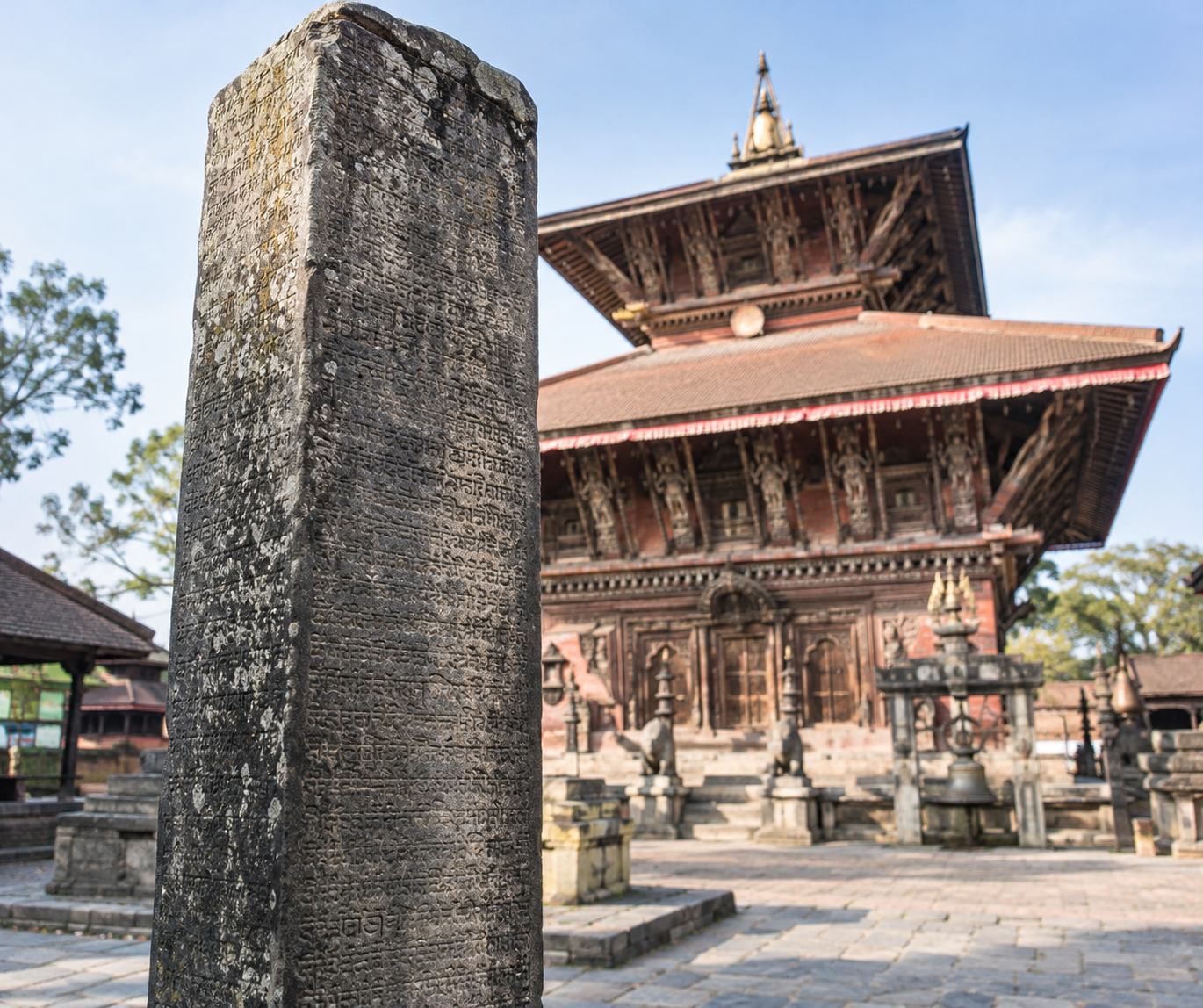
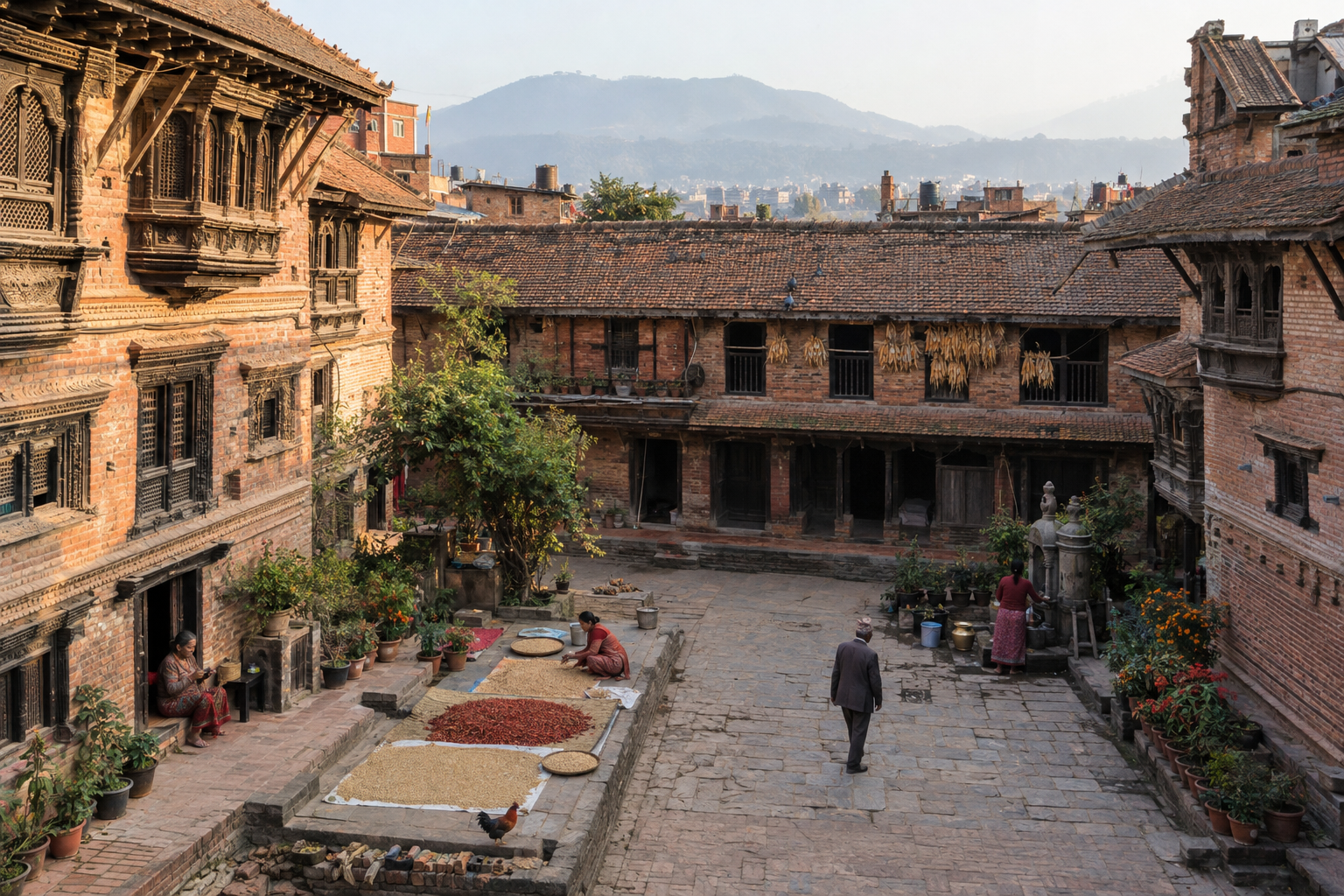
The Kathmandu Valley provides an important setting for exploring early uses of the name Nepal. · AI-generated illustration
How did Nepal get its name? The honest answer is that no single etymology—the origin and development of a word—is securely established. Scholars have examined early references, compared related names and proposed linguistic roots. Traditional stories offer other explanations, often linking the name to a revered figure or a meaningful place. These approaches do not all provide the same kind of evidence. To understand the question clearly, we need to separate what shows that the name existed from what might explain how it first formed.
That distinction matters because a familiar name can be much older than any surviving explanation of it. A written reference to “Nepal” tells us that someone used that name in a particular setting. Depending on the source, it may also help establish what place or community the writer meant. But the appearance of a word in a text does not automatically reveal who coined it, which language supplied it or what its earliest speakers understood it to mean. The history of a name’s use and the origin of the name are connected, but they are not identical.
There is also a question of geography hidden inside the wording. Today, Nepal names the modern country. In many historical contexts, however, the name referred more narrowly to the Kathmandu Valley or its political and cultural world. That older usage is important when considering possible origins. We should not assume that a name originally described the entire territory now shown within Nepal’s borders. A place-name can remain recognisable even as the area associated with it changes considerably.
A useful way to approach the subject is to keep three questions in view. First, where and in what form is the name recorded? This is a question about sources: inscriptions, manuscripts and other written references. Second, how might the word have developed? This requires linguistic reasoning, including comparisons between forms and explanations of sound changes. Third, how have people explained the name? This opens the door to traditions that may carry religious, cultural or local significance without demonstrating the word’s historical derivation.
None of these questions should be dismissed, but neither should they be treated as interchangeable. A naming legend can tell us something valuable about how a community understands its landscape and identity. It does not, by itself, prove that the word arose in the way the story describes. Likewise, a proposed linguistic connection may be worth considering without being settled fact. Resemblance between two words is a starting point for investigation, not a complete explanation. A convincing argument needs to account for language, meaning and historical context together.
Even apparently simple details need care. The spelling “Nepal” used in English is one written representation of a name that has travelled through different languages and writing traditions. Comparing spellings without considering pronunciation or the conventions of a source can be misleading. Dating a reference also requires attention: the age of a surviving manuscript and the age attributed to the work it preserves are not necessarily the same. These distinctions help prevent an early mention from becoming a claim stronger than the evidence allows.
For readers, the best starting point is therefore neither a neat legend presented as fact nor a confident translation assembled from similar-sounding words. It is a careful look at the kinds of knowledge available. Early records can establish usage; linguistic arguments can test possible derivations; traditional accounts can illuminate inherited meanings. Each contributes something different to the discussion.
Exploring the word Nepal means following those threads without forcing them into one certain answer. The aim is not to turn a disputed origin into a tidy fact. It is to understand what is documented, what is proposed and what belongs to the stories through which people make sense of a name.
What Early Records Tell Us About the Name Nepal
Early records give us a firmer starting point than stories about how Nepal received its name. They show that a name was already in use when a particular text was composed or an inscription was carved. They rarely explain who first used it or why. For anyone asking how did Nepal get its name, this distinction matters: evidence for the name’s existence is not automatically evidence for its origin.
Nepal in Samudragupta’s Prayaga inscription
One securely identified reference appears in the Sanskrit inscription of the Gupta emperor Samudragupta on the pillar at Prayaga, now Prayagraj in India. Dating to the fourth century CE, the inscription praises the ruler’s achievements and describes his relations with other political powers. Its composition is attributed to Harishena, a court official and poet. The pillar also carries older inscriptions, but those earlier texts should not be confused with Samudragupta’s record: the reference to Nepal belongs to the Gupta-period inscription.
In J. F. Fleet’s scholarly edition and translation, published in Corpus Inscriptionum Indicarum, Volume III, Nepal appears in a passage concerning frontier kings. The Sanskrit list names Samatata, Davaka, Kamarupa, Nepala and Kartripura, followed by an expression meaning “and others.” This is important wording. Nepal is not introduced as a newly named place, and the passage offers no explanation of the word. Instead, it treats Nepala as an identifiable political territory whose ruler belonged within the inscription’s account of surrounding powers.
The passage describes these frontier rulers as satisfying Samudragupta through payments of tribute, obedience to commands and attendance to offer homage. It should not be simplified into a statement that Nepal was directly governed as an ordinary Gupta province. Equally, a royal praise inscription is not a neutral diplomatic report. Its purpose was to magnify the emperor’s standing. The safest conclusion is narrower: the name Nepala was recognised in fourth-century political geography, and the Gupta court represented its ruler as acknowledging Samudragupta’s authority.
What territory did the name describe?
The Nepal mentioned in an ancient record should not simply be coloured in on a map using today’s national borders. Historically, the name was closely associated with the Kathmandu Valley and the political and cultural world centred there. The Prayaga inscription itself does not draw Nepal’s boundaries or identify its capital. Connecting its Nepala with the valley-centred kingdom relies on the wider historical record, not on a geographical definition supplied by this particular passage.
The valley’s surviving Licchavi-period inscriptions provide a richer picture of local rulers, settlements, religious foundations and administration in the centuries that followed. They help historians reconstruct the setting in which the historical name operated. However, the date of an inscription, the territory controlled by its issuer and the geographical meaning of a name are separate questions. A ruler’s influence could extend beyond the valley without making “Nepal” identical in extent to the modern country.
Later, as the Gorkha-led state expanded and brought the Kathmandu Valley under its rule, Nepal acquired a wider political application. The name became attached to the larger kingdom and eventually to the modern state. This was a historical broadening of usage, not proof that every earlier mention covered the same area. Older, valley-centred meanings and broader political meanings could overlap; context remains essential when reading documents from different periods.
An attestation is not a birth certificate
A surviving inscription establishes that a word existed by that time. It cannot tell us how long people had already spoken it. Earlier writing may have disappeared, while texts preserved through later copying can contain material of different ages. Claims about an “absolute earliest mention” therefore require careful dating and textual study. Samudragupta’s inscription gives us a dependable ancient attestation of Nepala, not a record of its coinage. It anchors the discussion in evidence while leaving the word’s original formation unresolved.
Linguistic Arguments: Nepal, Newar and Proposed Roots
The linguistic part of how did Nepal get its name begins with three similar forms: Nepal, Newar and Newal. Their resemblance matters, but it is not a complete explanation. A place name, a community name and the name of a language can influence one another over centuries. Establishing a connection is therefore a different task from identifying the oldest form or discovering its original meaning.
How Nepal, Newar and Newal Are Connected
Nepal is the country’s name today, but historically it also referred more narrowly to the Kathmandu Valley. Newar identifies the community closely associated with that valley and is widely used in English for its language, also called Nepal Bhasa. Newal appears in discussions of the relationship between these names. These overlapping geographical and cultural associations make a shared naming history plausible; they do not establish a simple family tree.
Specialist scholarship provides an important foundation. K. P. Malla’s work on Nepal’s linguistic history examines the valley as a multilingual setting, rather than treating every old name as Sanskrit. George van Driem’s Languages of the Himalayas places Newar within the wider Tibeto-Burman linguistic landscape. Newar is not an Indo-Aryan language like Nepali, although it has borrowed extensively from Sanskrit and other Indo-Aryan languages. That distinction matters when evaluating proposed roots.
One commonly discussed connection involves the consonants represented by p in Nepal and w in Newal or Newar. A stop consonant such as p can weaken in speech, potentially producing a sound closer to w. Likewise, alternation between l and r is possible in language history. But “possible” is not “demonstrated”: each proposed change needs evidence from the relevant language, period and phonetic setting.
Even if those changes explain how the forms are related, they would not automatically reveal the ultimate root. A sequence from Nepal through Newal to Newar needs dated evidence, not merely a neat arrangement of spellings. Borrowing between languages, formal written usage and local pronunciation could complicate that sequence. The earliest surviving spelling may also record an outsider’s version rather than the earliest spoken name.
Testing Sanskrit and Tibeto-Burman Proposals
Sanskrit deserves attention because it had a major role in the valley’s inscriptions, religious learning and formal vocabulary. However, a name’s appearance in a Sanskrit text does not prove that it was coined from Sanskrit words. Writers could adopt an existing local name and fit it to Sanskrit spelling or grammar. A Sanskrit-looking form may therefore reflect transmission rather than origin.
The same caution applies to Tibeto-Burman explanations. This label covers many languages, not one shared dictionary. A convincing proposal must identify a particular language or a carefully reconstructed ancestral form. It must then explain what the proposed word meant, how its sounds could produce the recorded name, and whether contact between the relevant speakers makes historical sense.
Claims that split Nepal into convenient syllables often skip these steps. Finding one syllable that resembles a word for a place or landscape feature, and another that suggests an inhabitant or protector, is only a starting point. Without attested vocabulary, appropriate word formation and supported sound changes, the result remains speculation. An attractive translation cannot substitute for a linguistic argument.
- Check the vocabulary: Are the proposed words documented in the named language with the claimed meanings?
- Check the sounds: Are the changes supported by comparable words, rather than invented for this name alone?
- Check the history: Could the proposed source have reached the valley before the form being explained?
The relationship among Nepal, Newal and Newar is therefore more useful as evidence of connected naming traditions than as a ready-made translation. Linguistic scholarship helps separate a plausible relationship from a proven derivation. It also leaves room for an honest limit: explaining changes between related names may still leave the original name unexplained.
Naming Legends: Sage Ne and Other Traditional Explanations
Legends give Nepal’s name a human story: a wise figure watches over a place, and that relationship becomes part of its identity. The best-known example centres on a sage called Ne, often referred to as Ne Muni. In this tradition, Nepal is understood as a land protected or cared for by Ne. It is a memorable answer to how did Nepal get its name, but it belongs to the world of traditional explanation rather than proven linguistic history.
An identifiable written source for this account is History of Nepal, published in 1877 under the editorship of Daniel Wright. The book includes a translated Nepalese chronicle and records the tradition linking the country’s name with the sage Ne and his protection. That makes it useful evidence that the explanation circulated in Nepal’s historical storytelling. It does not, however, make the story a contemporary record of the moment when the name was first created. The publication date should not be confused with the age of the tradition itself.
The explanation turns on two parts: Ne, the sage’s name, and pal, interpreted through the idea of protection or guardianship. Sanskrit has a verbal root commonly transliterated as pāl, associated with protecting, guarding or maintaining. This gives the story a meaningful linguistic connection. Yet recognising a suitable word or root is only a starting point. It does not establish that the place name was actually formed by joining that root to the name of a historical sage.
Retellings do not always describe Ne’s role in exactly the same way. Some foreground him as a holy guardian; others emphasise his care for the people or his association with the land. His title may also appear as muni, meaning a sage, or simply as “saint” in English summaries. These differences should remain visible. A careful account should not collect details from several retellings and present the result as one fixed, ancient narrative. Here, the shared theme is guardianship, while the particulars belong to individual versions.
There is also an important question of scale. Older traditions about “Nepal” often concern the Kathmandu Valley, not necessarily the entire territory of the modern country. When a story describes a sage protecting Nepal, readers should therefore be cautious about imagining today’s national borders. The legend makes more sense when read within the Valley’s sacred geography: a landscape where settlements, shrines, rivers and surrounding hills carry religious meaning. This setting helps explain the story’s cultural force without turning its geography into proof of its etymology.
Other familiar Valley traditions provide useful context, but they should not be treated as interchangeable explanations of the name. The Buddhist story of Manjushri opening an outlet from a lake, for example, explains the emergence of habitable land in the Valley. It is a landscape-origin narrative, not by itself evidence for the derivation of the word Nepal. Placing such stories beside the Ne tradition can reveal how people imagined their homeland’s beginnings. Combining them into a single naming event would erase their different purposes and religious settings.
For readers, the key distinction is between a source for a story and evidence for a word’s origin. A chronicle can show that a community preserved a particular explanation. Demonstrating an etymology requires different support, including early spellings, credible sound changes and a convincing historical setting. The Ne account deserves attention because it expresses an idea of the land as protected and morally significant. Its value does not depend on proving that the sage personally gave Nepal its name.
The fairest way to share this tradition is therefore simple: Nepal’s name is traditionally linked with a sage called Ne, with pal understood as protection. Name the source, acknowledge that versions differ, and leave the historical claim open. This approach respects the legend without asking it to settle a linguistic question it cannot resolve alone.
Conclusion: What Can We Safely Say?
So, how did Nepal get its name? The safest answer is that Nepal is a long-established name whose precise origin remains uncertain. Historical records show that the name was in use long before the modern country took its present shape. Linguistic research offers possible connections between Nepal, Newar and related forms, while traditional stories explain the name through sacred figures such as Sage Ne. These explanations deserve attention, but they do not carry the same kind or weight of evidence.
A useful conclusion separates three questions: When can we document the name? How might its sounds and meaning have developed? And how have people explained it through tradition? Treating these as separate questions helps us avoid a common mistake: assuming that an old story, a similar-sounding word or an early written reference must provide the complete answer.
- Documented use is the firmest ground. Historical references establish that Nepal is an old name. Each reliable occurrence shows that it was known by that point, although the place or territory it described must be understood in context. A written record is evidence of usage, not necessarily evidence of invention. The earliest surviving reference available to us need not mark the moment when people first began saying the name.
- Linguistic relationships are plausible but debated. The connection between Nepal and Newar is important to the discussion, especially given their association with the Kathmandu Valley. Yet recognizing a relationship does not automatically settle which form came first, how one developed into another, or what the earliest form meant. Proposed roots require more than a neat translation: they need support from historical language forms and credible patterns of sound change.
- Traditional explanations belong to cultural history. The account involving Sage Ne gives the name a sacred and memorable origin. It matters as a way people have understood and passed on the identity of their homeland. However, a naming legend is not, by itself, proof of the word’s linguistic formation. Respecting the tradition does not require presenting its explanation as a documented historical event.
Geography also matters when reading the evidence. An older reference to Nepal should not automatically be understood as a reference to every part of today’s state. The name has been closely associated with the Kathmandu Valley, while its territorial meaning has changed over time. Keeping that distinction clear prevents us from projecting modern borders backwards. It also reminds us that the history of a place-name and the history of a country are connected, but are not identical.
The strongest explanation, therefore, is not the one that sounds most satisfying in a single sentence. A tidy division of a name into meaningful parts can be appealing, particularly when it comes with a memorable story. But resemblance alone cannot establish ancestry between words. Equally, the presence of Nepal in an old text cannot tell us its original meaning unless that source supplies reliable evidence about its formation. These are limits on what we can claim, not reasons to dismiss the subject.
For readers, the practical takeaway is to notice the wording used around each claim. “The name appears in a historical record” is different from “scholars have proposed a linguistic connection,” and both differ from “tradition explains the name this way.” Clear wording allows all three kinds of material to remain part of the discussion without making them seem equally certain. It also leaves room for disagreement without suggesting that every proposed explanation is equally well supported.
We can therefore answer the title question honestly without declaring an unsupported winner: Nepal’s name has a documented history, possible linguistic relationships and enduring traditional explanations, but no securely established account of its first formation. Its uncertainty does not weaken its cultural importance. The evidence that the name Nepal has been used for a long time is stronger than the evidence explaining exactly how it was originally formed.