Culture
The Rise and Fall of the Malla Kings: Who Built Nepal’s Golden Age?
EverestBlog AI · Nov 1, 2026 · 8 min read
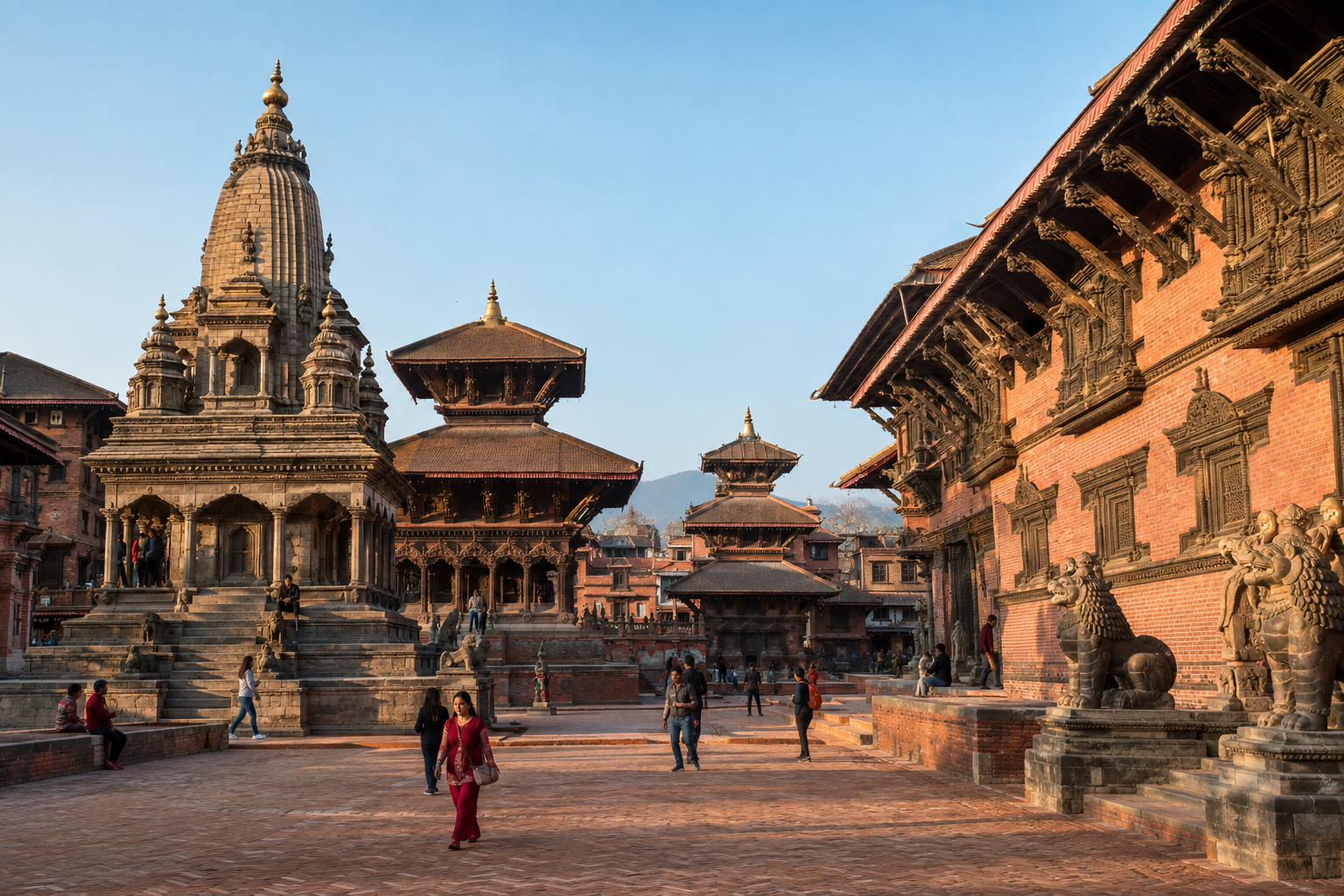
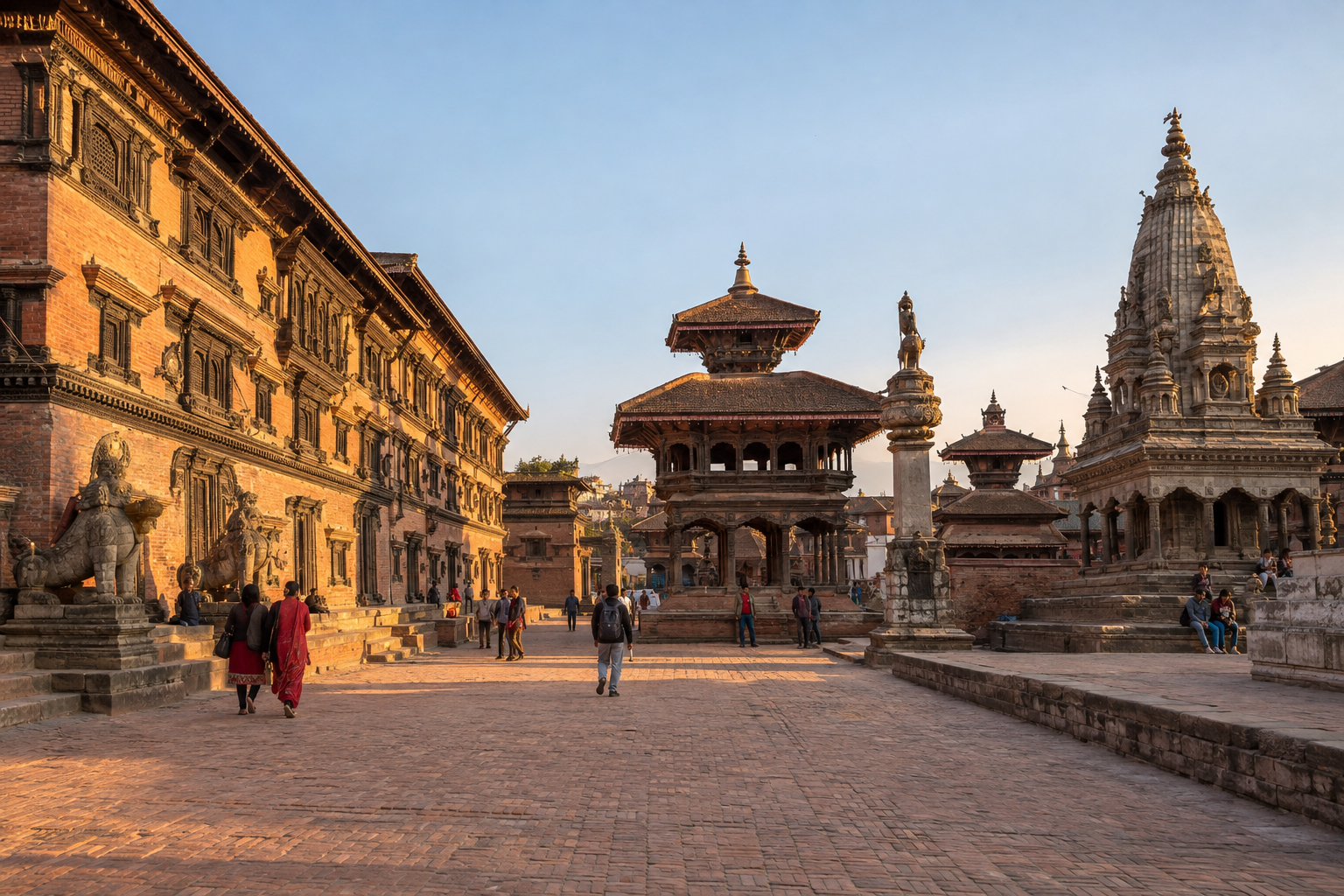
Bhaktapur Durbar Square preserves a heritage shaped by Malla patronage, Newar craftsmanship and generations of community care. · AI-generated illustration
In Bhaktapur’s Taumadhi Square, the five-tiered Nyatapola Temple still rises above the surrounding rooftops. Built under King Bhupatindra Malla in the early eighteenth century, it is among the Kathmandu Valley’s most striking surviving monuments. Its towering roofline makes royal ambition visible. Yet the temple also poses a quieter question: why is its king more readily remembered than the people who shaped its bricks, carved its timber, carried its materials and kept its sacred life alive?
That question offers a useful way into the story of the Malla dynasty Nepal remembers through palace squares, temples, festivals and royal statues. Kings commissioned buildings, supported religious institutions and attached their names to works meant to endure. But their achievements depended on skilled craftspeople, farming communities, merchants, priests and many other workers. Looking beyond the throne does not make the monuments less remarkable. It helps us understand how they became possible.
Malla rule in the Kathmandu Valley is generally traced to the early thirteenth century, with Ari Malla commonly identified as its first ruler. This was not the sudden birth of a unified Nepal, nor the beginning of civilisation in the Valley. Political authority developed through shifting relationships between rulers, local elites and religious institutions. The dynasty’s long history included changing centres of power, periods of consolidation and, eventually, rival royal courts.
The geographical distinction matters. The Kathmandu Valley was not the whole of present-day Nepal. Its principal urban centres—Kathmandu, Patan and Bhaktapur—formed a closely connected world of settlements, farmland, shrines and trade routes. Beyond the Valley lay other kingdoms and communities with their own histories. Even the Malla name requires care: the Khasa Malla rulers of western Nepal belonged to a different political setting and should not simply be folded into the story of the Valley’s courts.
Nor did the Valley’s artistic brilliance begin with the Mallas. They inherited older traditions associated with the Licchavi period and the centuries that followed it. Hindu and Buddhist worship already shaped the landscape, while local communities sustained skills in sculpture, metalwork, woodcarving and construction. The Malla courts helped reshape and extend this inheritance. They did not create it from nothing. Newar society, with its languages, religious institutions and specialised occupations, was central to the cultural world that visitors encounter today.
Calling these centuries a golden age captures something real: extraordinary artistic production and a built environment that remains culturally alive. Yet the phrase is a label to examine, not proof that everyone prospered. A richly decorated temple tells us about devotion, resources and technical skill; it cannot, by itself, tell us how comfortably ordinary households lived or how fairly obligations were shared.
The surviving monuments therefore invite two kinds of attention. We can admire the rulers whose patronage helped transform the Valley, while asking whose labour and knowledge stand behind their fame. The history of the Mallas becomes richer when “who built Nepal’s golden age?” is treated not as a request for a list of kings, but as an open historical question.
Royal Ambition, Collective Work and Divided Kingdoms
The story of the Malla dynasty Nepal remembers through its palace squares began with consolidation, not three competing capitals. In the late fourteenth century, Jayasthiti Malla strengthened royal authority in the Kathmandu Valley. He is associated with legal and social reforms that organised occupations and reinforced caste distinctions. However, accounts crediting him with creating the Valley’s entire caste system oversimplify institutions that developed over generations.
This stronger monarchy did not remain united. After Yaksha Malla’s death in 1482, succession struggles and shifting territorial control gradually produced separate kingdoms centred on Kathmandu, Patan and Bhaktapur. The familiar three-kingdom map emerged over time, rather than through one neat division. Their courts competed for territory, trade income, prestige and religious authority, while also maintaining alliances and cultural connections.
Royal Names, Many Makers
Competition helped make patronage politically valuable. A temple, courtyard or water installation could express devotion while advertising a ruler’s legitimacy. Yet rivalry alone does not explain the Valley’s architectural richness. Newar craftspeople supplied specialised knowledge in brickwork, timber construction, carving, metalwork and painting. Merchants connected the Valley with wider trading networks, while agricultural producers sustained its towns and generated resources that rulers and religious institutions could draw upon.
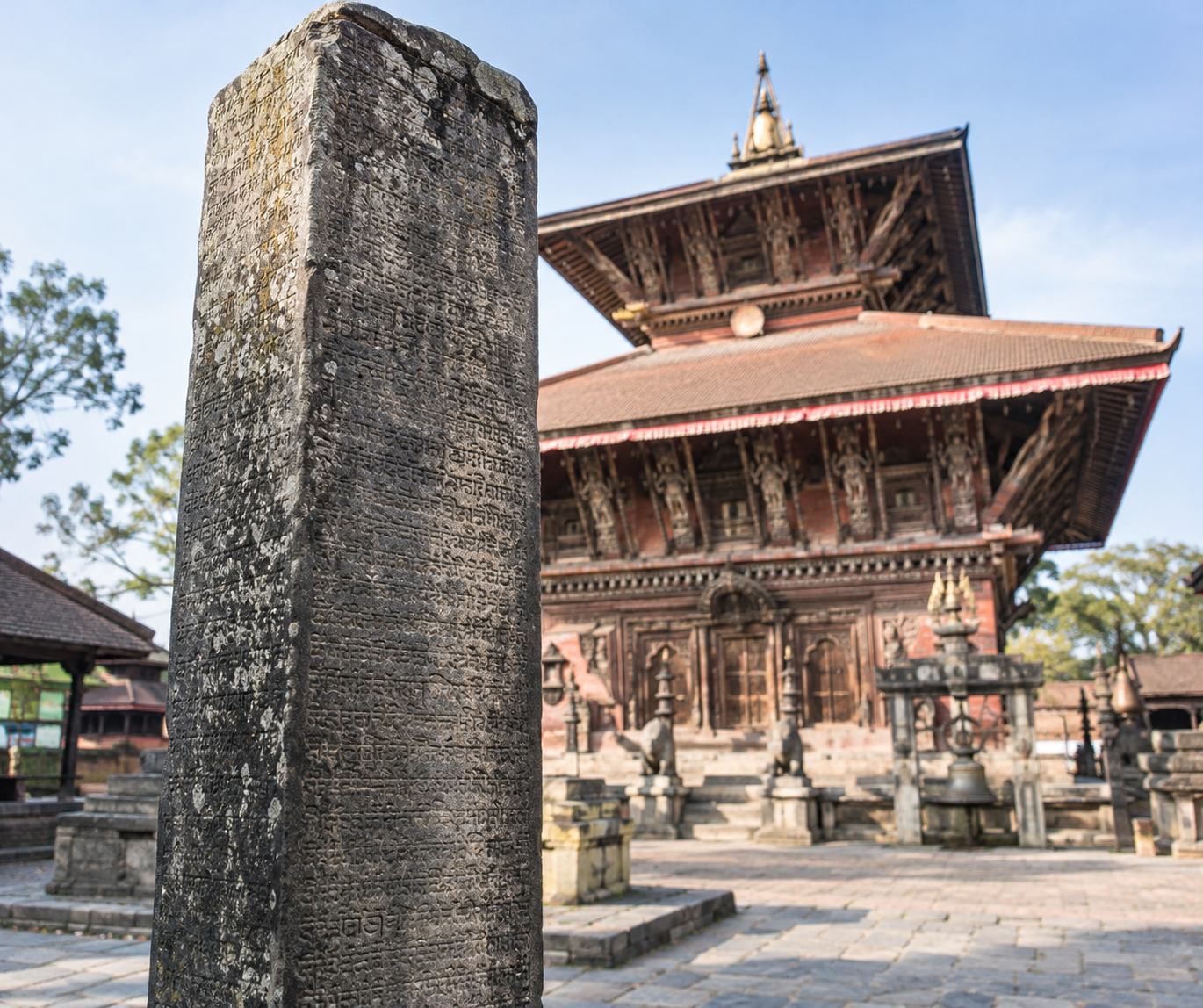
At Kathmandu’s Hanuman Dhoka palace complex, Pratap Malla left conspicuous expressions of kingship. His seventeenth-century projects included the Hanuman image that gave the palace its familiar name and the Mohan Chowk courtyard. His inscriptions also display royal learning and religious ambition. These works identify a powerful patron, but their construction depended on expertise that a royal inscription does not fully acknowledge. Naming the king is not the same as identifying everyone who designed, supplied or built a monument.
In Bhaktapur, Bhupatindra Malla’s Nyatapola Temple, completed in 1702, offers a particularly well-documented example. Contemporary construction records preserve information about materials, work and ritual preparations. They allow historians to examine an organised building enterprise rather than simply celebrate a royal vision. Even here, evidence must govern the claims: a recorded contribution or work assignment does not, by itself, reveal whether someone participated willingly or how they felt about the project.
Support, Hierarchy and Survival
Guthi institutions linked religious observance with practical support. Endowments, often involving land and its income, could sustain worship, festivals and maintenance. Specific arrangements varied, so funding and upkeep should be traced through surviving records, not assumed for every monument. Merchant wealth mattered to Valley society, but that does not prove merchants financed each royal commission.
Caste shaped occupations, status and access to authority. Celebrating collective craftsmanship should therefore not suggest equal power or recognition. Royal names survive prominently; many makers remain less visible. That imbalance deserves attention without inventing workers’ experiences.
The political end came through Prithvi Narayan Shah’s Gorkhali conquest in 1768–1769. Internal rivalries weakened coordinated resistance, but Gorkhali expansion, control of surrounding routes and economic pressure also mattered. Kathmandu and Patan fell in 1768, followed by Bhaktapur in 1769. Artistic spending is not an adequate explanation for defeat: these kingdoms faced a sustained external campaign as well as their own divisions.
Conclusion: A Golden Age with More Than Royal Authors
Who built Nepal’s golden age? The Malla kings helped make it possible, but they did not make it alone. Their courts sponsored religious foundations, commissioned works of art and gave skilled makers opportunities to develop their craft. Royal ambition could bring resources and talent together. Yet sponsorship was not the same as creation. The heritage associated with the Malla dynasty Nepal remembers was shaped by many hands, including those of artisans, merchants, religious specialists, farmers and households whose contributions rarely receive equal attention.
A ruler could order a building, but turning that command into something lasting required knowledge held beyond the palace. Makers understood materials, proportions, structural techniques and sacred imagery. Traders helped circulate materials, wealth and ideas. Agricultural production supported urban life, while families and neighbourhood groups contributed labour, offerings and care. These relationships mattered as much as individual royal taste. Cultural achievement emerged from a working society, not simply from a sequence of exceptional monarchs.
“Golden age” is therefore useful only with limits. It describes the remarkable depth of artistic, architectural and literary achievement associated with Malla rule, especially in the Kathmandu Valley. It should not suggest that everyone enjoyed security, prosperity or equal standing. Fine craftsmanship can flourish in a society marked by unequal access to wealth and authority. Courtly splendour tells us what powerful patrons valued and could support; it cannot, by itself, tell us how comfortably ordinary people lived.
The surviving evidence also shapes whose stories are easiest to tell. Royal names appear in inscriptions, genealogies and records of donations, making kings visible to later historians and visitors. Many contributors left fewer written traces, or their work was recorded under a patron’s name rather than their own. Women’s labour, routine maintenance and skills passed within families can be especially difficult to recover. That silence should encourage careful questions, not invented biographies or the assumption that unnamed people mattered less.
A more balanced account does not need to push the kings out of the story. It asks us to distinguish who paid, who decided, who made and who maintained. Those roles sometimes overlapped, but they were not identical. Recognising that difference makes the past more human and helps explain how traditions survived beyond the courts that supported them. It also avoids treating the Kathmandu Valley’s achievements as a complete account of Nepal’s diverse cultural history.
This distinction matters today because heritage survives through more than admiration. Craftspeople keep specialised knowledge alive by practising and teaching it. Community custodians organise worship, festivals, repairs and everyday care; institutions such as guthis remain important in many settings, though responsibilities differ. Their work requires time, resources and respect for local knowledge, not merely praise for an inherited golden age. Visitors and writers can honour that work by looking beyond royal names and listening to those who sustain living traditions. The Malla courts deserve recognition as patrons. The continuing life of their era’s heritage belongs equally to the people who make, use, repair and protect it.