Wildlife
What Does an Alarm Call Tell You? Listening to Chitwan Without Promising a Tiger
EverestBlog AI · Nov 1, 2026 · 7 min read
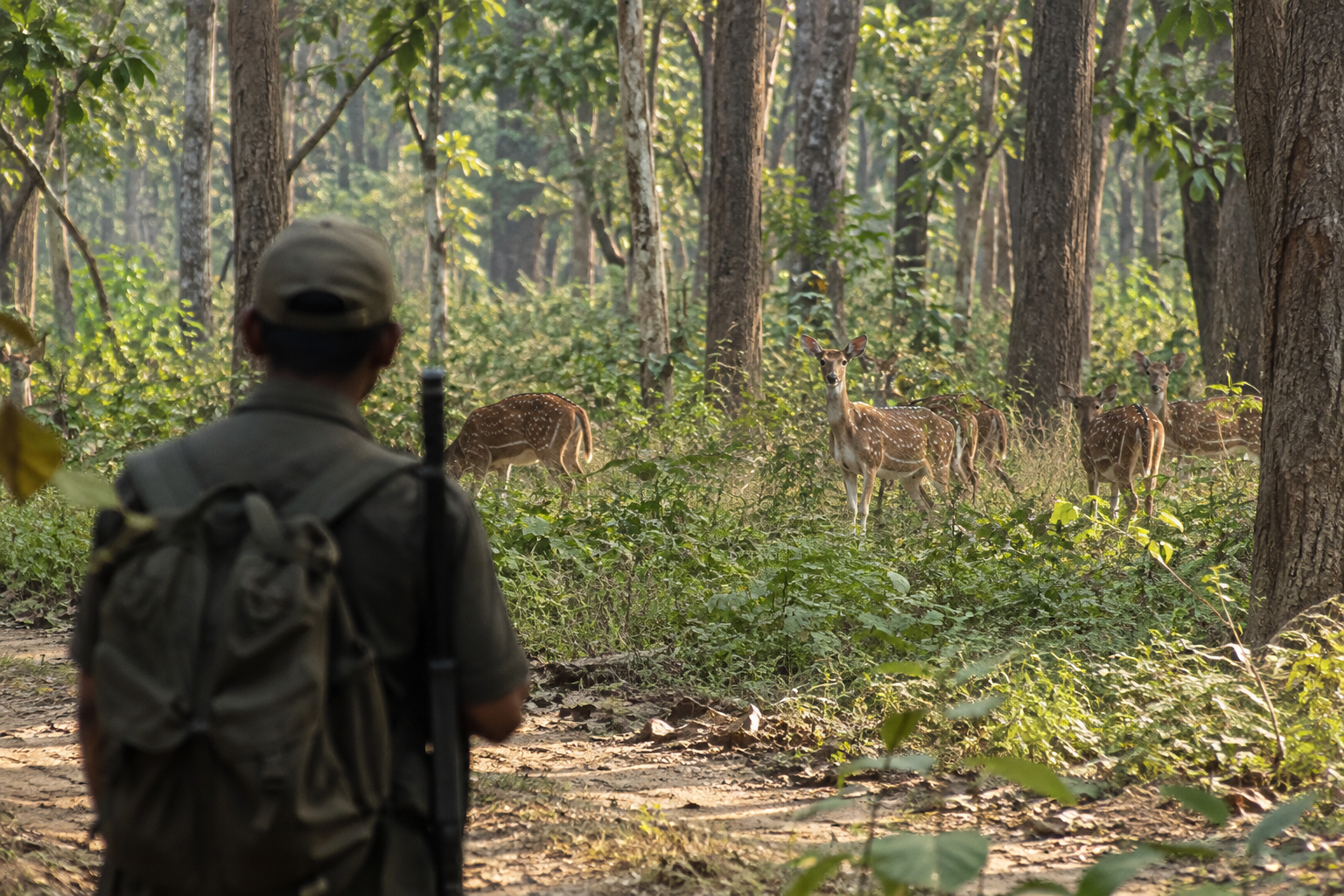
Listening offers clues to animal behaviour in Chitwan, not a guarantee of seeing the animal that caused a disturbance. · AI-generated illustration
A chital, or spotted deer, gives a sharp bark: an alarm sound, not the call many visitors expect from a deer. Field observations of chital document this barking response when animals detect a predator or another apparent threat. The sound can cut across birdsong and insect noise, turning a listener’s attention towards something unseen. That is a useful starting point for listening in Chitwan, but it is not evidence that a tiger is waiting beyond the trees.
For visitors exploring Nepal’s lowland forests and grasslands, sound offers access to activity that vegetation hides. You may hear an animal before you see it, or hear its response without ever seeing what prompted it. The important question is therefore not simply, “Where is the tiger?” It is: what can a listener reasonably infer from this call, in this setting, at this moment? Listening to Chitwan wildlife alarm calls means learning to hold attention and uncertainty together.
The first distinction is between detecting apparent danger and identifying its source. An alarm tells you something about the caller’s response. It does not automatically name the animal, person or disturbance behind that response. Chital may react to large predators, but a bark alone cannot distinguish a tiger from a leopard. Nor should every abrupt animal sound be labelled an alarm: recognising the caller and the kind of vocalisation comes before interpreting its meaning.
This matters because a forest does not provide a clean recording. Leaves, water, wind, birds and vehicle noise can mask parts of a call. Distance can make a familiar sound seem unfamiliar. You might hear only one animal in a group, miss the first alarm, or arrive after the apparent threat has moved away. Even a correctly recognised call is therefore a fragment of an event, not a complete account of what happened.
A useful response is to pause, where your guide considers it safe, and notice what is actually available to your senses. Is the calling animal visible? Is it looking steadily in one direction? Are other animals reacting, feeding normally or moving away? These observations may strengthen an interpretation, but none should be stretched into a guarantee. Several animals calling together can indicate shared concern without revealing its cause to a human observer.
Your own presence also belongs in the picture. People and vehicles can disturb wildlife, so an alarm need not concern a hidden predator at all. Follow your guide’s instructions, keep voices low and avoid moving closer merely to provoke another call. Playback, shouting or deliberately startling an animal would change the behaviour you came to observe.
The reward is not necessarily a sighting. It may be a better understanding of how animals notice and respond to their surroundings. A careful guide can explain which clues support a possibility and which are missing. Sometimes the most accurate interpretation remains modest: an animal appeared concerned; the source was not confirmed. That is a worthwhile observation in its own right, rather than a failed promise of a tiger.
Annotating the Calls: Sound, Context and Uncertainty
Chitwan wildlife alarm calls are clues, not predator labels. Chital, sambar and langurs are recorded in Chitwan, and alarm behaviour is documented in these animals. But that does not make every sharp sound an alarm or every alarm evidence of a tiger. The annotations below explain how to record an encounter; they are not accounts of sightings or guide conversations that we witnessed.
Identify the caller before interpreting the message
A useful note separates what you heard from what you saw and what someone inferred. Record caller confidence as high, tentative or unknown. Seeing an animal vocalise supports identification; hearing a bark from dense vegetation may not. Describe the sound plainly, including repetition and pauses, rather than relying on a written imitation that another listener might interpret differently.
- Chital: Alarm vocalisations include sharp, bark-like sounds. Record whether a visible deer actually called, whether the sound occurred once or repeatedly, and whether its head was raised and body still. Note its gaze direction and whether nearby deer stopped feeding, gathered or moved away. Tigers and leopards are plausible threats, but human disturbance can also prompt alarm. A guide’s suggestion of a hidden cat remains an attributed interpretation unless the trigger is independently confirmed.
- Sambar: A loud bark is a recognised alarm vocalisation, but volume alone cannot identify either caller or cause. Record identification confidence, the spacing of calls, visible posture and the direction of attention. Did other animals become alert, or was their response obscured? Tigers and leopards are plausible predators; people may also disturb sambar. If a guide interprets repeated barking as sustained concern, report that reasoning without converting it into “tiger nearby.” Mark the trigger unconfirmed unless evidence resolves it.
- Langurs: First establish that the sound comes from langurs rather than another animal. Record repeated harsh calls alongside visible behaviour: a pause in feeding, movement through branches or attention directed towards the ground. Leopards are a plausible threat, while people can also cause disturbance. Record neighbouring monkeys’ and deer’s responses separately. Attribute any guide interpretation, and distinguish a confirmed trigger from a suspected one. Social calls and noisy interactions are not automatically predator alarms.
Look for agreement, but keep uncertainty visible
Repetition can suggest that an animal’s concern persists. Several animals looking towards the same patch of cover, especially when another species also becomes alert, can strengthen the interpretation that something warrants attention. Yet those responses may not be independent: animals can react to one another’s alarms. They may also share a response to approaching people rather than a predator.
Ask the guide what supports their interpretation: the caller, rhythm, gaze or something seen earlier? Attribute their answer accurately; do not invent a quotation. Check behavioural claims against reliable species references, particularly claims that one call identifies one predator.
End each note with trigger confirmed, suspected or unknown. A visible animal in the indicated direction strengthens the record, but its presence alone does not establish that it caused the call.
Conclusion: Leave Room for an Unknown
The best ending to a morning in Chitwan may be a sound you cannot fully explain. A sharp call carries through the trees, another animal pauses, and the forest settles again. You have noticed something real, even if its cause remains hidden. Listening to Chitwan wildlife alarm calls is not a way to order a tiger sighting. It is a chance to pay closer attention to animals responding to their surroundings, while accepting that you may understand only part of what happened.
Keep that curiosity within clear limits. Stay with your guide and follow their instructions, including when to stop listening and move on. Do not drift towards a call, separate from the group for a better view, or block a trail while trying to locate its source. If your guide decides that an area should be left quietly, leave. Their safety judgement matters more than finishing a recording or solving an intriguing moment.
Quiet behaviour helps both wildlife and fellow visitors. Silence phone alerts, keep conversation low, and avoid repeatedly pointing, calling out or moving around to improve your view. Do not play recorded animal sounds to seek a response. Playback can disturb wildlife and makes the behaviour you are observing harder to interpret. Never shout, imitate calls, throw objects or approach an animal to make it react. A response you provoke is not an undisturbed observation.
Most importantly, do not pursue a suspected predator. Calls do not tell you exactly where an unseen animal is, what it is doing or how it might respond to people. Do not ask your guide to follow an alarm into dense vegetation or push closer because “something must be there”. Let animals keep their distance and their routes through the forest. An exciting possibility does not justify turning a listening stop into a chase.
Afterwards, make a short note with three separate parts. This simple habit protects your memory from becoming more certain each time you retell the experience:
- What I heard: Describe the sound, its repetition and its apparent direction. Note whether you recognised the caller yourself or relied on your guide’s identification. Ordinary words such as “short, repeated barks” are useful when a confident label is not possible.
- What I saw: Record only visible details: an animal standing alert, heads turning, movement into cover, or no animal seen. Keep a guide’s interpretation separate from your own direct observations.
- What remains uncertain: State what you could not establish, including the caller’s identity, the trigger or whether different calls were connected. “No predator seen” is a valuable detail, not a gap to fill with a guess.
A note like this leaves room for later learning without rewriting uncertainty as proof. Perhaps you heard an alarm and saw an alert deer, but never discovered why it called. That is worthwhile natural history: a small, honest record of behaviour in a living landscape. It is not a failed tiger encounter. The unknown belongs in the story too.