Wildlife
More Than a Mud Bath: What Do Rhino Wallows Do for Chitwan’s Landscape?
EverestBlog AI · Nov 1, 2026 · 16 min read
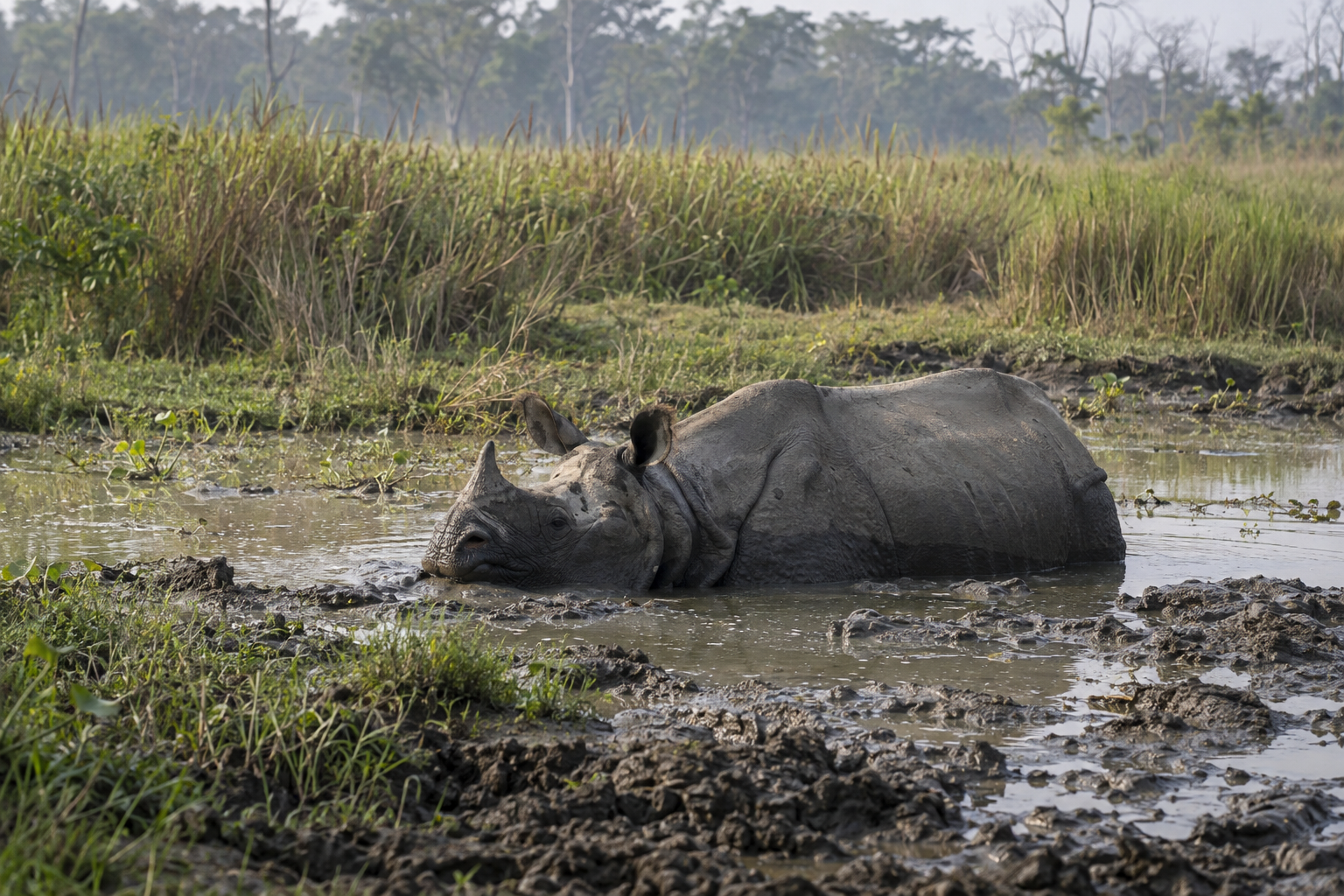
A rhino’s muddy resting place invites a closer look at the relationship between repeated wallowing and small-scale habitat change. · AI-generated illustration
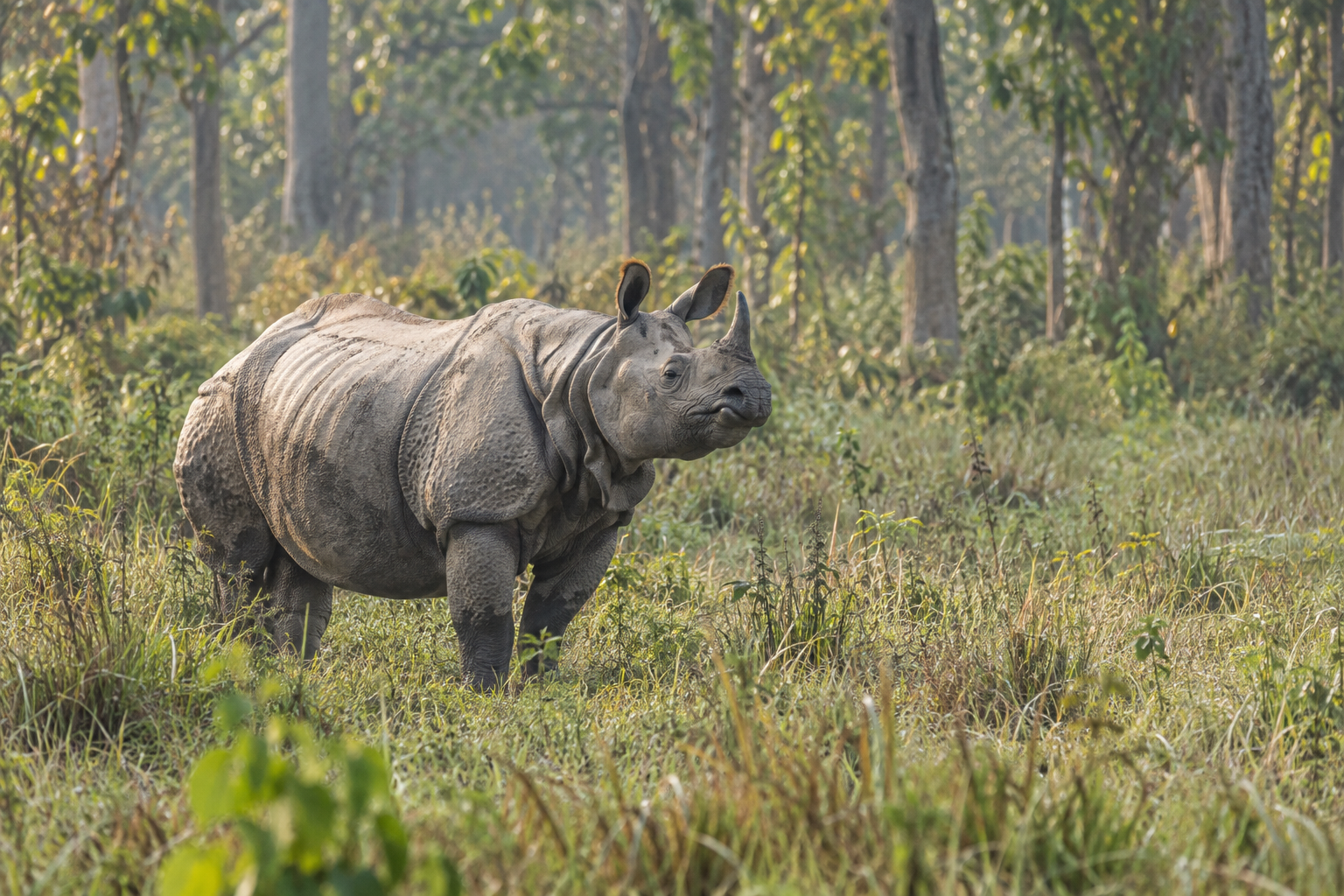
A greater one-horned rhinoceros settling into a muddy pool is a familiar image of Chitwan. The animal may lower its heavy body into shallow water, roll against the wet ground, or rest with much of its skin beneath the surface. This is normal rhino behaviour, not simply a playful pause. Wallowing helps rhinos cool down, while mud coating the skin can help protect it from biting insects. Wetting, rubbing and coating the body are also part of skin care. For the rhino, a wallow is a useful place in its daily surroundings.
Yet the animal is only half of the scene. When it climbs out, it leaves a muddy depression: an uneven patch of ground shaped by contact with a large body, moving feet and water. Some wallows occupy existing low spots rather than hollows created entirely by rhinos. Repeated visits may then alter their shape and surface. Looking at rhino wallows in Chitwan means looking beyond the mud on an animal’s back to ask what happens to the place it keeps returning to.
That shift brings a different set of questions into view. Does the disturbed ground differ from the soil just outside it? Are plants absent only from the centre, or does the surrounding vegetation change too? Does water remain after nearby ground has dried? Do other animals enter the depression, visit its edges, or merely pass along the same route? These are questions about a small habitat feature: a patch with conditions that may differ from its immediate surroundings. They do not, by themselves, establish an effect across Chitwan’s wider landscape.
Scale matters because a striking scene can invite a much bigger story than the evidence supports. A muddy hollow containing water is not automatically a reliable dry-season refuge. An animal photographed beside one does not necessarily depend on it. Nor does bare ground prove that rhinos have reduced plant diversity across an area. The starting point is narrower and more useful: repeated wallowing can physically disturb a particular patch, and that patch is worth examining. Whether those local changes add up to broader ecological effects requires further evidence.
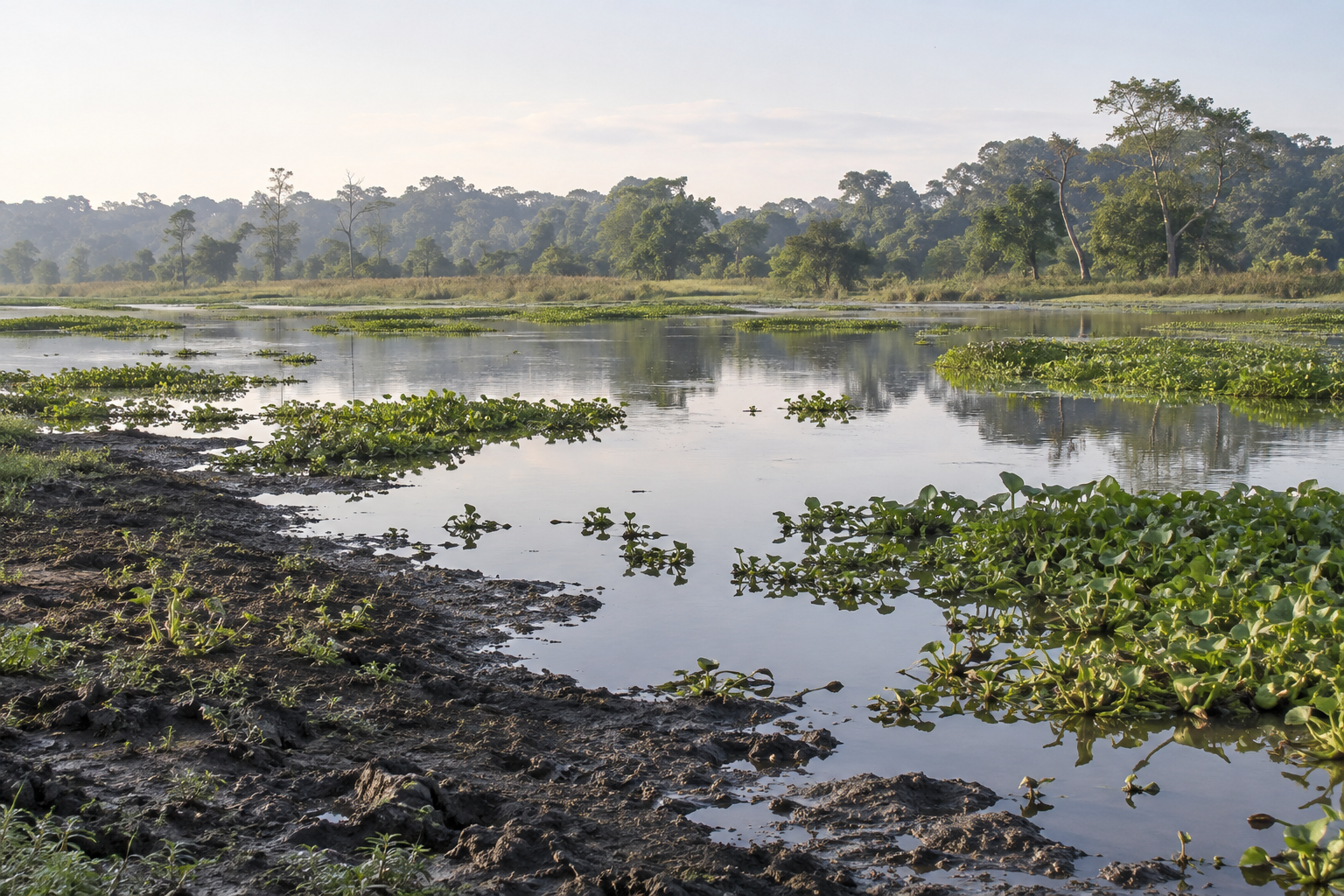
Chitwan’s setting makes those questions especially interesting, but also difficult to separate. Its floodplain habitats are shaped by seasonal rain, rivers, flooding and changes in vegetation. A depression may receive water from several sources, and its condition can reflect both animal activity and the ground it occupies. A wet patch used by a rhino should therefore not be treated as though the rhino alone produced everything seen there. Understanding a wallow begins with its setting, including what the site was like before repeated use, where that can be established.
This investigation will keep three kinds of information distinct. First comes evidence from Chitwan: observations or research that actually concern its rhinos, wallows and local conditions. Second come findings from elsewhere, which may suggest useful comparisons but cannot simply be transferred to Nepal. Different rhino species, soils, rainfall patterns and habitats can produce different outcomes. Third come untested possibilities: reasonable ideas about what a wallow might do, clearly labelled as questions rather than presented as discoveries.
That distinction is not a reason to overlook these modest features. It is a way to take them seriously without overstating their role. Even a small depression can be worth studying for its physical conditions and the animals or plants associated with it. But describing those associations carefully matters as much as noticing them. The pages that follow move from soil and plants to water, then to other visitors, asking at each step what is observed and what remains uncertain. The aim is to understand the muddy patch the rhino leaves behind—not to assume that every wallow transforms the landscape around it.
What Repeated Use Does to Soil and Plants
A rhino entering a wet patch brings weight and movement to soft ground. Its feet press into the surface; turning, lying down and getting up can shift mud and bend or uproot plants. When that activity happens repeatedly in one place, it may leave a disturbed centre and worn approaches. These are useful processes to consider when looking at rhino wallows in Chitwan, but they are not, by themselves, proof of measured changes to Chitwan’s soils or vegetation.
The distinction is between a plausible mechanism and a locally demonstrated effect. Without a Chitwan study measuring soil conditions, or an attributable field observation documenting changes at a particular wallow, it would be too strong to say that rhinos consistently compact the soil or remove surrounding vegetation. A muddy, sparsely planted patch offers clues, not a complete explanation of how it formed.
Trampling can change the surface in different ways
Repeated foot traffic can break stems, flatten grasses and expose soil along an approach. At a wallow’s edge, turning movements may tear vegetation rather than simply press it down. Plants rooted in saturated ground can also be loosened as mud shifts. These effects could help keep a frequently used patch open, especially if disturbance returns before plants recover. Establishing that pattern in Chitwan would require observations through time, rather than a single photograph of bare ground.
Soil compaction needs particular care. Compaction means soil particles are packed more closely together, reducing pore space. Animal traffic can cause it under suitable conditions, but churned mud is not automatically compacted soil. Very wet ground may be stirred and displaced at the surface, while firmer ground along an approach may respond differently. Soil texture, moisture and the frequency of use all influence the result.
Nor should a hard surface seen later be treated as proof of trampling-induced compaction. Mud can become firm as it dries. A convincing local assessment would compare repeatedly used ground with nearby, less-disturbed ground of similar soil and wetness. Measurements of soil density or resistance to penetration would be more informative than appearance alone, with moisture conditions recorded because they affect interpretation.
Bare ground does not identify its maker
Vegetation loss is easier to see than compaction, but its cause can still be uncertain. Long periods under water, seasonal flooding, sediment deposition and use by other animals may all affect plant cover. A rhino might choose a wet opening that already has few plants. Finding rhino tracks there would establish use, not show that the animal caused the original vegetation gap.
The same caution applies to the hollow itself. Creating, enlarging and maintaining a depression are different claims. A rhino may use a pre-existing low spot, including ground shaped by water movement. Repeated rolling and foot movement could then widen its margins or redistribute soft sediment. Continued disturbance might also slow plant recovery. None of those possibilities establishes that the rhino excavated the pool from previously level, vegetated ground.
Useful field evidence would therefore record more than whether a rhino was present. Observers could map the disturbed edge, photograph fixed viewpoints, note broken or uprooted plants, and record fresh tracks alongside signs of other animals. Returning after both use and quiet periods would help show whether the opening expands, stays similar or begins to revegetate. Nearby comparison patches would help separate wallowing effects from wider seasonal changes.
For readers interpreting a wallow during a guided visit, the safest question is not “Did a rhino make this?” but “What evidence shows how rhinos have changed this spot?” A guide’s account becomes more useful when it identifies repeated sightings and a specific change, rather than offering a general impression. Until such evidence is available, describe visible disturbance plainly and keep its history open: rhinos can be users and modifiers of wet ground without necessarily being its original makers.
When a Wallow Holds Water—and When It Dries
A rhino wallow can look like a pond after heavy rain and become a patch of cracked mud later in the season. That change is not simply a matter of whether a rhino has visited recently. For rhino wallows in Chitwan, standing water depends on a balance: how much water enters, how much the hollow can hold, and how quickly water leaves through the soil, evaporation or overflow.
Depth creates space, but does not guarantee water
The shape of a depression helps determine its potential storage. A deeper hollow can hold more water than a shallower one of similar area, provided its edges contain that water. A low gap in the rim may let water spill out well before the rest of the depression fills. Sediment washed in during rain or flooding can also change its depth and capacity.
Yet depth alone cannot explain how long a wallow stays wet. A deep depression in freely draining ground may empty sooner than a shallow one over less permeable soil. Its position matters too: water may collect from surrounding ground, arrive from a nearby channel, or be supported by groundwater close to the surface. These possibilities need checking at individual sites rather than assuming every wallow behaves alike.
What compacted soil might change
Repeated pressure from a large animal can compact soil, changing the spaces through which water moves. Under some conditions, that could reduce infiltration—the movement of water into the ground—and help water remain at the surface. But this is a possible mechanism, not evidence that wallows reliably retain water longer than other depressions.
Soil texture, structure and existing moisture all affect the outcome. Sandy material often lets water pass more readily than fine-textured material, although texture is only part of the story. Cracks, roots and soil layers can create or block drainage routes. Disturbed mud may also behave differently as it settles and dries. Without measurements, a firm-looking wallow floor tells us little about the rate at which water actually passes through it.
Rain, floods and the drying season
Rain can fill a wallow directly and send runoff into it from nearby ground. The timing matters as much as the amount: several showers close together may keep adding water before earlier inputs have drained or evaporated. A long rain-free interval allows those losses to accumulate. Rising temperatures, sunshine, wind and shade can influence evaporation, so two nearby hollows need not dry at the same rate.
Flooding introduces another complication in Chitwan’s river-influenced landscape. Floodwater may refill a depression, connect it temporarily to other wet areas, or deposit sediment that alters its shape. It can also scour material away. Once floodwater retreats, a wallow may remain isolated or continue exchanging water with the surrounding ground. A photograph of a full wallow cannot reveal which process supplied the water, or how long it will remain.
The local evidence needed
To test whether rhino use changes water persistence, researchers would need repeated observations across wetting and drying periods. Useful measurements include:
- Water depth over time: record levels at fixed points, including when the hollow becomes dry, alongside rainfall and flood observations.
- Soil properties: measure texture, compaction and infiltration, and examine layers or cracks that could influence drainage.
- Depression shape: survey depth, area and overflow points so differences in storage are not mistaken for effects of rhino use.
- Nearby unused depressions: monitor comparable hollows with similar soils, shade and landscape position, while checking whether animals begin using them.
Comparisons should cover more than a single rainstorm or site. Recording fresh signs of rhino use would also help separate active wallows from older hollows. Together, these observations could show whether use is associated with slower drying, faster drying or no consistent difference—and under which local conditions. Until then, water retention remains a question to investigate, not a benefit to assume.
Who Else Uses the Wallow? Following the Evidence
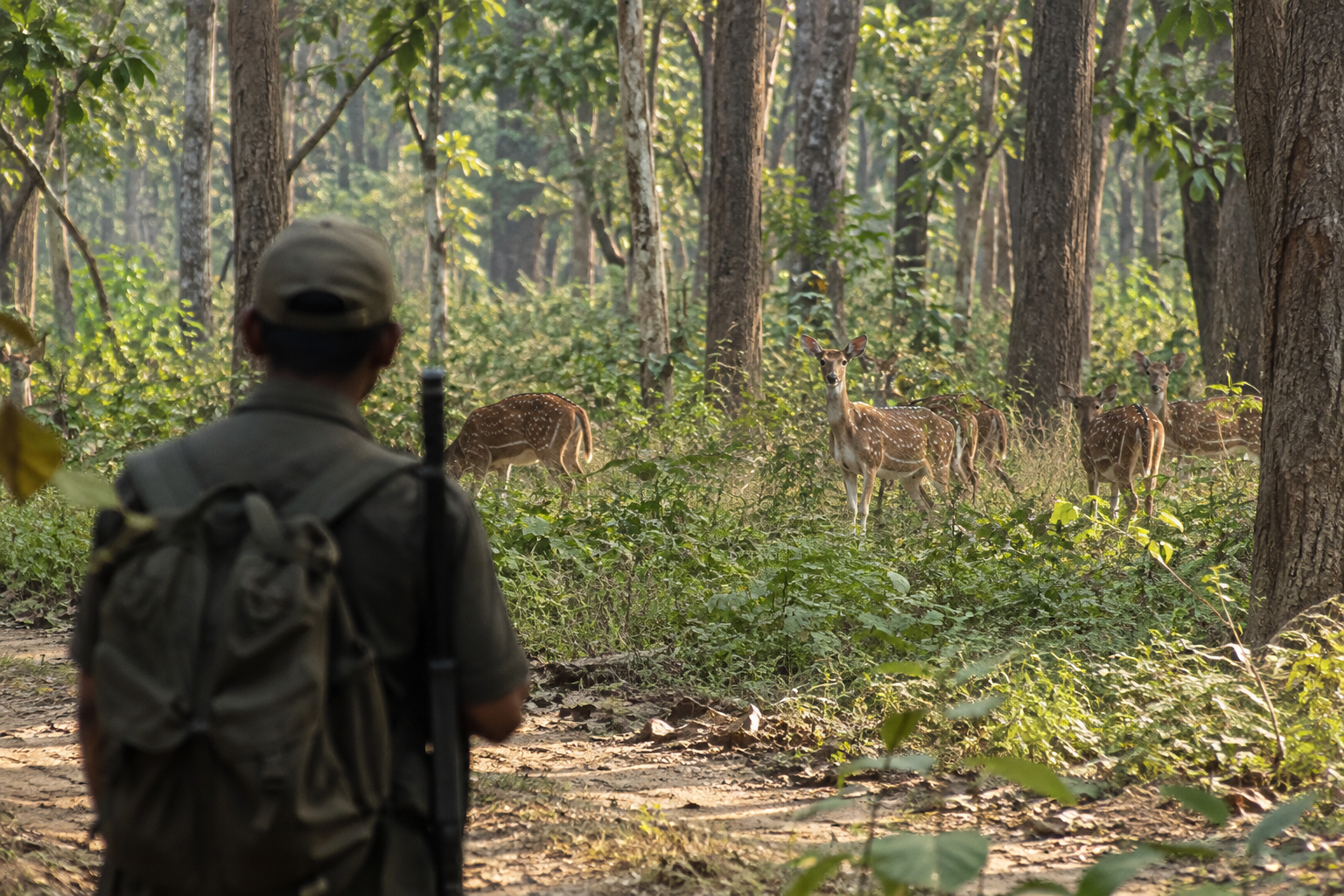
A muddy hollow may look like a meeting place for wildlife, but appearances are not enough. To understand who else uses rhino wallows in Chitwan, we need records tied to an identifiable wallow: camera-trap images, tracks assessed in context, or direct observations. A species recorded somewhere in Chitwan National Park cannot automatically be added to a wallow’s visitor list. Nor does an animal photographed beside muddy water necessarily use that water.
The evidence needs a clear boundary. No verifiable, wallow-specific Chitwan study is cited here that establishes which other species drink, bathe, feed or breed at these sites. That prevents a responsible species-by-species account; it does not establish that such records do not exist. Researchers, park staff and guides may hold relevant observations, but those need traceable details before they become evidence in an article. Naming familiar park animals without those details would turn a plausible visitor list into an unsupported claim.
A useful local record should identify its source, confirm that the location was a rhino wallow, and describe what the animal actually did. An observation date matters because conditions change between wet and dry periods. Exact coordinates need not be made public, especially where doing so could expose wildlife to disturbance. A report, paper, archived image sequence or documented field observation can still provide enough context for a claim to be checked.
Different field methods answer different questions. Camera traps can show behaviour, but a single photograph often captures only arrival or departure. Consecutive images or video provide stronger evidence of an activity. Tracks show that an animal crossed a surface when conditions allowed prints to form; they seldom establish whether it drank or fed. Direct observation can reveal those actions, although short watches may miss night-time visitors and quiet activity. These methods complement one another rather than offer interchangeable proof.
- Drinking: Look for a clear sequence showing water intake, not simply an animal lowering its head. Sniffing the mud or investigating vegetation can look similar in a still image.
- Bathing: Entering the hollow is not enough. Immersion, rolling or other clearly observed bathing behaviour supports the claim; walking across shallow water does not.
- Feeding: The record should show an animal taking food from the water, mud or surrounding vegetation. Searching behaviour can suggest foraging, but does not confirm what was eaten.
- Breeding: An adult’s presence is weak evidence. Eggs, larvae or documented reproductive behaviour would support a more specific claim, while successful development requires follow-up observations.
Amphibians, aquatic invertebrates and birds therefore belong on a research agenda, not an assumed Chitwan species list. Do amphibians lay eggs in these hollows, and does water remain long enough for development? Which invertebrates colonise them, and are they aquatic residents or insects temporarily trapped at the surface? Do birds drink or collect prey, or merely cross the camera’s view? Standard cameras may miss small animals, so answering these questions could require close observation and appropriately permitted sampling.
Evidence from other regions can help shape these questions, but it cannot answer them for Chitwan. Any comparison should name the outside location and its source, and explain differences in rainfall, soils or wallow makers. A behaviour documented elsewhere remains an outside example, not a local record. That distinction is especially important when a general account of wildlife waterholes is used to describe hollows specifically created or repeatedly used by rhinos.
Finally, visits alone do not demonstrate a biodiversity benefit. Researchers would need comparisons with nearby pools or similar ground without wallows, repeated across seasons. They would also need to consider detectability: bare mud preserves tracks better than leaf litter. Repeated visits by one individual are not the same as many species benefiting. The strongest conclusion would connect wallow use with a measurable outcome, such as successful breeding—not simply a busy camera-trap sequence.
Conclusion: A Small Feature, Not Yet a Complete Story
A rhino wallow is more than a place where an animal gets muddy, but its wider importance needs careful wording. Repeated visits can disturb the ground, press down soil and damage or remove plants within a small patch. Water may collect there, then shrink or disappear as conditions change. Other animals may visit too. Together, these processes make rhino wallows in Chitwan worth examining as features of the landscape—not automatically as places of exceptional biodiversity.
The clearest effects are close to the wallow itself. Where a rhino repeatedly enters, turns or rests, vegetation can be flattened and the surface worked into mud. These changes may leave a patch that differs from the surrounding grassland or woodland floor. Yet a visible difference is not, by itself, evidence of ecological improvement or damage. Its meaning depends on what changes, how long those changes last and which organisms respond.
Water adds another layer of uncertainty. A hollow containing water during one visit may be dry during the next. Rainfall, drainage, soil conditions and connections with nearby water all help determine what happens. Repeated use may alter a depression, but seeing water in it does not establish that rhinos created a lasting water source. Nor does a dry wallow necessarily have no ecological role. The important distinction is between describing its condition and explaining the process behind it.
Evidence of other visitors also needs to stay within its limits. Tracks, droppings, direct sightings or camera records can show that an animal used the site. They do not necessarily reveal why it came, how often it returned or whether the wallow offered something unavailable nearby. A visitor might drink, forage, cross the patch or investigate it. Use is evidence of a connection; dependence is a stronger claim that requires more than an isolated observation.
The strongest remaining uncertainty is therefore not simply whether wallows affect their immediate surroundings. It is whether those local changes consistently make a meaningful difference to other organisms, compared with similar places without wallows. Answering that requires separating the effects of rhino activity from those of the site itself. A naturally wet depression, for example, might attract both rhinos and other animals. Their shared presence would not prove that rhino wallowing caused the other animals to gather.
This is why small features deserve attention without receiving grand labels. A patch need not qualify as a “biodiversity hotspot” to raise useful questions about disturbed soil, plant recovery or temporary water. Equally, an interesting observation at one wallow should not become a statement about all of Chitwan. Sites differ, and the same site can change through the year. Keeping conclusions at the scale of the evidence makes them more useful, not less compelling.
Careful monitoring would follow individual wallows through wet and dry conditions rather than rely on a single photograph or visit. Useful records could include whether water is present, how the wallow’s outline changes, where plants return and what signs of animal use appear. Observations from comparable nearby patches would help distinguish changes associated with wallowing from wider seasonal shifts. Recording when nothing happens—no water, no fresh disturbance, no detected visitors—would also prevent a picture built only from memorable encounters.
For readers and wildlife watchers, the practical lesson is to look closely without rushing to a verdict. Observe from permitted routes, avoid disturbing animals and respect park guidance. A muddy hollow may hold a revealing story, but its appearance cannot tell that story alone. The value of watching rhino wallows in Chitwan lies in building a clearer account of what happens there, under which conditions and with what consequences. Repeated, careful observations can show where stronger conclusions are justified—and where an honest question remains the most accurate ending.